Is synthetic turf safe? Sacramento parents aren’t convinced
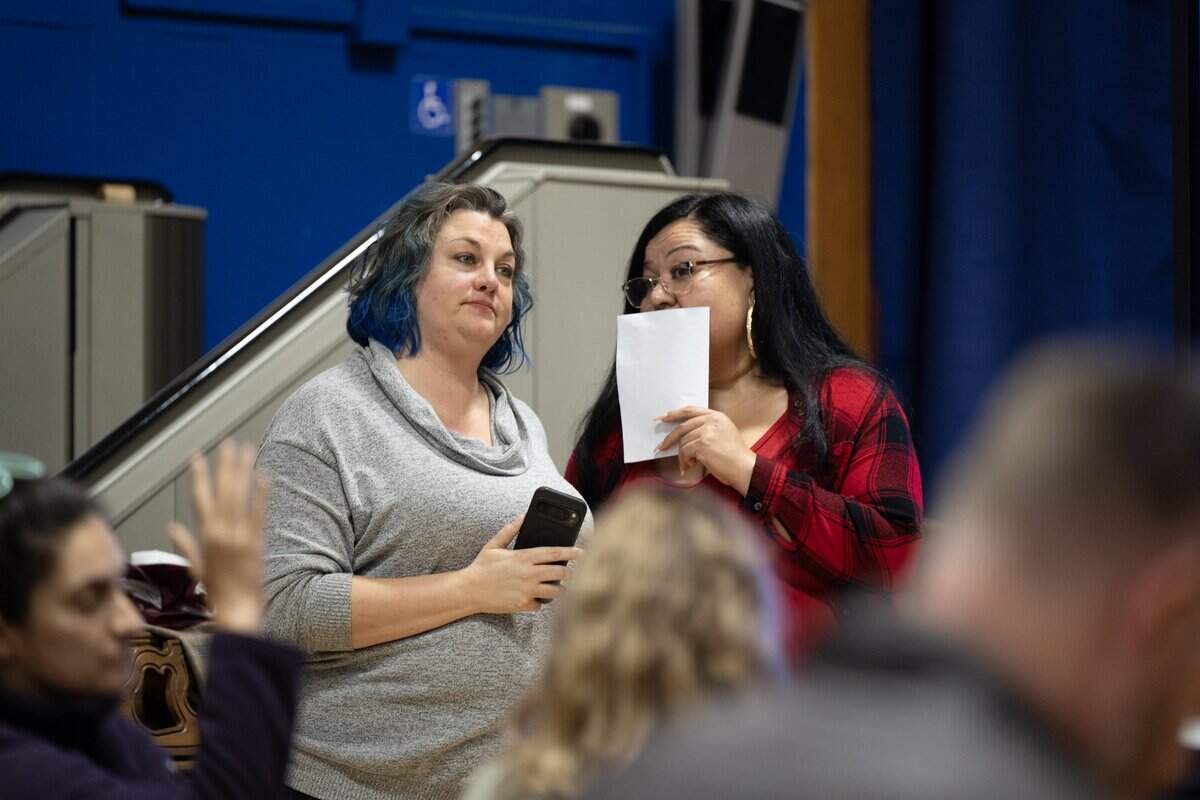
Frustration filled the auditorium Tuesday night at Crocker/Riverside Elementary School, where Sacramento City Unified School District officials faced dozens of parents, residents and students concerned about a plan to replace the school’s grass field with synthetic turf.
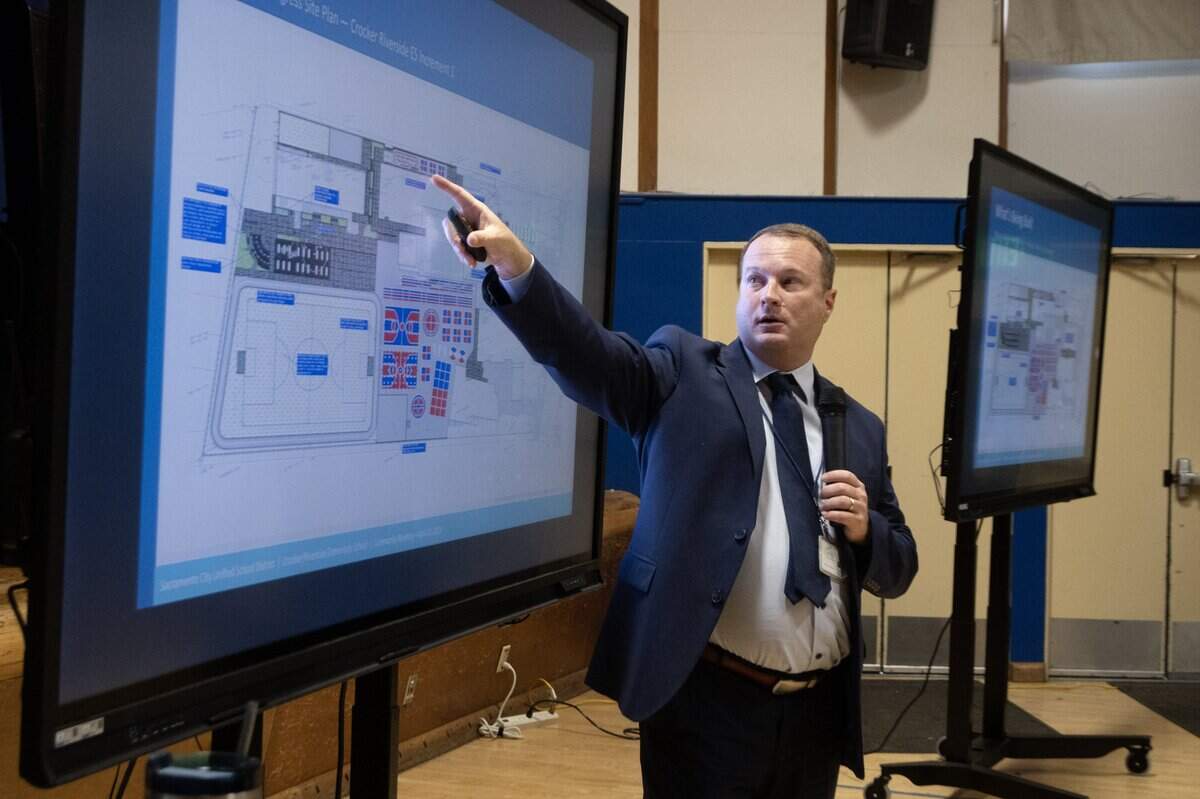
Chris Ralston, the district’s assistant superintendent of facilities, walked the residents through renderings and timelines related to the playground project — but the presentation was quickly followed by sharp questions about what up to 27,000 square feet of artificial grass could mean for the hundreds of children who play on it every day.
“I watched the board meeting last week, I don’t hear any discussion of the impact to the environment or a kid’s health and safety in this discussion. I don’t hear that presented to the board,” Nathan Jacobsen, a parent of two kids at the school said during the meeting.
First initiated in October, the proposal to replace the grass field with artificial turf recently cleared a key procedural step when the Sacramento City Unified School District’s Board of Education approved a notice of exemption last week, opening a 35-day period during which the public may file a legal challenge. The project is now awaiting approval from the Division of the State Architect.
The main concerns from parents include how hot artificial grass can get, especially during California’s scorching summers. Multiple studies have concluded that synthetic turf can reach far higher temperatures than natural grass, with a Penn State University study finding that synthetic turf runs 35 to 55 degrees Fahrenheit hotter than natural grass on hot days.
“My biggest concern is that we will be conducting an experiment on our kids,” said Chris Papouchis, the father of a student. Papouchis expressed worry about children slipping and injuring themselves on the synthetic surface, as well as potential exposure to PFAS — man-made chemicals commonly known as “forever chemicals” that are often detected in plastics and are classified as possible carcinogens by the U.S. Environmental Protection Agency.
Papouchis’ concern reflects a research-backed reality. The NFL Players Association found that players suffered 28% more knee and leg injuries, not caused by contact with other players, on artificial turf compared to natural grass.
Alexander Goldberg, a spokesperson for the Sacramento City Unified School District, said that the school “does not have the space to support 600 students while maintaining a natural grass field in a safe and usable condition,” echoing an overall theme Ralston emphasized during his presentation.
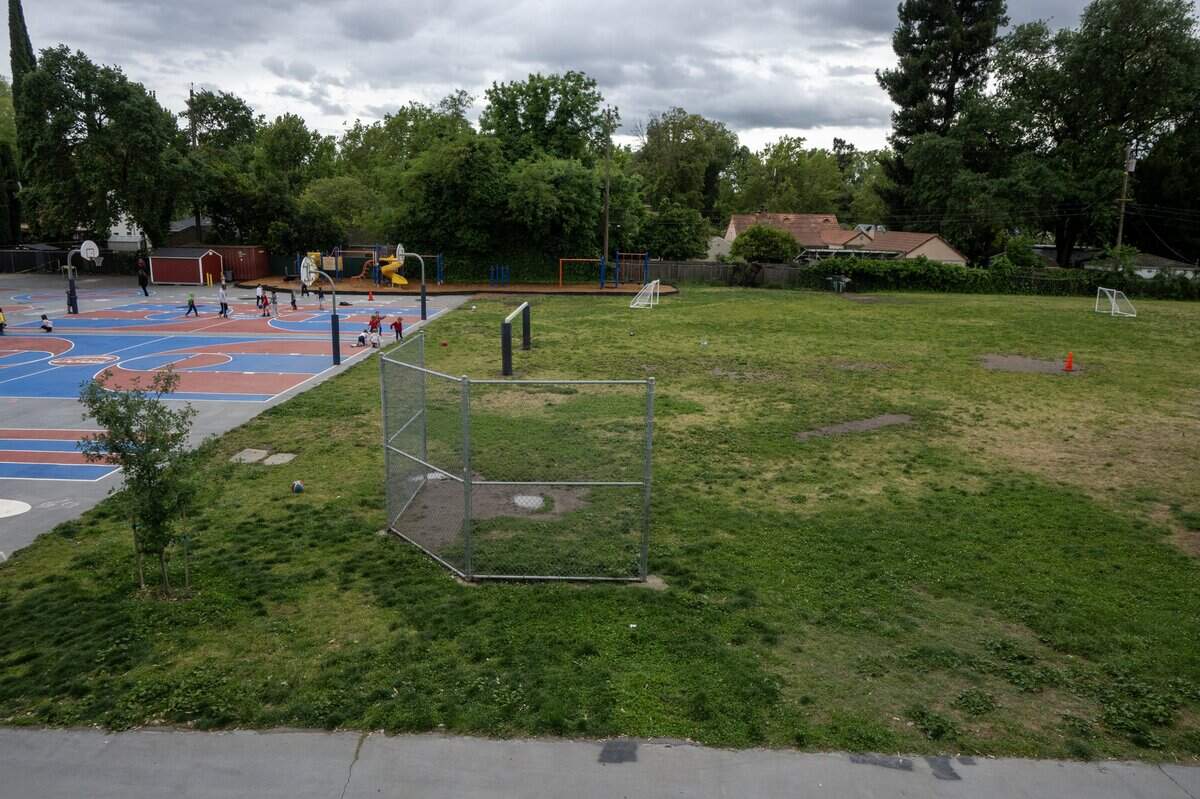
“If a sustainable natural grass solution were feasible, it would already be in place. In reality, the field has often gone unused because of safety concerns about its condition. Our goal is to create a space that is consistently safe and accessible for students.” Goldberg continued in an email.
Supporters of the proposal also spoke at the meeting, saying that the current grass field has long been unusable and renovation is overdue.
“Is my top choice grass? Sure. But I understand that in this case, that might not be practical,” said Dana Kennedy, a parent of a kindergartner who supports the project.
What science knows about synthetic turf
Artificial turf is made of two main components — the blade layer on top typically made out of nylon or polyethylene fibers designed to simulate grass and the infill underneath, which is most commonly crumb rubber, or recycled tires chopped into small particles.
In March, the Office of Environmental Health Hazard Assessment published what one expert described as the most comprehensive state-level evaluation of synthetic turf to date, concluding that no significant health risks exist from exposure to chemicals in crumb rubber infill on synthetic turf fields.
But the caveat of this study, experts cautioned, is the lack of long-term health data on real people. The study relied primarily on laboratory chemical analysis and anecdotal participant surveys, rather than tracking whether users actually developed health problems over time.
“When the Office of Environmental Health Hazard Assessment decided to do a study, they felt like they didn’t have the resources to do a good and comprehensive epidemiology study,” said John Balmes, a professor of environmental health sciences at UC Berkeley’s School of Public Health who served as chair of the group’s synthetic turf scientific advisory committee.
“It’s theoretically possible to do, but it would be a huge investment of resources, both people and money. So that’s something that I think it’s a legitimate caveat about the results of the state study,” Balmes continued, adding that he would not tell parents that synthetic turf is better than grass in terms of health and safety.
The district is suggesting olive pit infill as an alternative to crumb rubber infill, which could alleviate some concerns raised by the use of crumb rubber that contains toxic chemicals.
Ed Avol, a professor of clinical preventive medicine at USC’s Keck School of Medicine who also served on the advisory panel, agreed that data was limited in the state study on crumb rubber infill turf, adding that while olive pit infill could avoid the toxic chemical concerns raised, it still needs to be reviewed for allergenic or biological responses.
Avol also pushed back on the common cost-savings justification that decision makers often promote, arguing that artificial turf is not the maintenance-free solution districts assume it to be.
“The school district should commit to a maintenance program for the artificial turf if they’re going to go in that direction,” Avol said. That can look like spot spraying with antibacterial cleaners to address skin abrasions and biological debris left by children on the field, he noted. “The playing surface is a separate issue, and keeping that surface clean and hygienic would be needed regardless of infill below it,” Avol continued.
When asked how the district would prepare for maintenance, Ralston said the district already spends approximately $25,000 per year districtwide to maintain and test its existing artificial turf fields, and that the cost of adding Crocker/Riverside to that contract would be “minimal.”
SCUSD board members Taylor Kayatta, Tara Jeanne and April Ybarra attended Tuesday’s meeting. For Jeanne, the next step is gathering more information — starting with conversations with Ralston, district support staff and school principal Marty Tateishi — before deciding which direction to support on the project.
“I’m asking for the comparison of the pros and the cons and the limitations of both. Because there are limitations on what AstroTurf does, there are limitations on natural grass,” Jeanne said.
This story was originally published April 22, 2026 at 11:49 AM.
CORRECTION: The story has been updated to indicate that the district is considering olive pit infill as an alternative to crumb rubber infill.