How to become a wellness coach? These CA community colleges have you covered
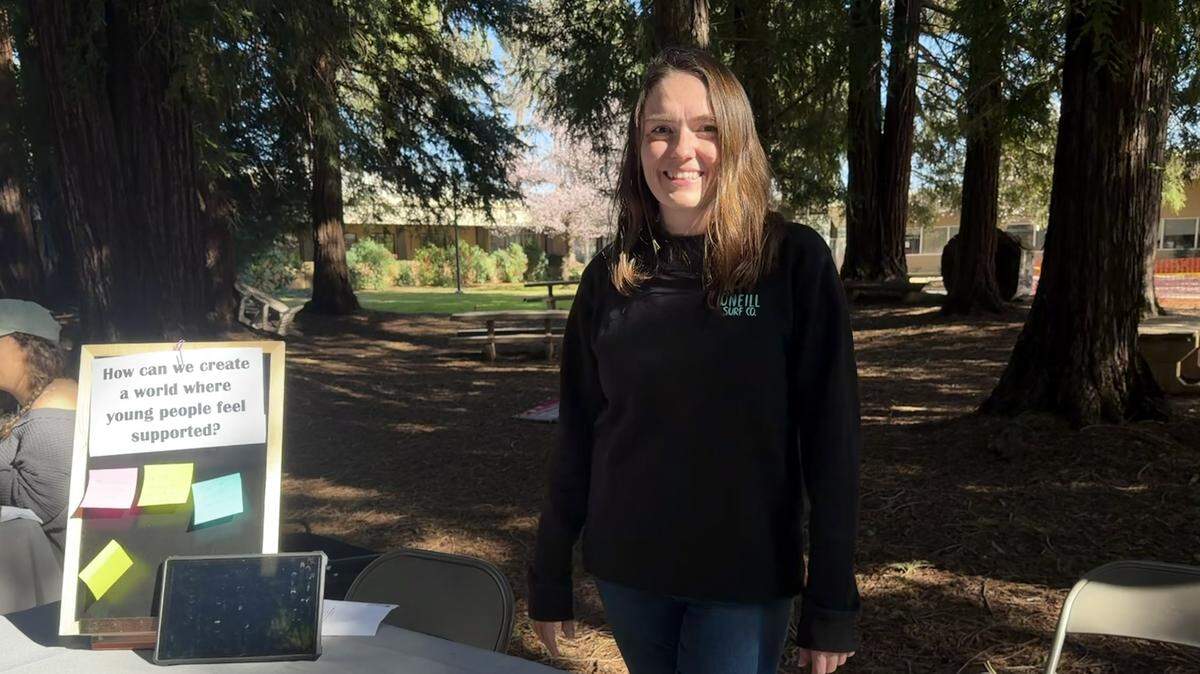
At a career day at Shasta College, a high school student walked up to instructor Joanne Tippin and told her she aspired to be a wellness coach at a school because she wanted to prevent other children from facing the kind of bullying she had endured.
Run by Tippin, the college’s wellness coaching program became the first in the community college system this April to be officially designated by the California Department of Healthcare Access and Information as offering the required curriculum aligned with a state certification.
As part of the statewide Children and Youth Behavioral Health Initiative, the certified wellness coach is a new professional pathway that seeks to build a larger and more representative workforce to support the social and emotion well-being of children and youth especially in underserved communities. On completing the required curriculum and earning the state credential, students become trained in early intervention and non-clinical support and are prepared to work at schools, community-based organizations and health centers.
“We have a huge need for mental health professionals in our area, and it feels like we can really change the trajectory of the mental health of our youth with these coaches,” Tippin said. “For our students, this designation gives them a really great foundation for their careers. They’re getting this great career-ready training and there’s jobs out there for them where they can start experiencing this very meaningful work.”
In addition to Shasta College, Santa Rosa Junior College and Southwestern College have has also been formally recognized by the state. With aligned curriculum and supervised field experience, the programs at these colleges ensure graduates are ready to apply for certification immediately upon completing their degree.
To be officially designated by the state, a community college’s associate degree curriculum must include a minimum of 60 semester units of relevant coursework and at least 150 hours of supervised field experience. A similar bachelor’s degree at the California State University campuses or private nonprofit schools must include 120 semester units of relevant coursework and at least 300 hours of field experience.
With the 2030 goal of state recognition for 80 of the California Community College’s 116 schools, the Foundation for California Community Colleges is administering grants worth up to $200,000 to support different campuses in launching or scaling programs aligned with the certification and core curriculum.
Funded by the Healthcare Access and Information department, the foundation has distributed $6.1 million to 32 colleges across four phases of funding since February 2024. In its most recent round, the foundation awarded grants worth $1.4 million this month to seven campuses including Coastline College and Santa Barbara City College.
“This program aligns really clearly with the foundation’s goal which is to support community colleges,” said Michael Quiaoit, senior director for equity and community impact at the Foundation for California Community Colleges. “In doing that, we are providing opportunities for students who can then serve their communities. The state’s youth behavioral health initiative is trying to relieve the stress on clinicians and help youth with their mental health.”
In the Sacramento region, Cosumnes River College and Folsom Lake College have received grants under this program.
In Spring 2025, Cosumnes River College received nearly $200,000 in grant funding. Since then, the school’s social work and human services program has used the money to hire an instructional assistant, create brochures, update learning material for students and host community information sessions, professor Brandy Jones-Thomas said.
“So far, it feels like we are more visible as a program,” Jones-Thomas said. “Students have attended program information sessions and community events. They are interested in learning to work with youth and need more training to understand youth needs. We are excited to offer clearer pathways for students interested in community healing careers.”
A full list of community colleges that have received this funding and are currently working towards state recognition of their programs is:
- Allan Hancock College
- Bakersfield College
- Berkeley City College
- Cañada College
- Cerritos College
- Chabot College
- Coastline College
- College of the Redwoods
- Cosumnes River College
- Cuesta College
- Cuyamaca College
- East Los Angeles College
- Folsom Lake College
- Foothill College
- Hartnell College
- Las Positas College
- Lemoore College
- Los Angeles Pierce College
- Mendocino College
- Merritt College
- Pasadena City College
- Rio Hondo College
- Saddleback College
- Santa Barbara City College
- Santa Monica College
- Santiago Canyon
- Solano College
- Southwestern College
- West Los Angeles College
- Ventura College.
This story was originally published May 15, 2026 at 4:04 PM.