Sacramento school board resists state agency’s urging to surrender to insolvency
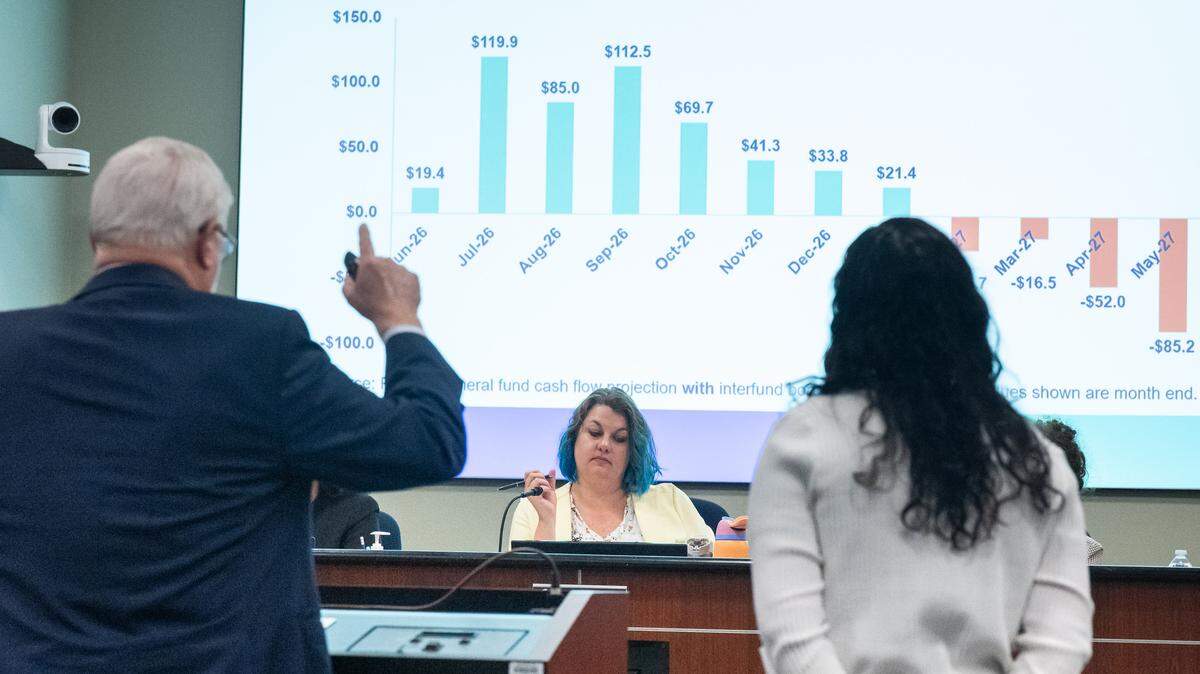
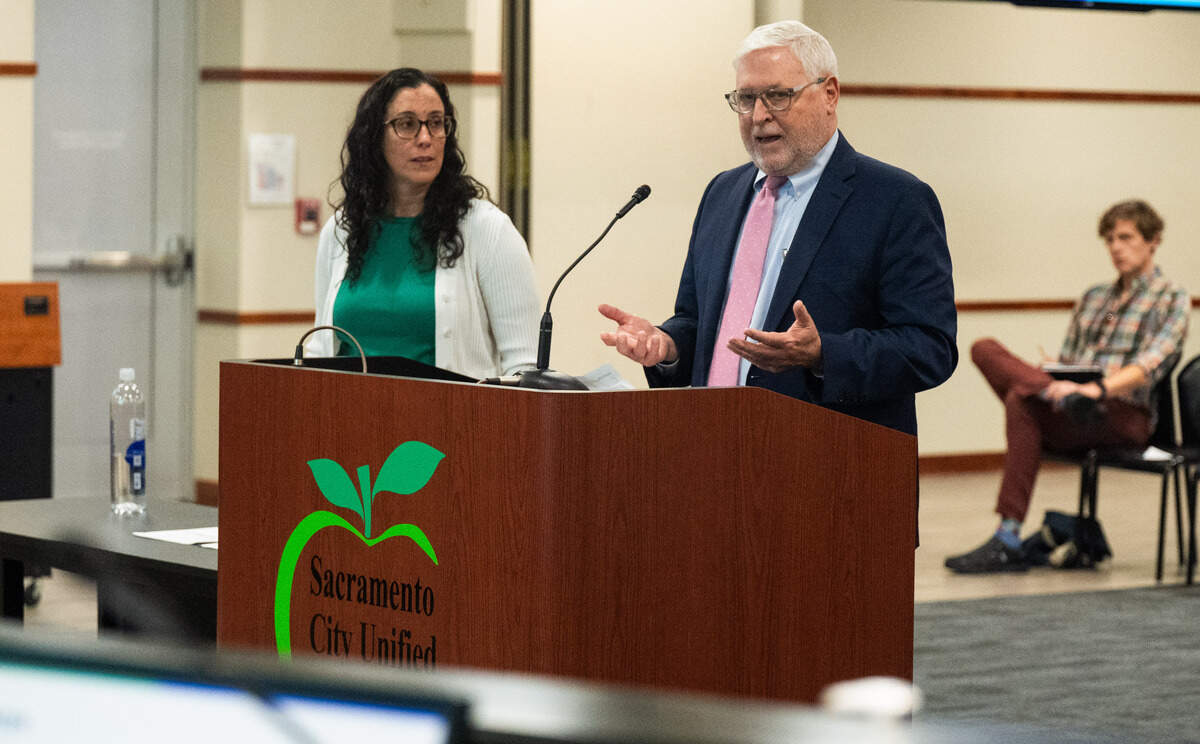
The mood in the Serna Center was decidedly grim Thursday night as the leader of a state financial agency told the Sacramento City Unified School District board that a state takeover is inevitable.
Michael Fine of the Fiscal Crisis Management and Assistance Team highlighted a word at the end of his presentation: “grief.” That’s the feeling associated with the reality of fiscal insolvency.
The emotional weight of the presentation was already apparent on the faces of the seven trustees, superintendent and student board member behind the dais.
By FCMAT’s analysis, the district will be out of money in February, if not January.
There are still variables at play that could affect the date it runs out of cash — like the governor’s May budget revision, which is anticipated to include more funding for schools — but Fine was clear: The district should request a state loan as soon as possible. If not, 5,000 school employees could go without pay until the loan arrives.
Despite the somber mood, some trustees were not convinced that their fate was sealed. Several of them held onto hope that some or all of those uncertainties could work out in their favor and save them from insolvency.
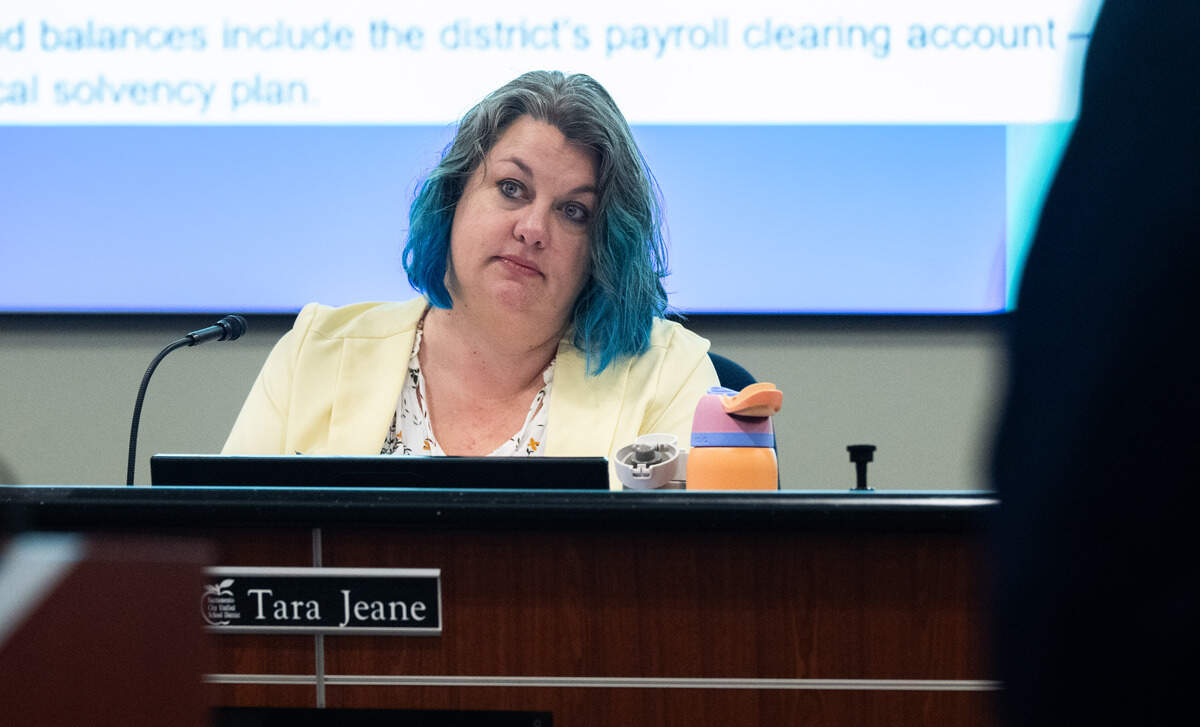
“We’re not giving up,” Board President Tara Jeane said.
Several were resistant to taking action on a loan anytime soon, but Fine emphasized a severe time constraint: the legislative schedule. If the district waits until after the current legislative session, it may not receive money until March or April, risking employees could go up to three months without pay.
School finance expert recommends state loan
FCMAT’s analysis looked at cash flow projections based on the district’s historic spending and the cuts it projected to make in its second interim budget. Fine noted that their analysis assumes the best possible outcome, and it’s likely the district could come up short sooner than January.
The district is slated to run out of money soon before 2027, but will be saved by receiving an emergency advance on its tax apportionment of about $111.1 million. However, by the time the district would usually get this funding in the spring, the money will already be spent. All borrowing options will be exhausted by February, Fine said.
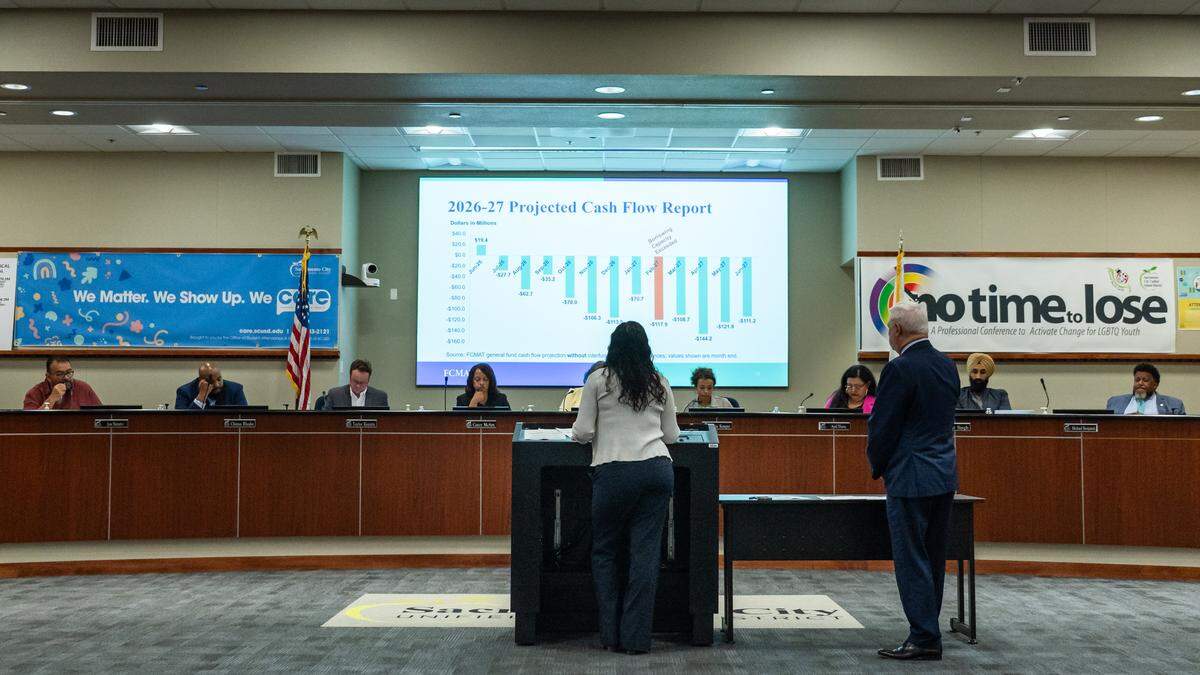
Fine, a school finance expert for three decades, strongly recommended that the board take action now since the loan would have to be approved by the Legislature. It takes time to get that action moving, and the current legislative session ends Aug. 30.
If the board were to wait until the next session, the earliest possible action would take place in late January, with funds becoming available in late March at the earliest, well after the district is projected to run out of cash.
This has never happened in the history of California — the laws surrounding school bailouts and the creation of FCMAT were designed to prevent this scenario. If the district can’t pay its staff or its utility bills, it’s unclear how the district would continue functioning.
“That’s why these statutes exist,” Fine said in an interview. “But we need time to access those protections.”
Trustees refuse state takeover
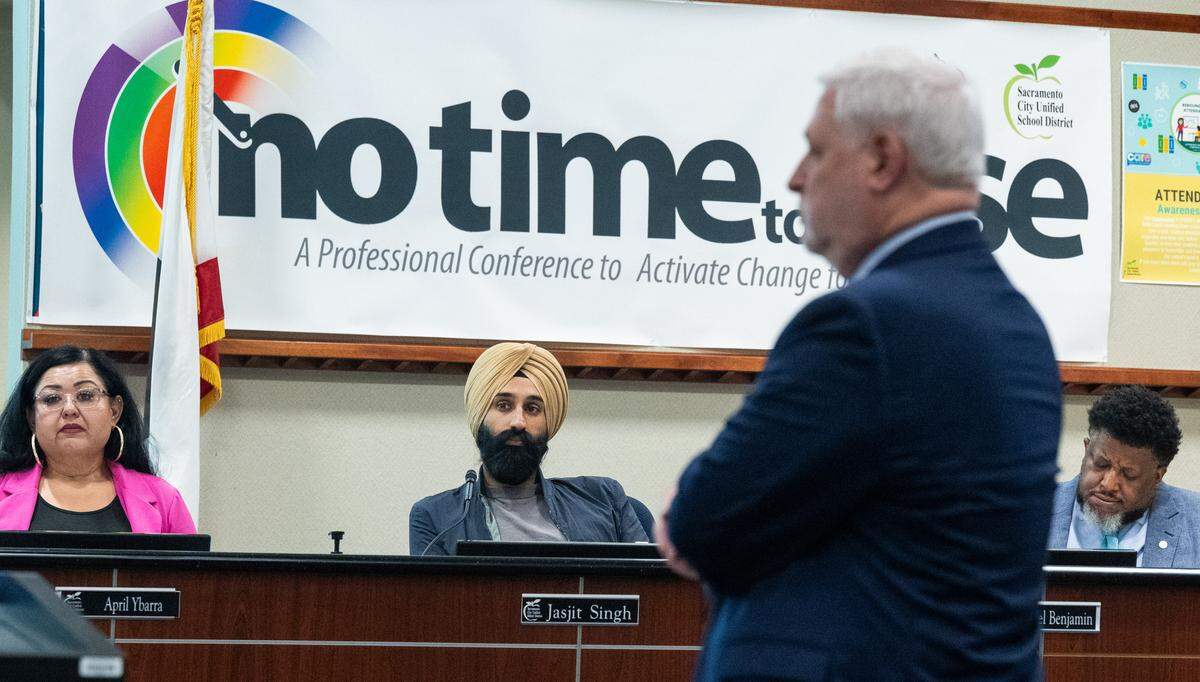
Still, trustees Tara Jeane, Jasjit Singh and Taylor Kayatta see a path forward without invoking state help. Singh said that he didn’t feel comfortable moving forward before seeing how much additional money the district could receive in the final state budget, adopted in June. School districts then have 45 days to revise their annual budgets based on the actual funding they will receive.
FCMAT’s cash flow analysis included the projections made for next year in the second interim budget, plus the district’s actual spending through March 31. Jeane voiced concern that the analysis didn’t include reductions identified since the most recent budget was adopted in March.
“We are asking for a way forward based on the locally elected leadership that are represented here and based on the superintendent that we’ve just hired with the full confidence that she’s committed to this district and committed to making sure we do not need to go to the state,” Jeane said.
“That would be great,” Fine said in response. “Just know that every day marches on, and you get closer and closer to the point where you run out of cash.”
“If we don’t make any changes before then,” Jeane said.
“Get the changes made,” Fine said.
A lot of changes would have to be made. So far this year, the district has identified $83 million over seven months, many of which represented one-time cost savings rather than ongoing savings, according to Interim Chief Business Officer Lisa Grant-Dawson. To stay solvent, the district would need to identify an additional $144 million between July and April.
What insolvency means for Sacramento
The board is hesitant to submit to insolvency because of the repercussions it will have on the community.
Taking a state loan means receivership — it means the loss of local control, the placement of interim leaders, rigorous oversight and indebtedness to California until the district can pay the loan back with interest.
Recently appointed Superintendent Cancy McArn would be out, to be replaced by a county-appointed administrator who would act in her role and assume the duties of the school board. The elected school board members would be powerless. The district would then have to meet over 150 standards set by FCMAT that range from financial management, student achievement and governance before the school board gradually regains its autonomy.
But the borrowed money would still need to be paid. Funds that could go to programming that would benefit students would instead go toward paying off the loan.
Even though elections will continue to be held, the trustees voters elected to office will hold no power, robbing the people of Sacramento of having any local control over district governance.
This story was originally published May 8, 2026 at 7:15 AM.