Kaiser teams with SEIU-UHW union to train 10,000 for health care jobs over next four years
Kaiser Permanente and the Service Employees International Union-United Healthcare Workers West joined Wednesday in announcing a $130 million effort to train 10,000 Californians for work as medical coders, licensed vocational nurses and other allied health professions over the next four years.
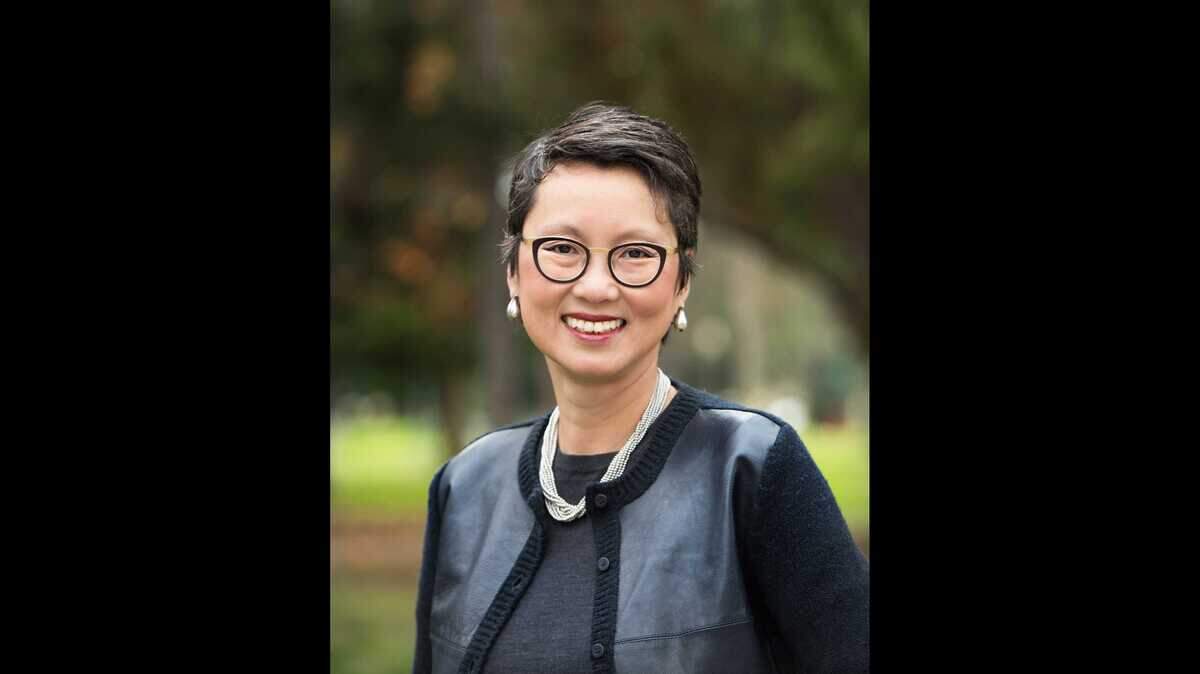
They have established a nonprofit, Futuro Health, and hired a leading veteran in the field of career technical education to accomplish the work of recruiting and guiding candidates toward credentials or licensing in the field.
Futuro’s new chief executive officer, Van Ton-Quinlivan, helped to recruit new workers to the energy field when that industry faced a skills drain due to the so-called silver tsunami of retiring baby boomers. Later, as a vice chancellor at the California Community Colleges, she led the effort to position the system and its students to take advantage of the expansion of technology and data science jobs.
She said she sees a number of challenges to growing the number of workers in the allied health care professions. The greatest one, she said, is that many of these jobs are invisible or hidden to most people.
“You might know what a nurse is, but you may not know what a licensed vocational nurse does versus a registered nurse,” she said. “They’re good jobs, and they might be a good fit with the personal aspirations of many individuals and what they want to achieve for themselves. There’s just not a lot of transparency on where the opportunities are and how you go from here to there.”
Let’s say you get into a car accident and need emergency care, Ton-Quinlivan said. The emergency medical technician who drives the vehicle and sees to your immediate care is part of the allied health care professions. So is the person who checks you into the hospital, the person who performs a sonogram and many of the people who perform your lab tests, she said.
They have attained credentials or licenses that allow them to do the work, she said. By 2024, California will need 500,000 new health care workers to serve its growing and increasingly graying population, according to data from the California Employment Development Department, and roughly 40 percent of those jobs will be in the allied health care professions. They are careers that require post-secondary certificates or associate degrees rather than a bachelor’s degree.
The public needs to be made aware of these jobs, said Ton-Quinlivan, and that’s a key part of the work she will do with the help of members of SEIU-UHW, with educational institutions and with community groups. Community partners, she said, were invaluable in helping California’s utilities spread the word about job opportunities in that field.
“We did the outreach with our community partners, and that was much more effective than doing it on our own,” Ton-Quinlivan. “We gave people an orientation to these careers and what it would take to move along the pathway. Then we helped them plan. What would it take to move along this path? For some people, it required support on transportation. Others had to rearrange their child care. Others had to work through rearranging responsibilities for the whole family – feeding them, getting them to school.”
Susan Chapman, a professor in the School of Nursing at the University of California, San Francisco, said this can be one of the biggest barriers: “The pathway from education to work has to be very thoughtful about where people are and what their life situation is and their circumstances to help them do that in a way that makes sense for them. They may not be traditional college programs. They may need to implement programs that allow people to work or work as they learn.”
For this reason, Ton-Quinlivan said, she’s looking for educational partners whose programs allow flexibility, and she’s already found one such partner: Western Governors University, an online college that will allow students some flexibility on when and where they learn.
Futuro Health also will have to ensure students know the pathway to attain the credential or degree to get the job they want, and it will work to ensure they have both the technical skills as well as soft skills such as the customer service skills needed to help with patients, Ton-Quinlivan said. The agency also will be looking to pair mentors from SEIU-UHW to model soft skills and provide coaching on getting a job placement.
There are often many steps to getting a job in a health care institution, Ton-Quinlivan said, and applicants need a bit of guidance to navigate that transition. She said her agency will be working with both individuals new to the health care field and with veterans looking to step into different jobs.
Often, veterans in the field have a hard time financing the coursework needed to get a new credential, she said, because they are still paying off student loans for the coursework that got them their first job. Futuro Health will help them figure out how to get the funding they need.
“We have functioned in a society where education and training has been considered a one-time inoculation,” Ton-Quinlivan said. “You get as much education up front as you can, and then it carries you throughout your lifetime. But the truth is that the economy has changed where you actually need not only the one-time inoculation but you need booster shots all along the way.”
Kaiser Permanente is making the initial $130 million investment to get Futuro Health off the ground as part of a labor agreement it reached with the Coalition of Kaiser Permanente Unions in October. The health care giant’s chief community health officer, Dr. Bechara Choucair, said Futuro Health addresses a critical gap in the education-to-work pipeline.
“The demand for health care workers, particularly here in California, is outpacing the number of people entering the workforce, and the need to invest in skilled development to prepare for those jobs is more pressing than ever,” he said. “That’s why we’re really excited about launching Futuro Health in partnership with SEIU to help address that gap, and we do believe that this investment in education and skills training, as well as the retraining will result in better care for patients, better-paying jobs for workers, and better workers for business to hire and retain.”
If you’re interested in learning more about the Futuro Health initiative, student prospects, workers, employers and community partners can sign up for emails at the group’s website, www.futurohealth.org.