California hospital leaders again appeal to Newsom for coronavirus financial relief
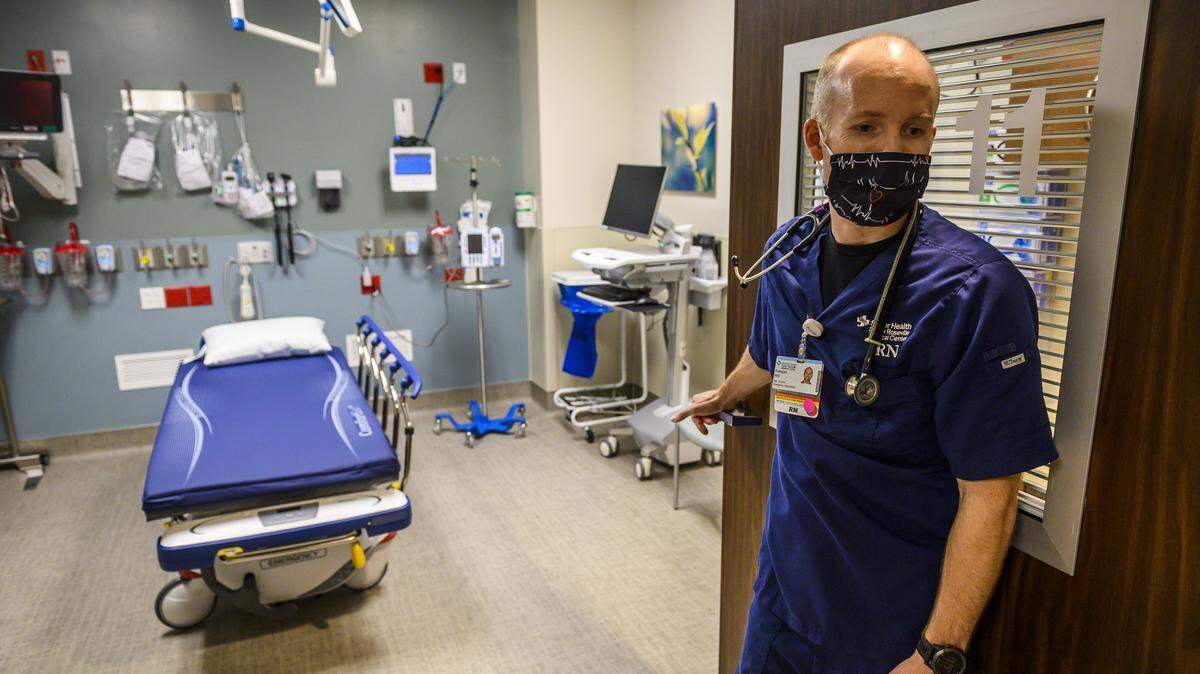
Hospital leaders have again called upon Gov. Gavin Newsom and state legislators to provide state financial relief as part of the 2020-21 California budget, saying billions of dollars are needed to help defray costs incurred as institutions prepared for and met a surge in cases connected to the coronavirus.
Newsom proposed a revised budget Thursday that did not include the $3.1 billion in state funds that hospital providers have sought.
The California Hospital Association has asked Newsom to set aside that sum and use it to leverage matching funds from the U.S. Centers for Medicare and Medicaid Services. CHA Chief Executive Officer Carmela Coyle has said California hospitals have lost up to $14 billion as they ended elective surgeries and ancillary services while suffering a 50 percent decline in emergency room traffic.
Billings for care of COVID-19 patients did not replace that income, she said.
“There is no question California is facing one of the most challenging budget years this state has ever seen — far worse than the Great Recession of 2009,” Coyle said. “As the budget is a reflection of the state’s values and priorities — even during devastating economic times when the state is working hard to return many sectors of our economy to more normal activity — it’s vital that hospitals be able to remain open, staffed, and ready for the state’s ongoing COVID-19 response.”
‘Incredibly impacted by this pandemic’
Joining her in a telephone news conference, two hospital leaders from rural north state counties said the cost of preparing for and operating amid the COVID-19 crisis had a devastating impact on the bottom lines of their organizations and hospitals statewide.
Louis Ward, CEO of Mayers Memorial Hospital District in Shasta County, said his 16-bed facility rented beds so they could expand to 35 when the state asked hospitals to double capacity.
They had only one ventilator and scrambled to acquire more, he said, because COVID-19, the respiratory illness caused by the coronavirus, robs lungs of their ability to process enough oxygen to satisfy other organs. They also had to source personal protective equipment, such as gloves and face shields, as well as hard-to-find supplies such as hand sanitizer.
They did all of this at a time when prices were soaring and when suppliers were looking to make the biggest sales, Ward said.
“We are off 38 percent in our expected revenue since March, which equates to over $3 million in revenue losses, and all the while increasing our expenses,” he said. “We chose not to furlough or lay off employees to date because recruiting is a significant challenge, as well as it would have a dire impact on our local economy.”
Gary K. Herbst, CEO of Kaweah Delta Health Care Center in Tulare County, said he’s had to make staffing cuts. He’s concerned about the impact that will have long term because hospitals in rural counties often find it difficult to recruit nurses and other highly skilled health-care workers.
“We now have 390 employees that are on leave of absence,” Herbst said. “We’ve got 1,100 of our employees who’ve now had their hours cut or docked and we have furloughed 184 employees at this point. So, not only has it been financially devastating to our organization, but also to our Kaweah Delta family of employees and physicians. The medical community has really been incredibly impacted by this pandemic.”
Visalia-based Kaweah Delta, a public hospital district with an annual operating budget of $800 million, was struggling to make ends meet even before the pandemic, Herbst said, and in the first eight months of its fiscal year, July 1 to Feb. 29, the district had a cumulative operating loss of $81,000.
Budget projections had estimated they would have nearly $13.5 million in operating income, he said, but the 650-bed teaching hospital serves a patient base that increasingly gets coverage from Medicaid and Medicare.
Those payers typically don’t pay enough to cover the cost of providing services, and that’s a challenge for a hospital that depends on overtime by its staff and high-wage contract work by so-called traveling nurses who work temporary positions in communities where there are labor shortages.
Even though Tulare County was hard-hit by COVID-19, Herbst said, Kaweah Delta suffered big losses as it canceled elective surgeries and closed many units that would have served ambulatory patients.
“We literally went from being at break-even ... through the first 10 months, and now we’re staring at a $21.2 million operating loss at the end of April,” he said. “I really don’t know what the future holds for us. We clearly will not be the hospital we have been in the past. ... I don’t know how many staff we will be able to employ. I don’t know how many services we will be able to continue to provide.”
Hospitals answered the call, now seek state help
The teleconference with Herbst and Ward was the second time that the California Hospital Association has had hospital leaders share the impact of the crisis on their operations with news organizations. They say they answered the call to expand services when California needed them, and now they need state leaders to help them recover from the financial devastation they are facing.
The federal government has provided assistance, Coyle and other leaders said, and Newsom’s revised budget cites that funding. But the state has not provided any funding.
In addition to the $3.1 billion sought in the 2020-21 budget, Coyle also sent a letter to Newsom requesting $1 billion in funding from the current budget.
The financial impact of hospital losses doesn’t just affect hospital operations, Ward said, especially in rural counties where hospital systems are often some of the biggest employers in the region. Ward chairs the board of the Critical Access Hospital Network, an industry group made up of small hospitals in rural areas that serve residents who would otherwise have to travel long distances for emergency care.
“When people consider company towns, think of the past — mills or steel companies — but today rural hospitals have taken those places,” Ward said. “Without those hospitals, these towns dry up, not only from a health perspective but from an economic perspective. Many of us are the economic engines in the communities we serve.”
This story was originally published May 14, 2020 at 6:06 PM.