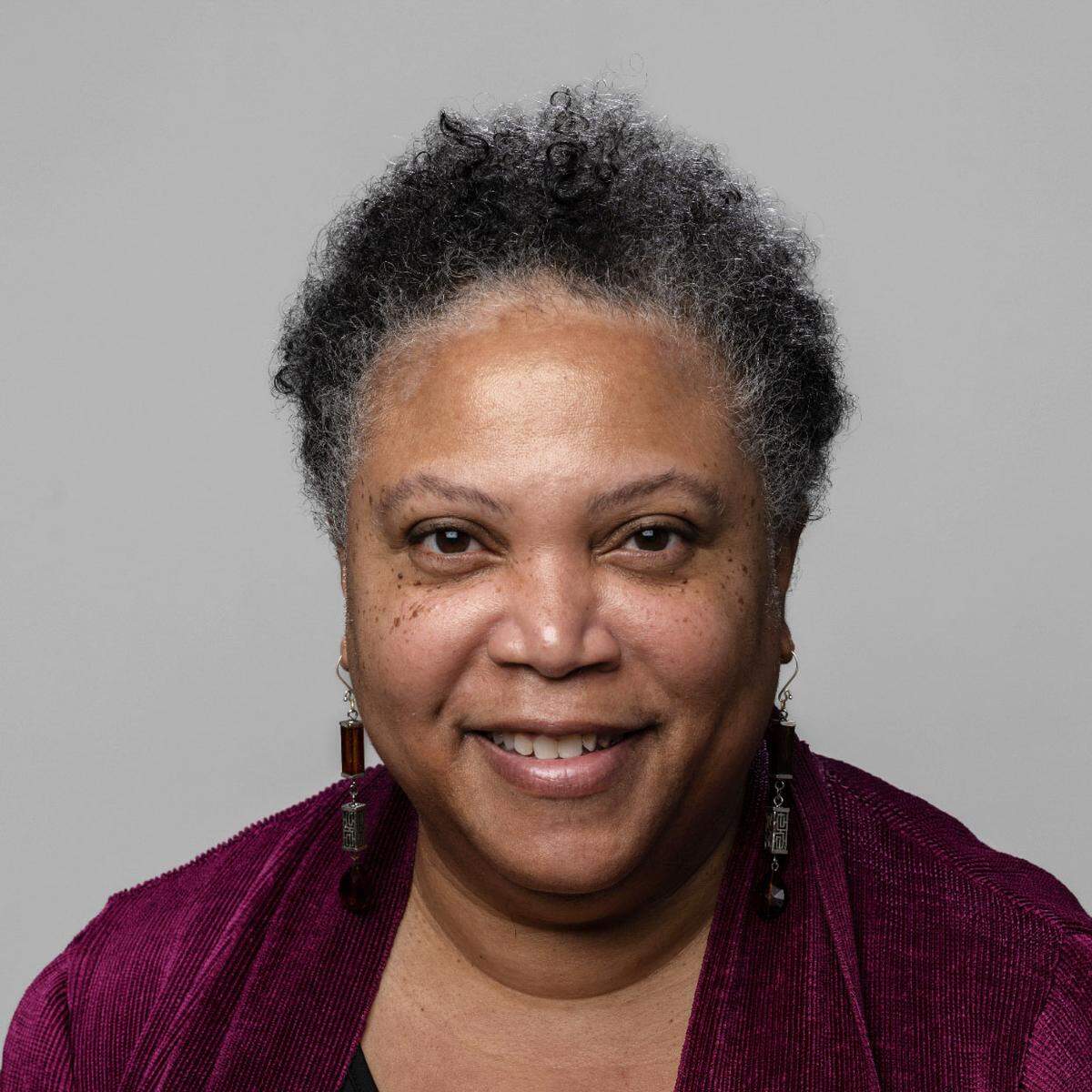
A Sacramento family blames racism, not coronavirus, for new mother being on life support
As Keona Hankston lay brain-dead Monday inside Sutter Medical Center, Sacramento, outside her family declared that, while the coronavirus led her to seek care at the hospital, it was not the respiratory illness that put her on life support.
“In less than a day, she went from laughing and telling me about being a new mom and how bad she was ready to come home and get away from the mean staff that was treating her like she was the plague,” said Hankston’s sister, Regina Gadlin. “Yes, my sister was infected with COVID-19, but let’s be clear that COVID is not responsible for her condition. It is the staff that disregarded her life and winged her procedure.”
In a statement emailed to The Sacramento Bee, Sutter officials said: “Providing compassionate, safe patient care is our highest priority and at the core of our mission. Our commitment to patient privacy, as well as legal requirements, prevent us from providing additional information.”
Hankson was about six months pregnant when she arrived at the hospital, and doctors told her they would have to perform a cesarean section to prematurely deliver her daughter, Melody, her family said.
Gadlin, who works as an operating assistant at another local hospital, said she called her sister every two hours and since she understood the language of hospitals, their mother, Karina McDaniels, asked her to be the family member to check in regularly with hospital staff.
Hankston developed a pain in her abdomen and when she showed her bare abdomen to Gadlin on FaceTime, she agreed that it looked unusually swollen. Doctors later said Hankston developed a hematoma, but that it was something they could treat with a bedside procedure.
Gadlin asked whether the procedure would require anesthesia and she said a doctor told her no, that they would require a completely different approval for that. The next time she spoke with a doctor, however, she learned that her sister had been intubated and given anesthesia to allow doctors to do surgery “because she couldn’t keep her composure.”
Panic overtook Gadlin when she learned that her sister had been intubated again. When COVID-19 intially surfaced in the United States, treatment called for intubation fairly early in the process, but doctors have since learned that led to more negative outcomes and have tried high-flow oxygen and other treatments to improve oxygenation in patients’ bloodstreams.
“I know a little bit about the procedure from my experience working at UC Davis hospital in the recovery room and the operating room for now, 11 years, so when they told me that my sister had to be intubated again, I panicked,” Gadlin said. “She had already been intubated. She had already had a difficult time, and from that difficult time, she was recovering.”
Melody was the first baby for Hankston, McDaniels said, and she was scared. Because of procedures implemented to limit the spread of COVID-19, Sutter Medical Center and other hospitals are not allowing family into their facilities.
“I told her to trust in God, that she was going to be all right, to just have God on her mind. She was scared, so we left each other on the phone, saying, ‘Goodbye,’ and I haven’t seen her since,” McDaniels said.
McDaniel and Gadlin said they can’t get answers from Sutter staff about what happened during the procedure performed just before Hankston’s health spiraled downward.
Since star athlete Serena Williams and platinum-selling singer Beyonce Knowles both experienced potentially fatal health setbacks during their pregnancies, public health officials are shining more light on the disparities in care faced by Black women.
Sacramento County, in fact, launched a website where they provide insights into the disadvantages African American women face when seeking obstetric care.
“Black women are four times more likely to die from pregnancy-related conditions such as cardiac issues and hemorrhage. Their babies are twice as likely to die, too,” county public health officials state. “These deaths are not explained by income, education or unhealthy habits.”
Despite increased income, access to insurance and academic achievement, they say, the mortality rates for college-educated Black women and their babies are often no better than for a white high-school drop out on Medi-Cal.
What is the difference? County health officials say it plainly: “Daily experiences of racial bias and discrimination are contributing significantly to health inequities and disparities More than half of these deaths are considered preventable.”
Gadlin said she wonders whether the combination of her sister being a COVID-19 patient and a Black mother doomed her chances of walking out of the hospital. African Americans make up 6 percent of California’s population, but 8.3 percent of state residents who are dying from the respiratory illness.
“Can they honestly say that they followed proper protocol, or did they mishandle saving her life and her care because of her situation, being an African American mother or a COVID-positive patient concerning and threatening to your staff?” Gadlin asked.
This story was originally published August 3, 2020 at 4:38 PM.