‘Disastrous’: 16 dead of COVID-19 at California nursing home with history of health lapses
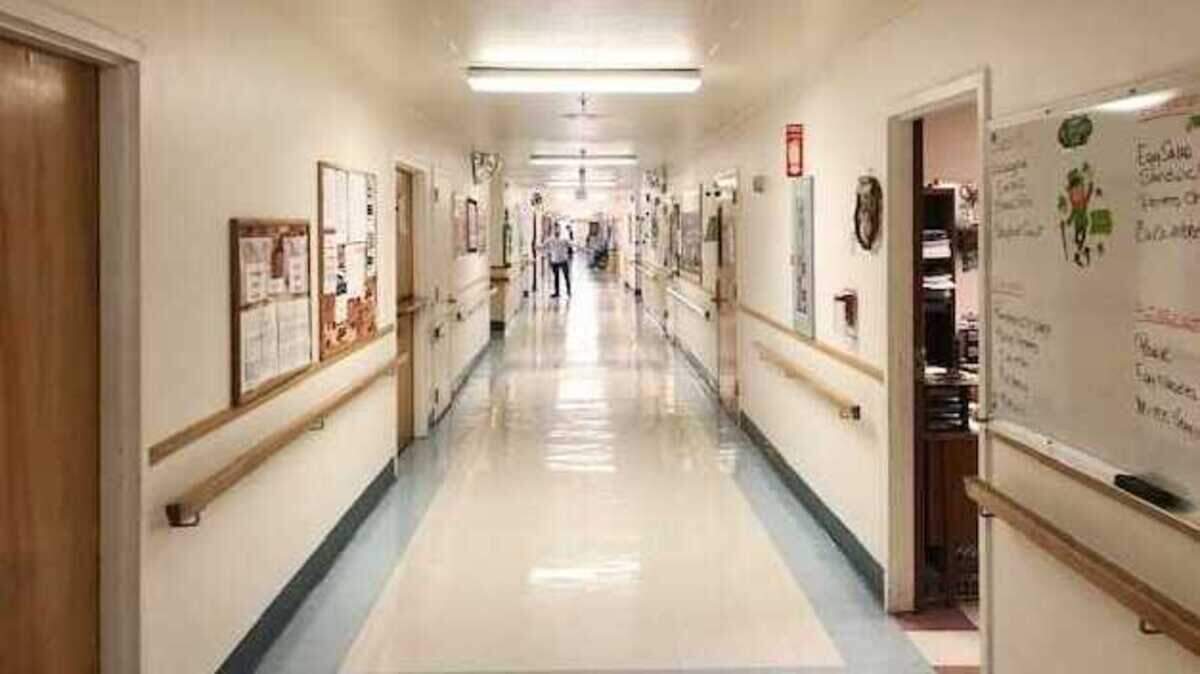
As a nursing home in rural Northern California recovers from a severe coronavirus outbreak that killed more than a dozen residents and infected close to 90 people, questions have surfaced about the facility’s health and safety protocols — including an allegation that it went through with an ill-advised patient transfer not long after its first COVID-19 cases emerged.
At least 16 residents of Kit Carson Nursing and Rehab Center in Amador County have died of the virus, according to a state data dashboard tracking COVID-19 activity in licensed skilled nursing facilities. That ranks it among Northern California’s deadliest senior home outbreaks during the pandemic.
Kit Carson in an update to its website on Friday confirms only 11 virus deaths connected to its facility, which houses nearly 200 residents in the city of Jackson.
Amador County’s public health office as of Tuesday reported the entire countywide COVID-19 death toll at 14. The county says it doesn’t officially confirm deaths as being related to coronavirus until full investigations are complete. In one news release from early last week, officials said “multiple” senior care homes accounted for all of the county’s 15 cases considered active at that time.
The county hasn’t explicitly disclosed any of the affected care facilities by name. But the local health office first reported in a July 21 news release that two cases had been detected at a skilled nursing facility within the county. Kit Carson is Amador’s only licensed skilled nursing facility.
Kit Carson declined to comment for this story. Reached by phone, a representative of the facility twice declined a Bee reporter’s request to speak with management or administration about any facet of the outbreak, deferring to a statement on its website. An email to Kit Carson administration seeking comment regarding the institution’s protocols also went unanswered.
Since the earliest weeks of the pandemic, it has been apparent that COVID-19 is generally deadliest to the oldest of populations and those with existing medical conditions. Skilled nursing and assisted-living facilities accounted for more than 4,900 of California’s 12,933 total reported COVID-19 deaths as of Monday morning — 38% of them — and have been the sites of some of the most horrific outbreaks documented.
Many — but not all — of the worst outbreaks have involved facilities with poor inspection histories as well as those with low ratings from the federal agency that ranks them based on sanitation, health protocols and other quality-of-life factors.
Kit Carson inspections show violations
The inspection history at Kit Carson, an hour’s drive east of Sacramento, is far from stellar, a Sacramento Bee review of records found.
The for-profit nursing home has a documented history of violations, according to state and federal records. It has a two-out-of-five star rating on the federal government’s Nursing Home Compare website, indicating greater-than-average health risk to residents, including just a one-star rating for health inspections, the worst score possible.
In a September inspection, surveyors documented 24 separate health citations, nearly double average for California and triple the national norm.
Among an inspector’s findings last fall: Employees failed to properly clean their hands when tending to a resident’s open wounds and did not don proper personal protective equipment when caring for a resident with a draining surgical incision in their groin. For 12 days, staff did not change a catheter that was supposed to be replaced weekly.
And, records show, the inspector saw multiple Kit Carson employees use dirty pill cutters covered with residue from other drugs when they were dosing resident medications — a blatant violation of the nursing home’s infection prevention guidelines.
In Kit Carson’s most recent update to its website, it reported having one active coronavirus case among residents, plus 39 recovered cases, 11 deaths and six negative tests. It also lists 39 positive employee cases total, nearly double the 22 staff infections documented by the state, but says those 39 have all recovered.
That adds up to 90 positive COVID-19 cases connected to Kit Carson, which would represent almost 40% of the 234 that Amador County has reported to date as of Friday, 106 of them Jackson residents. Not all nursing home staff, though, may reside in Jackson or the county.
A statement that has topped the Kit Carson website for more than a week thanks the Jackson community and residents’ families for their support, and says the outbreak situation has been improving.
“From our first COVID positive case, we are grateful to be able to say our numbers have lowered significantly,” the statement reads, in part. “We continue the tireless work with Amador County Department of Public Health along with the partnership of Sutter Amador Hospital to manage the outbreak and ensure quality of care for our residents.”
Allegation that Kit Carson flaunted protocols
A director for a separate group of Amador County-based assisted-living facilities — elder-care homes that offer long-term residence but provide a lower level of medical care than skilled nursing homes — said Kit Carson went through with the transfer of a rehabilitating resident back to one of his homes without officials or staff informing the receiving facility that Kit Carson had positive cases.
This transfer was initiated and occurred three days after the county’s low-profile confirmation of Kit Carson’s outbreak, said Ron Regan, a managing executive director for AssistCare Communities of Amador County, which operates ARC and three other local assisted-living facilities. Regan also said Kit Carson didn’t perform or permit a more up-to-date COVID-19 test before moving the resident.
The ill-fated patient had been in the care of Kit Carson for about two months while recovering from a medical procedure unrelated to COVID-19, and was moved back to her previous residence, 49-bed Amador Residential Care, in late July.
Within about a week of the transfer, she tested positive for coronavirus at a hospital and died.
Regan told The Bee this patient’s tragic story in a recent email responding to the publication’s Aug. 14 story centered on COVID-19 in Amador County. In his email, Regan expressed serious concern about Kit Carson’s pandemic protocols.
Regan said he believes Kit Carson at the least violated ethical and industry health standards, along with the state’s mask mandate, in its handling of the woman’s transfer, which he phrased as “disastrous” and said likely exposed ARC staff and residents to the respiratory disease.
Since that transfer, at least one other resident and five employees at ARC have tested positive for the virus, he said.
On July 24, Kit Carson requested that the recovering patient be returned to her prior permanent residence of ARC, Regan said. That would have been a relatively standard procedure before the pandemic; but in line with its coronavirus protocols, ARC requested a “care assessment and a COVID test prior to the return.”
“Kit Carson denied ARC access to the patient based upon restriction to entry by non-essential 3rd parties (ARC staff),” he wrote. “Kit Carson also stated that the last swab test was negative, albeit 5 days previous.” Regan said he was told Kit Carson tests its residents weekly, absent symptoms.
Anthony Chicotel, an attorney with California Advocates for Nursing Home Reform, says he’s not aware of “any specific affirmative obligation of nursing homes to disclose the status of COVID-19 in its building before sending a resident to a new facility.”
But that doesn’t mean they shouldn’t do so anyway.
“If Facility A knew it had active COVID cases and did not tell Facility B, shame on them,” he said. “That would be a self-interested and dangerous move.”
Even prior to the COVID-19 crisis, a patient transfer of this kind would normally require the approval from not just both facilities, but also the patient’s doctor. Regan acknowledged at least one mistake on ARC’s end: despite Kit Carson allegedly declining to have the resident take a more recent test first, a communication breakdown among ARC staff and management led the transfer to proceed anyway.
ARC ended up sending a van to Kit Carson to pick up the woman the afternoon of July 24, he said.
Stomach pain, ‘bile’ and death
ARC’s driver wore a mask as he made the short drive across Jackson to get her, but the patient and the Kit Carson attendant accompanying her “did not have (a) mask or any other PPE gear” on at the time of the pickup, Regan wrote.
If true, that would represent a violation of the statewide face covering mandate that’s been in place since June 18, which includes both health care and transit settings.
“The fact that Kit Carson, a long term care (LTC) facility was aware that it had positive (patients) and failed to provide this information to ARC was disastrous,” Regan wrote.
The woman transferred July 24 was placed into a designated quarantine room at ARC that afternoon, in line with the assisted-living home’s COVID-19 procedures, Regan said.
The next morning, July 25, she “complained of stomach pains” and threw up “bile like material,” Regan told The Bee by email. She collapsed to the floor. Medics took her to a nearby hospital.
By 2 p.m. that day, the hospital notified ARC of a positive test.
Chicotel says a skilled nursing home’s COVID-19 status “should not be a mystery since it’s supposed to be publicly reported and then posted” on the state health department’s data dashboard, and a facility on the receiving end of a transfer would be wise to “quarantine any new residents without a negative test and treat the new resident as if they were positive just to be safe,” which is what Regan says ARC did in this case.
The facility closed and sealed off the room the woman had been in and sent home three caregivers who had tended to her so they could self-isolate, according to Regan, who did not identify the woman by name.
The patient died at the hospital about a week later, near the start of August, he said.
About five days after the transfer, a resident in the room adjoining the victim’s at ARC became sick and was also sent to a hospital. That patient tested positive for coronavirus while hospitalized, but is “doing well” and has since been sent to a convalescent home elsewhere in Northern California to recover, Regan said.
ARC has been working with the county health department to test all of its residents and staff. Regan said in two rounds of test results July 31 and Aug. 7, two employees and no additional residents returned positive for COVID-19. The two infected staff members were separate from the three workers who self-isolated, he said.
The AssistCare website says at least eight cases have been linked to its four living homes: the two ARC residents, five ARC staff and one employee of Jackson Gardens. No currently active staff or resident cases are in those buildings, the site says.
“There have been a number of employees who have not returned to work, which causes issues with staffing,” Regan told The Bee late last week. “Residents are not moving in, so the economics are not good for our companies.”
A separate state data dashboard for virus activity at licensed assisted-living facilities, maintained by the Department of Social Services, acknowledges at least one resident death at ARC. More precise numbers for individual facilities’ infections and deaths are obscured, part of another privacy measure. (The state also doesn’t list coronavirus numbers for assisted-living homes with fewer than seven beds.)
In his email, Regan said the woman’s death might be a double-count, included in both ARC and Kit Carson’s state-tracked coronavirus numbers due to her extended residence at both facilities. Because the woman allegedly died less than 24 hours after returning from a two-month stay at Kit Carson, the AssistCare website continues to list its death toll from COVID-19 as zero.
What do state COVID-19 guidelines say about facility transfers?
Regan alleged that Kit Carson knew about its confirmed COVID-19 cases at the time of the rehabilitating patient’s transfer, but did not inform officials at ARC. He said this lack of information had “disastrous” consequences.
However, as Chicotel suggested, the state guidelines are less explicit in detailing how a facility should handle a transfer when the residents who are being moved aren’t suspected or confirmed to have the virus themselves, but others at the facility do.
The California Department of Public Health has issued nearly 70 “all facility” memos this year to the facilities it governs — which include skilled nursing facilities, hospitals, clinics and more. A vast majority of the bulletins sent since late January have been directly related to COVID-19 protocols.
A handful of them, including one from May, detail the rules for transferring residents who do have a confirmed or suspected infection into or out of a skilled nursing home.
“Prior to transfer, SNFs must notify transport personnel and receiving facility about the suspected diagnosis,” one rule reads.
The state has more recently recommended that skilled nursing facilities develop a plan, in conjunction with CDPH and local health officials, for “how results will be communicated to ensure appropriate management when residents are transferred to other congregate settings.”
This memo came at the end of July, a week after the ARC-Kit Carson transfer. It also includes a requirement that facilities with one or more COVID-19 positive individuals should test all residents every seven days until no new cases are found for two straight weeks.
This story was originally published September 1, 2020 at 12:33 PM.