
Monkeypox symptoms, causes, origin: What to know about rare virus in California
What is monkeypox?
Monkeypox comes from the monkeypox virus and is from the orthopoxvirus family, where smallpox also belongs. However, according to the World Health Organization, monkeypox is less contagious than smallpox and results in milder illness.
According to the New Jersey department of agriculture, the first human case of monkeypox was found in the Democratic Republic of Congo in the 1970s, and is considered an endemic in Central and West Africa.
The name monkeypox comes from the first documented cases in 1958 when two outbreaks occurred in monkeys kept for research, according to Rodney E. Rohde, a microbiologist at Texas State University. “However, the virus did not jump from monkeys to humans, nor are monkeys major carriers of the disease,” he said.
How do you get it?
According to the WHO, people can get the virus from close contact with an infected person or animal. The virus can spread from lesions, bodily fluid, respiratory droplets and materials contaminated with the strain.
The disease is zoonotic, meaning the virus can be transmitted between animals and humans. However, monkeys are not the primary carrier of the virus.
What are the symptoms?
Monkeypox symptoms start with fever, headache, tiredness and muscle achese, according to the U.S. Centers for Disease Control and Prevention. Unlike smallpox, monkeypox also causes lymph nodes to swell.
Then from one to three days, after the fever, a rash will develop with lesions on the face then body. The lesions typically start off flat, then raise and fill with liquid. Eventually, it will scab and fall off.
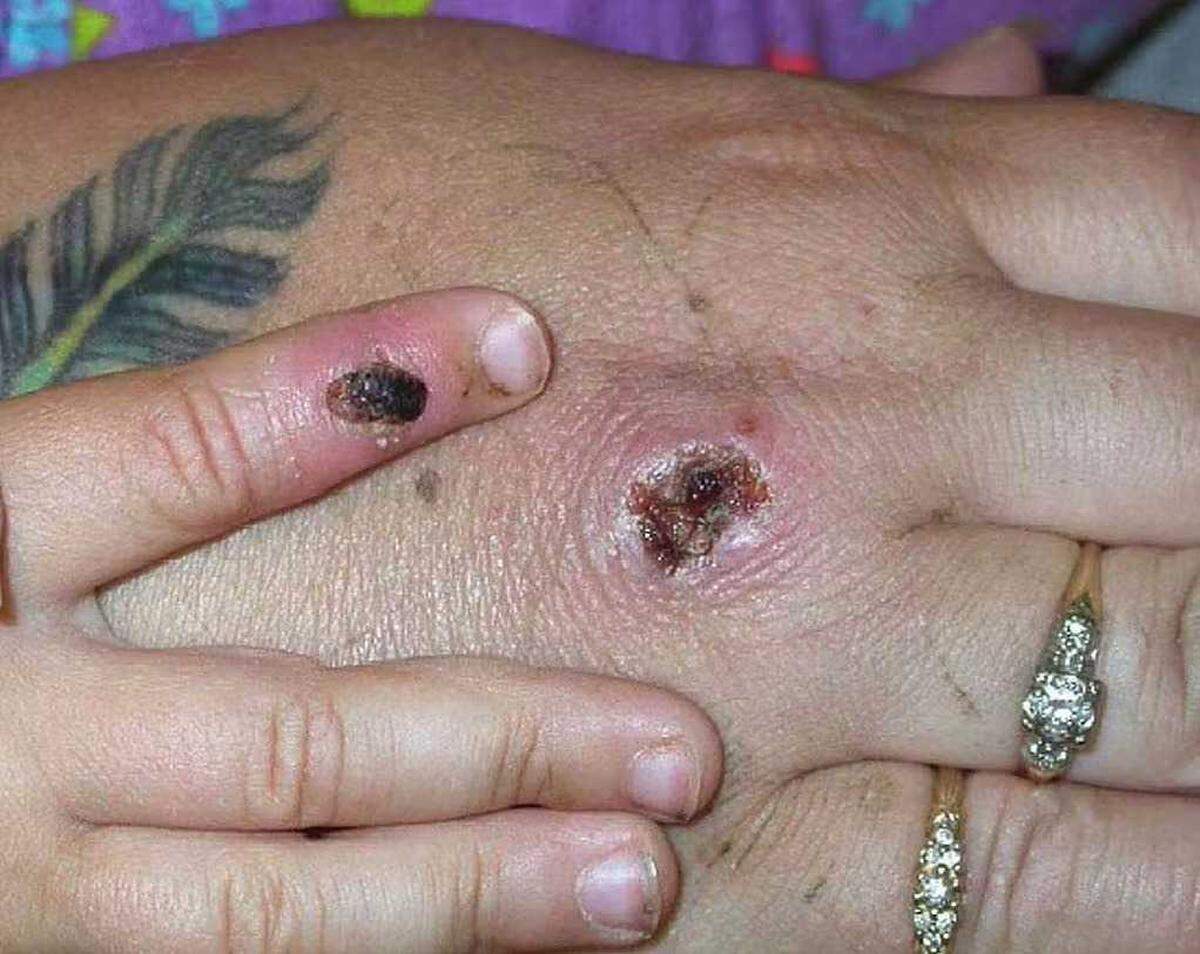
The agency said illness lasts two to four weeks.
“While monkeypox is rare and usually non-fatal, one version of the disease kills around 10% of infected people,” said Rohde. “The form of the virus currently circulating is thought to be milder, with a fatality rate of less than 1%.”
How to test and treat monkeypox
Monkeypox can be lab tested by sampling the skin lesions or conducting a biopsy where a piece of tissue is removed and tested.
According to the CDC, there is currently no specific treatment for monkeypox. The WHO said clinical care includes relieving symptoms, assisting complications and preventing long term illness. This entails maintaining nutrition and treating bacterial infections.
The agencies advise getting vaccinated against smallpox.
“Because monkeypox virus is closely related to the virus that causes smallpox, smallpox vaccine can also protect people from getting monkeypox,” according to the CDC website. “Past data from Africa suggests that smallpox vaccine is at least 85% effective in preventing monkeypox.”
This story was originally published May 24, 2022 at 11:06 AM with the headline "Monkeypox symptoms, causes, origin: What to know about rare virus in California."