UC Davis opens wellness office to promote healthy living with facts on diet, exercise and more
Consumers today get bombarded with advertising for mobile training apps, exercise equipment and even gummy bears promising to help them lose weight or maintain their fitness.
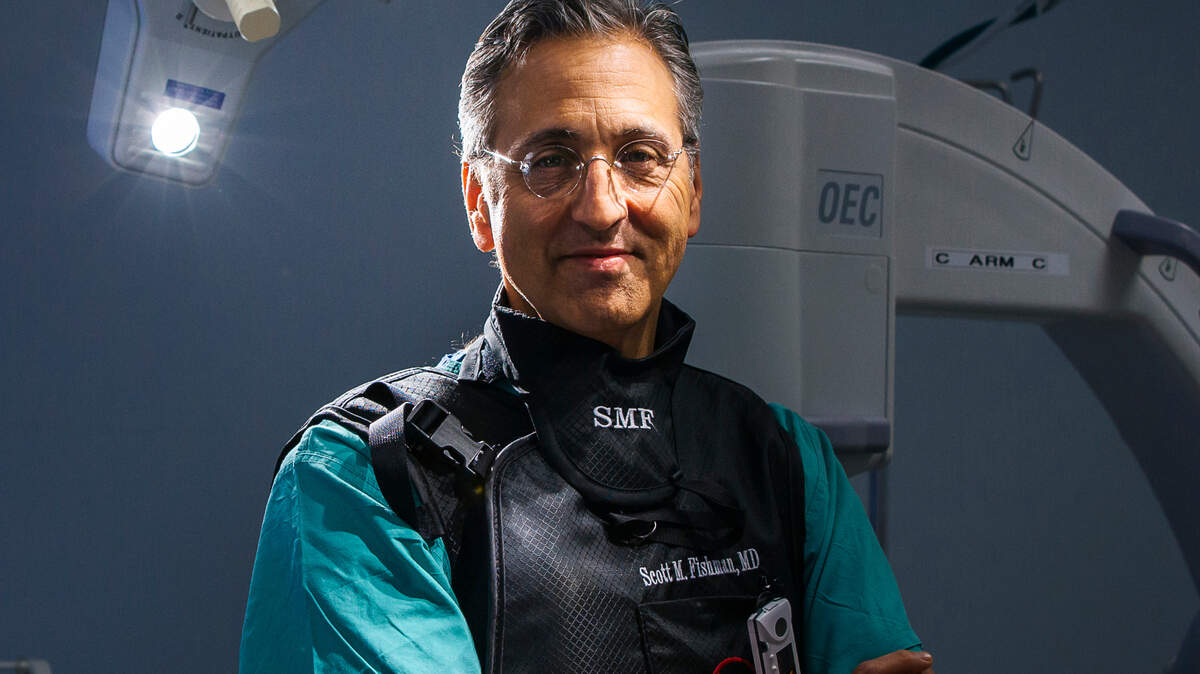
Oddly, though, they don’t hear much on those subjects or wellness in general from the companies that they rely upon for health care advice and treatment. That is something that the UC Davis Health and Dr. Scott Fishman are now working to change.
“Health systems ..., they’re really disease response systems. Everyone who comes into the system typically has a diagnosis and is looking for help and, and they want to get well from a problem that they have,” Fishman said. “The systems really aren’t set up to help people avoid needing health care. I think most people recognize that’s the best care. The best way to avoid problems is to never have the condition.”
Fishman is heading up a new Office of Wellness Education at UC Davis Health. His team will be providing information on a website in magazine-style articles, in video and audio productions and in newsletters.
“My hope is that we can help our community by providing some of the science, and where science isn’t known, some of the consensus and some of the reasoning for beliefs around how to have a healthy diet,” Fishman said.
Not everyone has the same opinion about how to achieve wellness, Fishman said, but what everyone wants is unbiased information that has been proven to work. People have a lot of questions when it comes to health, Fishman said: How can they sleep better? How can they eat better? What’s the best method of exercise?
“If you try to get information,” he said, “you’ll find that there are a zillion resources out there, but they’re all trying to sell something or all have kind-of an ax to grind or a position to take rather than giving a really neutral, unbiased approach.”
‘Not just about food and sleep’
Fishman said he plans to “let people make choices for themselves around healthy exercise and stress management and really prevention, all of the things that we’re impacted by – not just about food and sleep and thought and movement but also our environment and even our social system.”
Fishman’s team is also planning local events, where they’ll invite doctors, physical therapists and nurses to team up with chefs, food scientists, coaches and exercise scientists.
While many people may believe that wellness is about changing habits or making different choices, Fishman said, other aspects of pursuing wellness are less apparent. For instance, he said, there is the biology of belief.
“There’s a very well-known study where people are given the same meal,” he said. “It’s a meal that is plant-based and very healthy.”
If those who ate it believed that plant-based meals were healthy and enjoyable, Fishman said, they reported being satisfied and less hungry, but those who saw plant-based meals as healthy but not enjoyable said they were still hungry.
“There are things that we didn’t know even 20 years ago,” Fishman said. “We know the hormones that get released that trigger our brain to feel satisfied. If you believe that the meal is going to be satisfying, the hormones actually release. And if you believe the meal is not going to be satisfying, then they don’t release, even though you’re having exactly the same meal.”
Why UC Davis is launching center now
The office launched July 1 with funding from Sacramento-area native Jim Anderson, a scion of the family who founded Pacific Coast Building Products. He gave $5 million in honor of his late wife, Jacquelyn “Jackie” Anderson, an artist and photographer who was passionate about health and wellness. She passed away from cancer in March 2021.
Sacramentans will have the chance to get to know Jackie Anderson better in spring of next year when Anderson launches The Jacquelyn Project, an art gallery in downtown Sacramento that will showcase Jackie Anderson’s artwork and photography. The gallery will be free, Anderson said, in the hopes of inspiring young artists and all who visit.
Fishman, the chief of the division of pain medicine at the academic health system, said that he and Jackie Anderson shared a passion for the pursuit of wellness. He is just getting the wellness office up and running, laying the groundwork for the wellness programming and how to evaluate its work.
While this office will be doing a lot to educate the community, Fishman said, it will also be creating similar programming to inform students in the medical school, nursing school and other health care majors as well as practicing clinicians at UC Davis Health.
If UC Davis Health is successful in integrating this new mission, Fishman said, physicians will get involved in helping patients maintain good health rather than stepping in after they come for urgent care or a visit to the emergency room or intensive care unit.
This isn’t something that physicians have traditionally done because insurers and other organizations that finance the health care system in the United States really don’t pay for wellness as part of the preventive medicine, Fishman said.
“The systems really aren’t set up to help people avoid needing health care,” Fishman said. “As a pain specialist, ... I treat a lot of people with chronic illness that, in many ways, may have been preventable through lifestyle changes that could have happened earlier. As such, I’ve become very aware and concerned that maybe we’re not doing enough for our constituents.”
The University of California, Davis, and the team at the Office of Wellness Education are particularly well-situated to lead such conversations, Fishman said, because so many researchers there are experts in food, agriculture and the environment and because they’re surrounded by agricultural producers who feed the state and nation.
“I think we have an obligation to do this because of all the plentiful resources that we have here,” Fishman said, “and ... this is clearly a deficit in health care across America. We’ve got to step up. What you see in healthcare is that we look at wellness as a workforce issue, but we need to make it a patient and consumer issue.”