
Monkeypox in California fact checks: How does it spread and who is affected?
California has reported more than 2,600 cases of monkeypox, or the MPX virus, since May.
In early August, President Joe Biden declared the MPX virus a national health emergency in response to the disease that has disproportionately affected gay and bisexual men.
After the initial outbreak, misinformation about who can get the disease and how it can spread has surfaced, said Dannie Ceseña, director of California LGBTQ Health & Human Services Network.
“By different folks saying it’s transmitted through sex and it’s a gay disease or it’s only affecting gay and bisexual men, we’re putting on negative stigma of something that should be addressed ” Ceseña said.
The Bee talked to Ceseña, as well as UC Davis infectious disease expert, Dr. Dean Blumberg, to dispel misinformation about the MPX virus, including who can contract it, how it can be transmitted and how it does not compare to the coronavirus outbreak.
Here are myths and misconceptions about monkeypox, debunked:
Myth: Only gay or bisexual men can be infected with monkeypox
According to the U.S. Centers for Disease Control and Prevention, men who have sex with other men make up the majority of cases affected by the virus — but they aren’t the only individuals who can get infected.
“Right now, yes it is primarily gay and bisexual men who are testing positive for this, but we also have to think about who isn’t going to get tested,” Ceseña said.
Anyone could get the virus, and everyone needs to be careful and aware of it, he said.
“Now, certainly as a clinician, anyone who has a suspicious rash … we want to send a test for that,” said Blumberg, chief of pediatric infectious disease at UC Davis. “We want to make sure we diagnose it correctly.”
Ceseña, who oversees the LGBTQ HHS Network that is headquartered in Sacramento, said this misconception can lead to consequences about how the virus is treated in California.
“Many folks in public health departments aren’t seeing this as a super huge issue,” he said. “It’s like, ‘oh well this is only happening in LA or San Francisco’ when ... this can happen anywhere across the U.S.”
In Sacramento County, 110 monkeypox cases have been reported, according to the latest update from county health officials.
According to the CDC, California has the second highest number of reported cases in the U.S., behind New York.
The first California monkeypox case was discovered on May 24 in a resident who recently returned from international travel.
This map illustrates the number of monkeypox cases across the U.S.
Blumberg added that men who have sex with men remain at the highest risk for it, and specifically those who have multiple sexual partners.
Myth: Monkeypox can only be spread through sex
Monkeypox is primarily spread from prolonged skin-to-skin contact — which can occur from hugging, sleeping in the same bed or sexual activity.
“It’s not necessarily transmitted just through fluids from the sexual act, so that’s why it’s not a sexual transmitted infection,” Blumberg said.
The virus can also be spread through direct contact with scabs, rashes or body fluid from an infected individual, according to the Mayo Clinic. The vast majority of cases are transmitted by people with visible skin lesions or rashes in their mouth, Blumberg said.
The virus can also be passed from a pregnant person to a fetus through the placenta, according to the CDC.
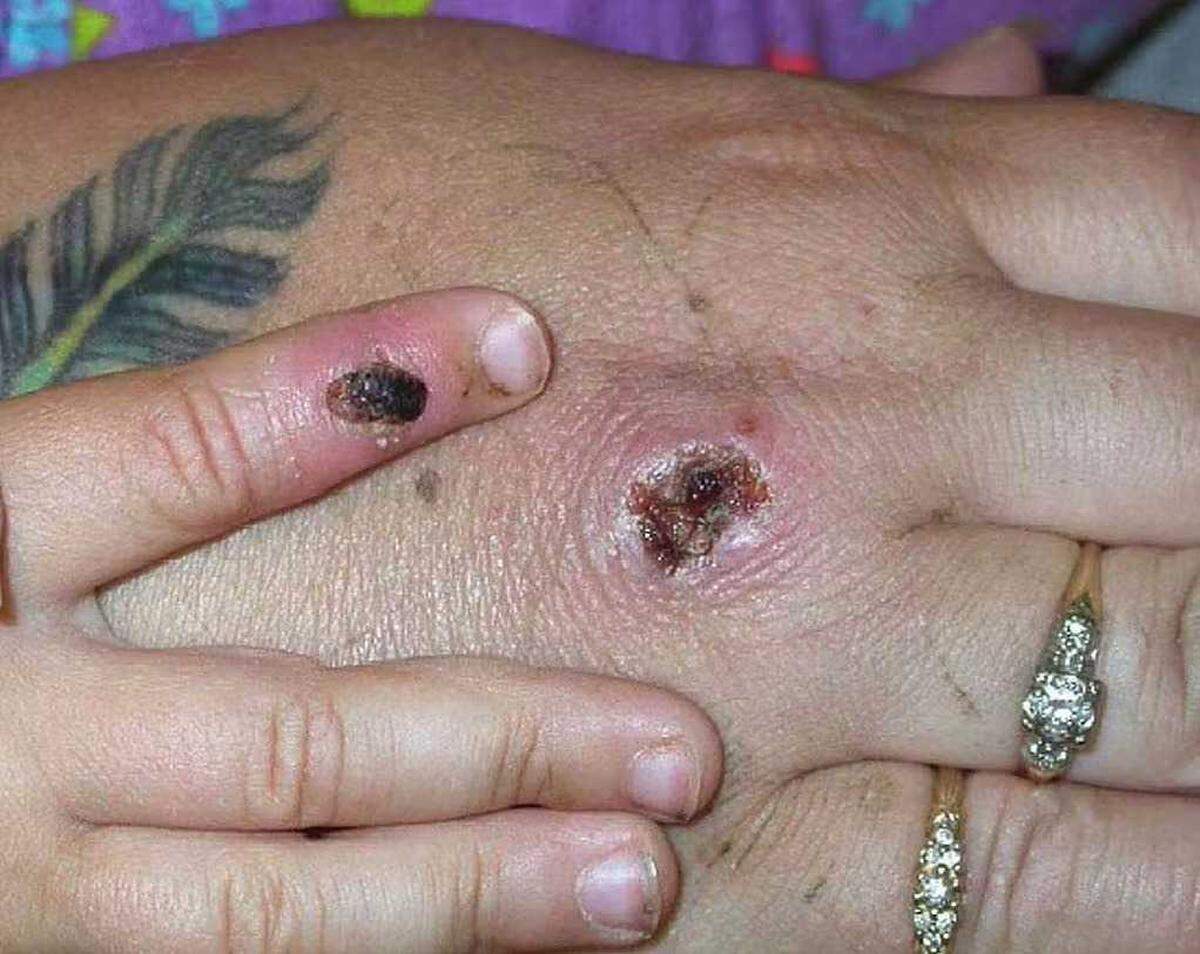
Ceseña said framing monkeypox as an STI only creates more negative stigma around a viral disease that requires treatment.
“An STI does not mean that anyone is immoral or anything like that, but that’s the first thought everyone has … when the truth is anyone can get this with non sexual contact,” he said.
The sexual orientation of an individual also does not make a person predisposed to monkeypox, he added. It does not discriminate against the person, whether they’re in a straight, gay, bisexual or lesbian relationship.
Myth: You can get monkeypox from brief contact with surfaces
Monkeypox is most likely not transmitted from contacting things an infected person has touched, although theoretically, this is possible, Blumberg said.
“For example, somebody who is infected sleeps in a bed and somebody else sleeps in that bed and has prolonged contact with the bedding or the linens, then it may be transmitted via the contaminated bedding,” he said.
But when it comes to doorknobs, window handles, groceries, mail and elevator buttons, Blumberg said there’s no reason to worry about getting the infection from brief exposure.
“Even if an infected person touches those surfaces, the chances of transmission are extraordinarily low,” he said.
Myth: Monkeypox is just like COVID
Two and a half years into a pandemic, the world is familiar with infectious disease. While it might seem logical to compare the COVID experience with the rise in another virus — the two are vastly different.
“There really is no comparison,” Blumberg said of the two diseases.
The main difference, he said, comes down to the way it is spread. While COVID spreads through the air, the MPX virus’ primary avenue of transmission is from prolonged skin-to-skin contact, according to an article from the scientific journal Nature.
Another distinction between the viruses is their longevity. Coronavirus emerged in 2019 and is a much newer disease compared to the MPX virus, which has been around for at least 50 years. The first human case was recorded in 1970, according to the CDC.
“They’re really quite different pathogens,” Blumberg said.
Scientists are still determining if the virus can spread from someone who is asymptomatic, like with COVID, or how often it spreads through respiratory secretions such as breathing, according to the CDC.
Testing for the MPX virus also looks different from COVID. There are currently no at-home options for monkeypox testing, and specimens are collected from the affected lesions for diagnosis.
People who think they have the virus or have been exposed to it should visit a healthcare provider, whether that’s a doctor’s office or urgent care center.
Should I get vaccinated?
Vaccines for monkeypox are scarce, and getting one depends on your local health department’s criteria and availability.
The CDC currently recommends you get vaccinated if you are identified as a contact of someone infected with it; if one of your sexual partners in the last two weeks has had monkeypox; and if you have had multiple sexual partners in the last two weeks in an “area known with monkeypox.”
Other individuals who may be susceptible to monkeypox include people exposed to the virus at their jobs, such as lab workers and healthcare workers.
If you are still unsure about eligibility, individuals should contact their local health departments to help determine if you should get vaccinated.