Invasive fruit flies detected in Sacramento County. Officials mobilize to prevent outbreak
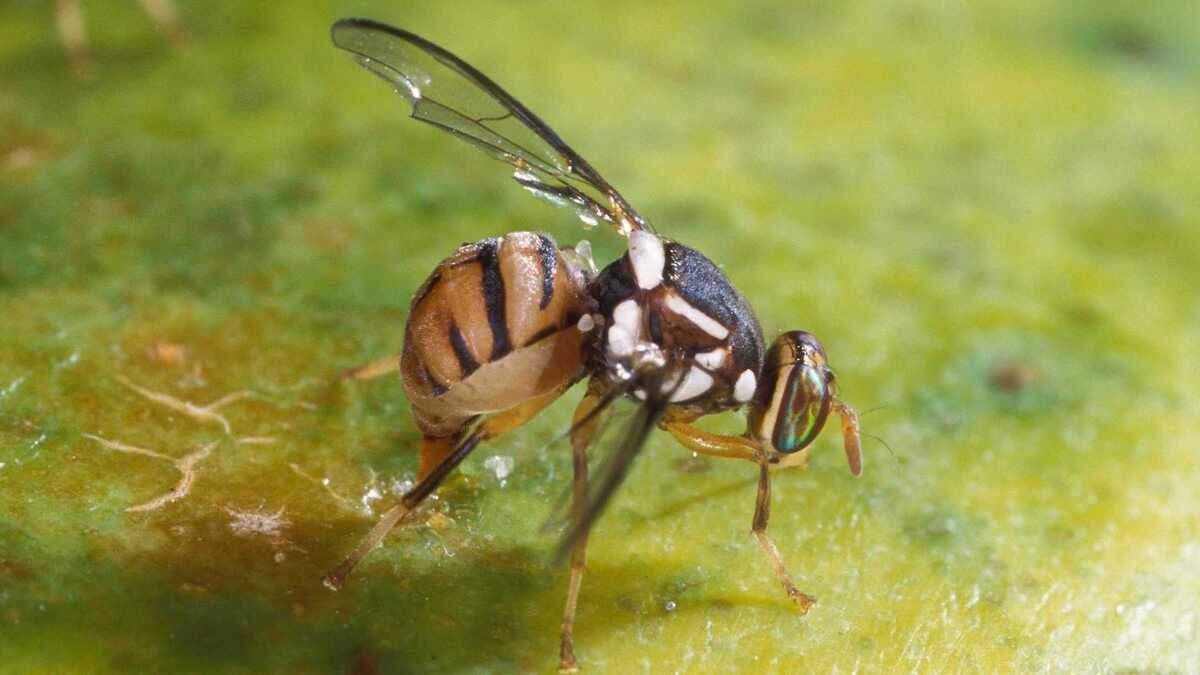
Officials found nine male oriental fruit flies near Rancho Cordova and the American River Parkway this month, sparking a swift effort to eradicate the invasive species that threatens California farms.
Sacramento County announced Wednesday in a news release that agricultural officials from the county coordinated with the California Department of Food and Agriculture and the U.S. Department of Agriculture to deploy an eradication strategy in a 1½-mile radius around each trap that caught a male fruit fly.
They’re using a “male attractant” system, which county officials said, “has successfully eliminated dozens of fruit fly infestations in California.” Workers will mix a substance that attracts male fruit flies with a natural pesticide, Spinosad. They will place the mixture, fatal to flies, on street trees and other surfaces 8 to 10 feet off the ground.
The flies, Bactrocera dorsalis, pose a real risk to California’s agricultural products. The female flies lay their eggs inside some of the same fruits that are grown in massive numbers in California, such as grapes, apples and other pome fruits, stone fruits, citrus, dates, avocados, tomatoes and peppers. When the eggs hatch as maggots, they ruin the fruit for humans.
Sacramento County saw an oriental fruit fly infestation in 2018, and fruit flies were also detected in 2019 and last year.
The 2018 infestation ultimately led to a nine-month quarantine over a 123-mile area which included swaths of the city of Sacramento. During those months, the California Department of Food and Agriculture urged residents in the quarantine zone not to move fruits and vegetables from their homes, and to discard them by double-bagging them and throwing them in the regular trash bin.
Before 2018, the last infestation in the county was in 2007. A study published in 2021 in the journal Communications Biology explained that these flies are most successful at spreading in tropical and subtropical areas, but as climate change warms the planet, the flies will expand their range. They are well established in south and southeast Asia.
The California Department of Food and Agriculture has said that oriental fruit flies most commonly enter the state as stowaways on fruits and vegetables mailed illegally from infested regions or carried here illegally by travelers from those regions.
However, some of those regions may currently be in California. KGO-TV in San Francisco reported this month that Santa Clara County is under a 112-mile fruit quarantine. In Contra Costa County, the state announced, 99 square miles are under quarantine. In 2022, there were quarantines in Los Angeles and Orange counties.