225 children under 9 were hospitalized after crashes in the Sacramento area
AI-generated summary reviewed by our newsroom.
- Vehicle crashes hospitalized 225 Sacramento County children under 9 since 2016.
- Sacramento received $137K state grant to expand car seat education programs.
- Large vehicles increase fatal crash risk; state considers weight-based fees.
As the Sacramento region struggles to address a road safety crisis, data from the California Department of Public Health show 225 hospitalizations of children under 9 years old following crashes between 2016 and 2023.
Over the last three years of available data, the number of young children visiting the emergency room in Sacramento County has risen each year: In 2023, there were 564 ER visits by kids from the Sacramento region for non-fatal vehicle crash injuries, up from 478 in 2021. Most of the injured kids were passengers in vehicles. Although it was unclear how many visits were related to car seats, the county estimated that as many as three in four car seats are being used improperly.
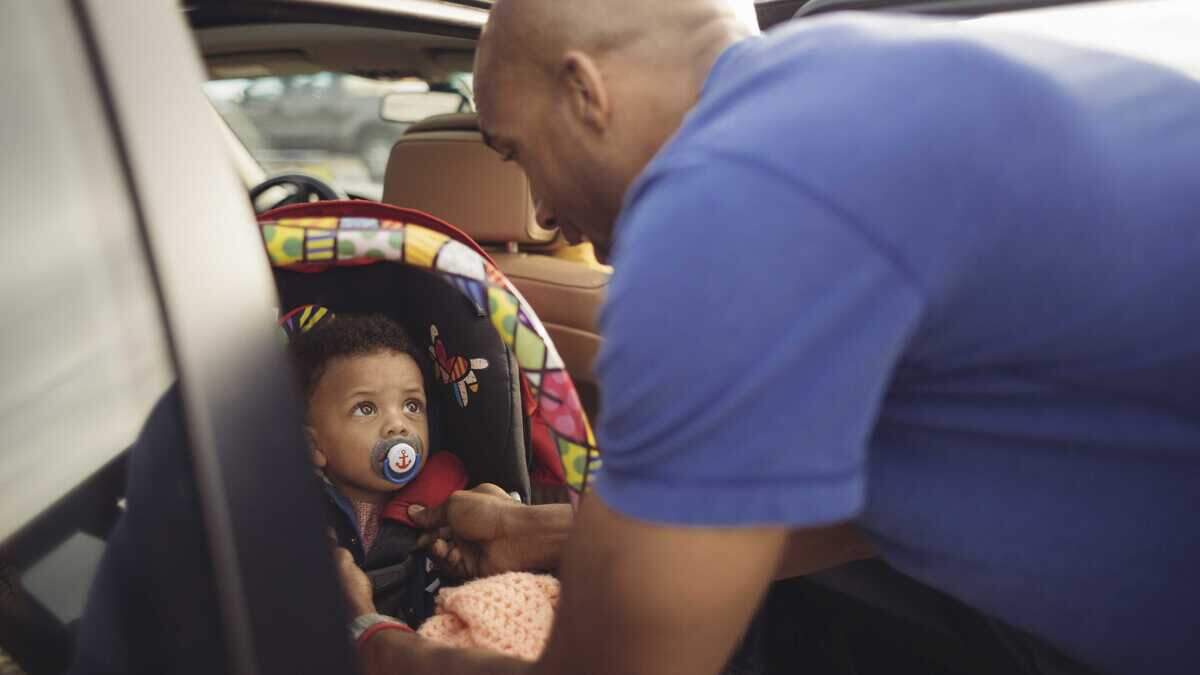
County staff won a $137,000 grant from the California Office of Traffic Safety to fund a “child safety seat” education program. That work will bring car seat checkups to public locations throughout the county and provide some free car seats to those in need. The program will also have a focus on the county’s immigrant populations, particularly speakers of Ukrainian, Russian, Pashto and Dari. Recent immigrants may be less familiar with car seats, and people who speak a language other than English or Spanish have fewer opportunities to learn about them.
Statewide, the data show that at least 59 children under 9 died in vehicle collisions in 2023. In the whole eight-year span, 574 young children in California died. In those same years, UC Berkeley’s Transportation Injury Mapping System shows crashes killed 17 children under 9 in Sacramento County.
A small proportion of those children were killed in “nontraffic” collisions, which take place in areas outside normal traffic flows such as parking lots or driveways. Such deaths are relatively uncommon, but they do follow patterns. Back-up collisions usually involve large vehicles that make it more difficult to see a small child around the car.
Just this month, a Sacramento County family began to endure a back-over tragedy when Aella Vargas, 3, was fatally struck in a driveway near Elk Grove. A spokesperson for the California Highway Patrol, Officer Michael Harper, said the driver was backing up in a Nissan Armada — a large SUV. A Sacramento toddler, Everly Nguyen, 2, died similarly in 2017 when she was hit outside a family gathering by a driver backing up a Lexus LX470 — another large SUV.
Bigger vehicles are more dangerous for everyone around them, not just toddlers.
Researchers from the Insurance Institute for Highway Safety looked at almost 17,900 pedestrian crashes and found that vehicles with a hood height over 40 inches were 45% more likely to kill a pedestrian than vehicles with a hood height of 30 inches or less and a sloping profile. Larger vehicles are heavier, which is the most apparent cause of the increased risk of death. But pedestrians in most age groups are also more likely to roll onto the hood of a smaller vehicle with a sloping profile; by contrast, they’re more likely to go under a larger vehicle. Among victims who are adults and older children, shorter hood heights may cause more injuries to the legs, while higher hood height tends to cause greater injuries to vital organs.
Some cities, including Washington, D.C., and Paris, have raised various fees for bigger vehicles to account for the additional inconveniences and dangers they impose on other road users. California is considering something similar: a registration fee tied to vehicles’ weight.
Children in the capital region have little say in vehicle policy, and they bear some of the highest burdens.
Most kids aren’t severely injured in car crashes, but some are
In 2023, more than 500 children from the capital region went to emergency rooms for treatment after vehicle collisions. Most of them were treated and released. An additional 225 were admitted into Sacramento County hospitals — when children are hospitalized, the state Department of Public Health takes them out of the ER numbers, unless they’re transferred from the ER to a different facility.
A small number of cases — fewer than 11 — were transferred from the ER to acute care at a different facility.
Although most of the young children injured or killed in vehicle collisions are passengers, most of the traffic deaths in Sacramento are among adult pedestrians and cyclists. This is a strong contrast from the early days of the private automobile in the U.S., when a huge proportion of the victims of fatal and non-fatal crashes were children spending time outside.
As Peter D. Norton writes in “Fighting Traffic,” city streets had been considered public spaces for all users, where pedestrians could freely travel. However, as automobile interests gained more power, the same streets were reimagined and then regulated as areas primarily for cars. Parents eventually learned that streets were no longer safe for their children and began to restrict their time outside. In 1928, before that shift occurred, drivers struck 2,000 children between the ages of 4 and 8 just within Philadelphia, for example.
What is Sacramento County doing about children injured in car crashes?
Sacramento County is currently trying to address children’s safety in vehicles with the grant funding from the Office of Traffic Safety. The funding will add to the county’s efforts on car seat education for families.
The National Highway Traffic Safety Administration recommends rear-facing car seats for at least the first year of a child’s life — and for as long as possible afterward, until the child outgrows the seat. California law says children must remain in a rear-facing car seat until the age of 2, unless the child weighs at least 40 pounds or is 40 or more inches tall.
Car seats followed by booster seats are recommended until children are large enough to properly wear a seatbelt. The NHTSA says “the lap belt must lie snugly across the upper thighs, not the stomach. The shoulder belt should lie snug across the shoulder and chest and not cross the neck or face.” Children, the agency advises, should sit in the back seat.
The county said in a grant agreement that 188,000 residents in the county are under 9, about 12% of the population.
Where to get car seat safety checks near Sacramento?
In Sacramento County, there are several options to get help with a child safety seat.
- Caregivers can make an appointment for a car seat checkup at UC Davis Health’s office on Broadway. The checkups are offered in English and Spanish. Appointments can be made by calling 916-734-9798 or online, scrolling down on SafeKidsSacramento.org.
- Caregivers can make an appointment for a car seat checkup at Mercy San Juan Medical Center. The checkups are offered in English and Spanish; they also offer assistance to Hmong speakers. Appointments can be made by calling 916-864-5779 or online, scrolling down on SafeKidsSacramento.org. Hmong speakers can call (916) 864-5541.
- Several California Highway Patrol offices in Sacramento offer installation help. Near the state Capitol, appointments can be made by calling 916-341-4740; in North Sacramento, appointments can be made by calling 916-348-2317. CHP’s south-area Valley Division also offers appointments in Spanish and can be reached at 916-731-6320.