
Sacramento opens another homeless ‘Safe Ground’ community. Here’s where
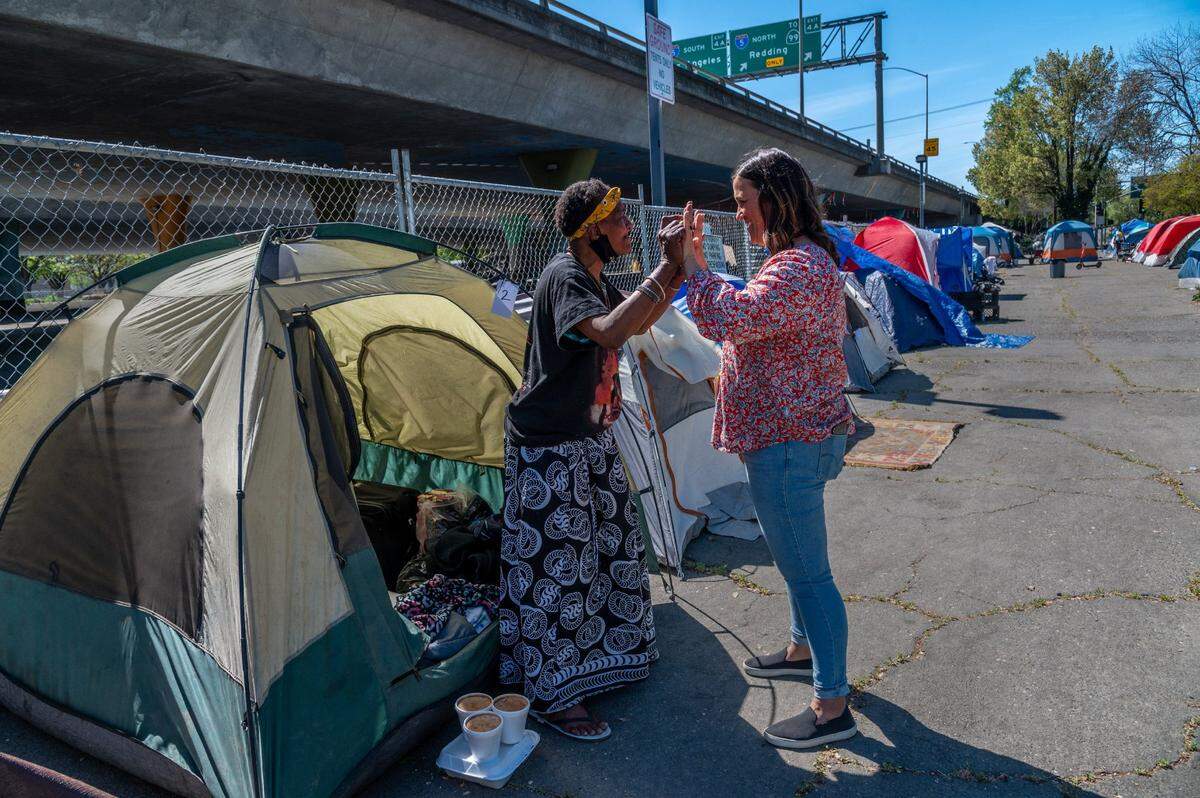
Days after opening its first “Safe Ground” community for homeless individuals, the city of Sacramento this week is launching a second site, this one for people living in their cars, campers and recreational vehicles.
The new site is an overflow parking lot near the city’s Sacramento River marina in Miller Park, a mile from the existing initial city-authorized camping site on a parking lot next to the W-X freeway at Sixth and W streets.
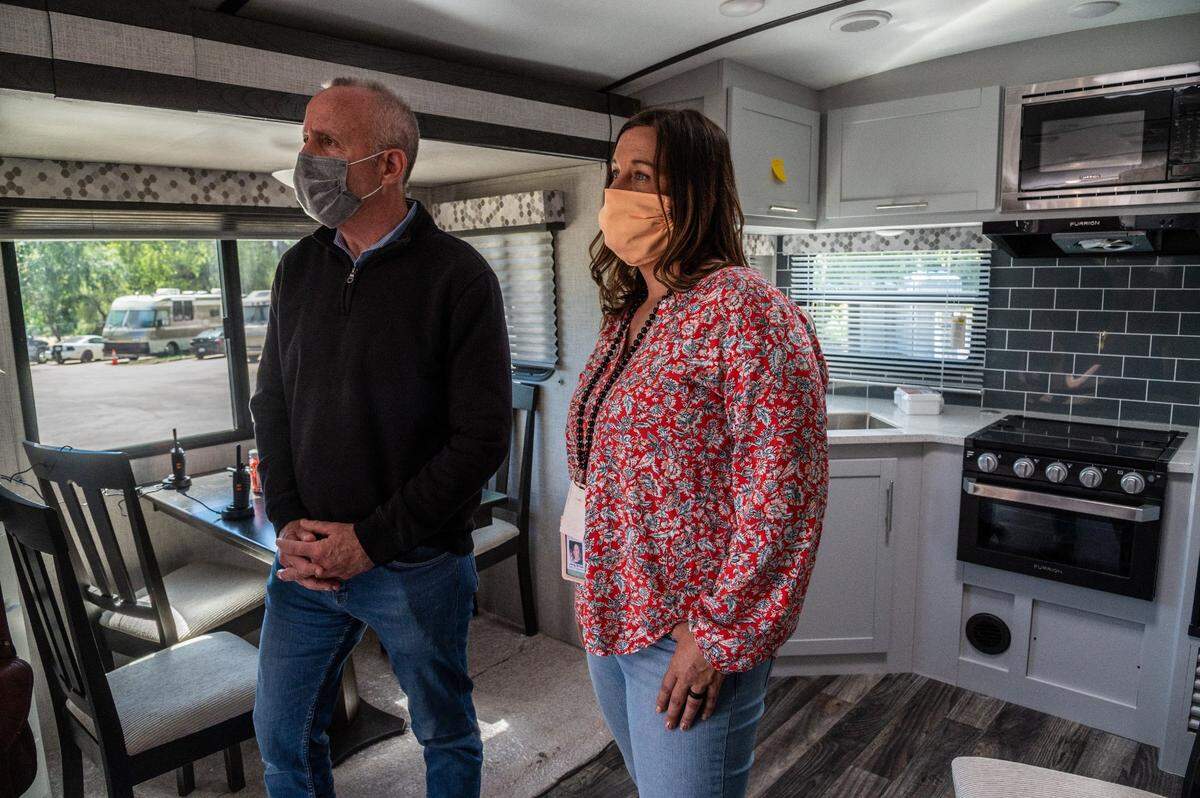
“This is our triage space,” city homeless coordinator Bridgette Dean said, standing in the dusty Miller Park lot next to a social worker’s trailer with a list of rules on the side: No drugs. No violence. No campfires. The residents will be asked to hold weekly community meetings to take ownership of their site. But the hope, Dean said, is that people will live there only temporarily.
“This is where we get you connected and start moving toward (permanent) housing,” she said.
The two sites, also called triage centers, are overseen by First Step Communities, on contract with the city. Social workers are expected to register residents and work with them to see if the city, county or private groups can offer services to improve their situation. Volunteers of America is providing meals on site twice a day.
The Miller Park site is partially encircled with temporary cyclone fences and can accommodate several dozen vehicles. The larger W-X freeway location is essentially two adjacent sites, one on the north side of the parking lot, near Southside Park, for tents, and one on the south side of the parking lot for people living in vehicles.
The Miller site is opening because the vehicle section at the W-X is too compact for many large vehicles, Dean said.
Dean said there have been no 911 calls or significant incidents in the first two weeks at the W-X street lot, where some 60 to 85 people have been staying on recent days.
Sacramento’s homeless strategy
The two sites represent a new step in what city leaders say they hope will be a more comprehensive effort this year to reduce the huge number – in the multiple thousands – of people living in tents, vehicles or just sprawled in blankets on sidewalks around the city.
Starting on April 20, Mayor Darrell Steinberg said he is going to ask two council members per week to present their plans for similar sites and other homeless services in their districts. That includes similar triage centers, some indoors, but also some outdoor facilities open to anyone experiencing homeless willing to follow basic rules, Dean said.
Steinberg said he hopes that each council member also will identify a more formal site for a congregate center or homeless shelter, as well as potential permanent “supportive” housing opportunities for people who are in a position to graduate off the streets.
“In the end, what I want is a commitment of thousands of beds, roofs, or spaces for people living in squalor in these disparate tent encampments to have a better chance, and to have a cleaner and healthier city,” Steinberg said.
The city’s push to find housing for people experiencing homeless is not new. Steinberg and past mayors have made various efforts for years to reduce homelessness in the city. Services for homeless though are costly, complicated and housing sites are often unwelcome by residents in many neighborhoods.
The City Council has also been reluctant for years to established sanctioned encampments, despite studying the model in places such as Seattle.
The city has allocated $4 million to the recent efforts on the homeless front. The city general fund is benefiting from increased revenues from the voter-approved Measure U sales tax measure and from pandemic-related federal funds.
The homeless issue has become more intense since COVID-19 hit. Early this winter, a large storm with high winds toppled tents around the downtown. Several homeless died this winter. Those incidents prompted some homeless activists to call for the city manager’s resignation and for a recall of the mayor for inadequate response.
Also, recently, Caltrans informed the city it planned to evict several hundred people living in tent camps under the W-X freeway to make room for a freeway widening project. Caltrans also was about to evict another large enclave that was camped along a Capital City freeway off-ramp near 29th and C streets, city officials said.
The news prompted concern among residents of those areas. Would the displaced flood into the neighborhoods?
Push for more action
Councilwoman Katie Valenzuela, a homeless advocate who with Dean led the effort to get the two Safe Ground triage sites open, is pushing the city to take a more decisive, active and humane approach.
Watching set up at the Miller Park site this week, Valenzuela said she may invite other council members to visit. “This is a call to action to colleagues to come check it out. See what it looks like,” she said.
A few yards away, an early-arriving family of three sat on soccer chairs outside their bus on a rug in the shade, eating sandwiches and playing with their new puppy. David Coyle and April Crowell, both 27, and their daughter Cillían, who is about to turn 3, moved to Southern California while working in the music concert industry. But that industry shut down during COVID-19. An apartment roommate skipped out one day, leaving them unable to pay the rent, absent paychecks.
David bought the bus for them to live in. They used part of their federal stimulus check to buy a generator to provide them with electricity. When they were rousted from parking spots on the south coast, they headed inland to Sacramento because they had music industry friends here.
Crowell’s hope, he says, is to join some friends in a music startup. They were pleased to find a place to stay that is sanctioned by the city and has some behavior rules. “Sacramento is the first place that has extended hands to help,” he said this week.
The “Safe Ground” effort remains in its early stages, and has not been smooth or easy for the city, though.
The city had hoped to open a few other freeway sites as Safe Ground locations but discovered they need federal approval for leases, and have been told that takes months. The Miller Park vehicle site may only be available until summer, and the W-X site likely will exist only until the end of the year. Both are out in the open and will be hot in the summer.
Steinberg’s hope is to get some campers out of their tents and into “pallet homes” at longer-term sites. The city has a few dozen of those homes available, and was planning to put them in at the first Safe Ground, but discovered they run on electricity and there is no power source in the parking lot.
Valenzuela said the city is checking to see if they can be retrofitted with solar panels.
“We are learning skills here,” Valenzuela said. “We are learning something every day.”
If it is going to step up efforts to rehouse the homeless, the city also must figure out how to earn trust, homeless advocates say.
For years, the main interaction those living on the street have had with the city is when police roust them from their camping sites, said Crystal Sanchez of the Sacramento Homeless Union, a critic of City Hall on homeless issues. “The normal narrative (at City Hall) has been anti-homeless,” she said. “This the first time there is engagement.
“Trust is a huge deal. Trust has been betrayed over and over. It will take time.”
This story was originally published April 9, 2021 at 5:00 AM.