
We asked for your feedback on Sacramento’s homeless crisis. Here’s what you told us
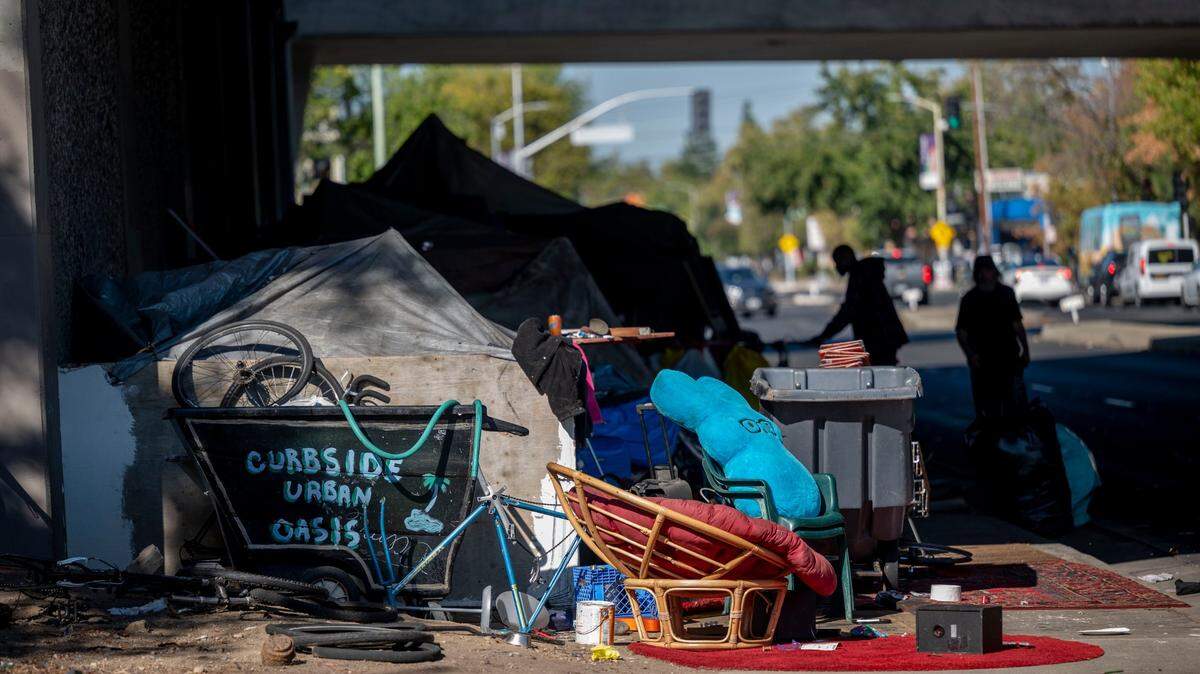
Two important revelations emerge from The Sacramento Bee’s informal survey of community attitudes toward homelessness.
One, more than half of those who answered the survey believe that homelessness is the single most significant local issue confronting Sacramento.
Two, the respondents were almost evenly split on why most people become homeless.
The online survey accompanied The Bee’s unveiling of what will be a months-long investigation into the issue called “Homelessness: Our urgent human crisis.” The survey’s purpose was to gather feedback and provide some understanding of community attitudes on the issue.
The survey is by no means a scientific poll. Still, with nearly 350 responses, it provides enough information worth sharing.
When asked how significant the issue is, slightly more than half of respondents — 52% — called homelessness the most significant local issue. Another 39.8% labeled it significant. The remaining roughly 8% either felt it was “of some concern” (5.3%) or not an issue (2.9%).
Respondents were asked to choose among five answers to this question: Why do you believe most people become homeless?
The top three answers were remarkably close: High cost of living (27.5%), mental health issues (26.9%) and substance addiction issues (25.7%) accounted for 80% of the responses in total. Another 13.1% called it a personal lifestyle decision, and just 6.7% attributed it to a lack of access to jobs that pay a living wage.
Respondents were also asked if government was allocating enough money to combat the problem.
“Not enough” was the most popular response at 52.4%, followed by “too much” at 33.4%. The remaining 14.2% chose “just about right.”
In addition to multiple choice questions, the survey also asked open-ended questions such as:
Describe what you think should be done to ease the problem of homelessness, and who do you believe is most responsible for the problem and why?
Mental illness, substance addiction major concerns
In both instances, the responses were wide-ranging, and it would be a reach to describe anything as a consensus answer.
Still, some themes emerged. For example, a good number of respondents focused specifically on mental illness and substance addiction. Many called for the return of government-run hospitals to house those with mental illness. Others advocated for more targeted and accessible addiction treatment programs.
In each case, the respondents typically stressed safety — for those who are vulnerable, as well as the general public who come into contact with them.
Some respondents focused on the need for job training and the creation of affordable housing such as tiny homes. Others focused squarely on the need to hold those who are not mentally ill accountable for their actions that have led them to be homeless. Some advocated for locking up those they believe have made being homeless a lifestyle choice.
If there was anything close to a prevailing answer to who is most responsible, it would be this: all of us.
Politicians, bureaucrats, elected officials were all singled out in various ways — in some instances for being too coddling; in others for not caring enough. But mostly for simply not finding solutions and thus allowing the problem to become worse.
Still, others placed at least some of the blame on local residents — either by being resistant to raising tax dollars to build affordable housing or fund treatment programs, or by opposing the placement of shelters, affordable housing or treatment facilities near where they live out of fear of reduced property values or by preventing an influx of what they would consider undesirable neighbors.
Collectively, the respondents’ answers reflected not only the complexity of the issue but also — and herein lies a measure of hope — the sincere belief that we, as a community, have reached a point where something must be done.
Our thanks to the nearly 350 people who took the time to respond to our survey. But we still want your feedback. If you have not yet filled out the survey, please feel encouraged to do so. We will continue to update you on your responses in the weeks to come.
This story was originally published May 25, 2023 at 5:00 AM.