
‘Unsustainable’: It now costs $670,000 to build a single affordable housing unit in Sacramento
Affordable housing is widely believed by social service providers, elected officials and those living on the streets to be among the most significant tools for fighting homelessness.
But in Sacramento and California, the cost to build affordable housing is anything but affordable.
Recent projects in the capital region illustrate just how exorbitantly expensive — not to mention time-consuming — it has become to provide housing for low-income families and the homeless.
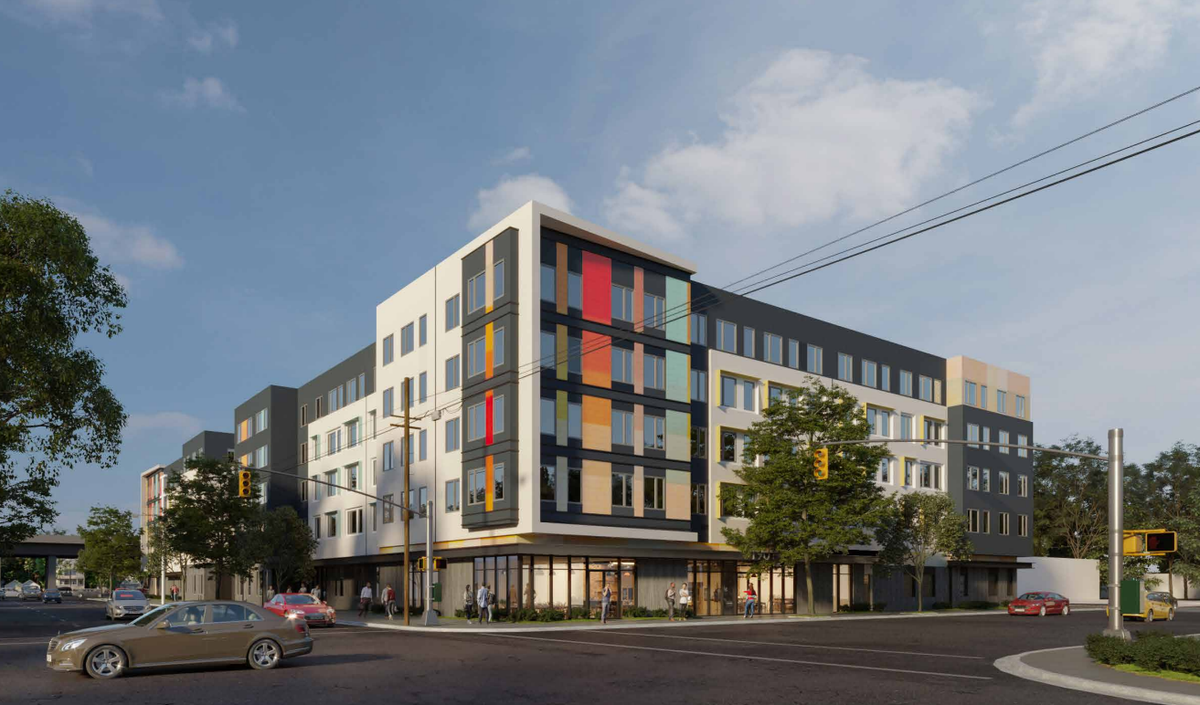
When a nonprofit developer was finalizing plans last year to construct a 140-unit affordable apartment building on Sacramento’s Broadway, the project’s estimated budget was around $78 million. By the time crews began leveling a vacant building at the site in July so construction could finally begin, the budget had ballooned to $94 million.
Mutual Housing, a statewide affordable housing builder, is progressing on plans to transform the long-blighted site of the former San Juan Motel on Stockton Boulevard into a modern community for low-income families. The first construction phase of 113 units — made up mostly of one-bedroom and two-bedroom apartments —.is projected to cost around $70 million, or a seemingly absurd $620,000 per unit.
To put that in perspective, new three-bedroom single-family homes in the high end Folsom Ranch development are listed for sale at $617,000.
And the San Juan apartments won’t even be the most expensive “affordable” units in the city to build.
Over in Oak Park, top Sacramento city officials, housing advocates and neighborhood leaders celebrated the July groundbreaking of an affordable housing apartment complex for seniors at the corner of 39th Street and Broadway. The project, with 43 units, will cost $28.7 million to build, Sacramento housing officials said earlier this year, or nearly $670,000 per unit.
As they race to meet the growing demand of housing for homeless individuals and low-income earners in the Sacramento region, affordable housing developers are faced with a daunting array of financial challenges, strict regulations, and rising material and labor costs. As a result, the cost of building affordable housing has skyrocketed, placing a severe constraint on a societal effort to provide stable homes to low-income earners and homeless families.
“The cost to build affordable housing is unsustainable in the long term,” said Muhammad Alameldin, a policy associate at the University of California, Berkeley’s Terner Center for Housing Innovation. “And that cost needs to go down to get us out of the housing crisis.”
A Sacramento Bee analysis of more than a dozen affordable housing communities recently opened, under construction or in advanced planning stages found that it almost always costs at least $500,000 to build a single unit of affordable housing in Sacramento. More recently, that price tag has frequently eclipsed $650,000 on substantial projects.
In contrast, developers of market rate housing told The Bee they are often able to build projects in Sacramento for around $300,000 per unit. Those developers typically do not receive direct financial subsidies from the public and face far fewer regulatory and financial obstacles.
In a series of interviews with The Bee, prominent affordable housing developers and housing policy experts said it can take years to assemble the public financing for affordable housing communities, and that builders often have to cobble together funding from as many as eight or 10 different sources.
That effort doesn’t just take time, it can also add millions to a project’s budget, as teams of lawyers, bankers and consultants negotiate the terms of each financing piece. Meanwhile, developers are forced to sit on land they’ve purchased, all while continuing to pay taxes and insurance on those properties.
“It’s not for the faint of heart,” said Welton Jordan, the chief real estate development officer for EAH Housing, the developer constructing the affordable apartment complex on Broadway. “But it’s our mission, it’s what these companies were founded to do. You have to see it through, you have to persevere.”
With each passing month, Jordan said, the cost of building a project can increase by 1% or more.
“Nothing,” he stressed, “gets cheaper as time goes by.”
Some cities in the region, particularly Sacramento, have made significant progress in simplifying the permitting and review process of affordable housing developments. Still, a significant gap remains in the demand for housing that low-income earners can afford. An analysis by the Sacramento Area Council of Governments determined that more than 60,000 units of housing for low-income families should be built this decade to meet demand.
At today’s costs, fully funding those units would cost tens of billions of dollars.
Providing affordable housing is vital in addressing the region’s homelessness crisis, experts said. And nearly half of the homeless individuals surveyed in Sacramento County in 2022 said a lack of affordable housing was the most severe problem exacerbating the homelessness crisis.
“Though individuals can fall into homelessness due to a variety of personal challenges — which can include mental illness and substance use disorders — research shows that these challenges worsen and become more difficult to manage in communities with a worsening affordable housing crisis,” researchers wrote in their bi-annual point-in-time count of the county’s homeless population.
Affordable housing is generally housing that is available for rent only to individuals and families making far below the region’s median income. In Sacramento, that typically means individuals who earn less than $60,000 and families earning below $85,000 are eligible to live in affordable housing communities and pay reduced rents.
Despite the spiking costs and time it takes to deliver a new affordable housing community in the capital region, hundreds, if not thousands of units are being planned. More than 1,200 units of low-income housing were under construction in Sacramento last year, with another 600 or so in various planning stages.
“What’s the alternative? More people become homeless and what’s the cost of that?” said Roberto Jimenez, CEO of Mutual Housing California. “I think people have said they don’t want to live in communities where their neighbors are on the streets. For me, it’s what kind of community do we want to be?”
Driving up the cost of affordable housing
Affordable housing developers and other housing experts describe a seemingly impossible set of circumstances they must confront to transform a project from a proposal on paper to a building where low-income families and the formerly homeless find shelter and stability. And that process, experts said, often takes five years or longer.
The cost of construction materials has stabilized since the peak of the pandemic, but is still far higher than it was just a few years ago. Some public funding sources might require a project to have larger apartment units for families or incentives for residents to ride mass transit, adding costs to budgets. To be competitive for grants, developers often incorporate the highest level of costly environmental standards into their designs, known as LEED Platinum.
The cost of labor is another driver of the ballooning budgets. Affordable housing developments rely heavily upon public subsidies, and those public contributions often come with requirements that those working on the construction of the community be unionized and paid prevailing wages. In California, those wages can reach upwards of $90 an hour and can add 25% to a project’s labor costs over projects that are not paying prevailing wages, developers said.
Affordable housing developments are frequently constructed in neighborhoods where public investment has been lacking. As a result, developers are asked time and again by local governments to pay for infrastructure improvements near their work sites, such as sidewalks and utilities. In the case of the San Juan Motel project, Mutual Housing is spending about $3 million to move a SMUD utility line and make improvements to Stockton Boulevard.
“What’s often not spoken about is that when it comes to an affordable housing development, there’s this expectation that because it’s public funds (being used) that they also clean up the infrastructure,” Alameldin said. “The justification is that this is public money, there are going to be people using it and that’s a strain on the infrastructure.”
While labor, material and construction costs add to a project’s bottom line, the biggest hurdle to delivering affordable housing projects is a lack of funding and the time it takes to secure financing from local, state and federal sources, developers and housing experts said.
“The amount of underwriting and work that goes into securing seven, eight, 12 sources … it’s just the way we have structured affordable housing financing,” said Danielle Foster, executive director of the Capitol Area Development Authority and the former housing policy manager at the city of Sacramento. “The bottom line is there is more demand for the funding that’s available than actual resources.”
The largest funding source for most projects are federal low-income housing tax credits. But in order to receive those credits, developers must first secure money from other sources.
“At best, we get a project out of the ground hopefully in two and a half to three years potentially,” said Steve Swiecicki, a vice president of forward planning at affordable housing developer Community HousingWorks. “But in some cases it can extend outward to five to six years. Meanwhile we’re fighting tooth and nail for every financing source in every round.”
Solutions for funding problems
As they compete against one another for scarce state and federal dollars, affordable housing developers said a more robust and reliable local funding source would go a long way toward delivering projects.
Sacramento Mayor Darrell Steinberg last month proposed a 2024 ballot measure that would raise the sales tax countywide to fund affordable housing and transportation projects. Steinberg said the tax could raise up to $3 billion for housing alone.
“The way we look at Sacramento is that it’s an area that’s experiencing such growth right now, but there are limited amounts of funds locally and obviously that’s the starting point (of the challenges),” Swiecicki said. “If we had those local dollars, I think we could really accommodate some of the growth that the city is experiencing.”
State officials are also attempting to make the financing hurdles easier to navigate.
Gov. Gavin Newsom and the state Department of Housing and Community Development launched a program earlier this year called the Multifamily Finance Super Notice of Funding Availability, known among developers as the Super NOFA. The program was designed to serve as a wholesale funding mechanism for affordable housing by consolidating multiple applications for financing under one process.
“State applications that were once redundant, and overly bureaucratic, are now streamlined to ensure projects are not stalled in an endless bureaucracy that favored process over production,” the governor said in a statement announcing the program.
The first round of funding awarded roughly $825 million for new affordable housing. However, developers made a combined $3.5 billion in funding requests, meaning a vast majority of projects did not receive money.
And while more than 70 projects across the state were awarded money, according to a list of awards released by the state, just one was in Sacramento County: the senior affordable housing development at 39th and Broadway in Oak Park that received $1.9 million. Seven other Sacramento County projects were turned down for money.
“There really isn’t a one-stop shop (for funding) and the Super NOFA was supposed to get us a little closer to that,” said Kevin Leichner, a senior vice president at Community HousingWorks. “I think the jury is still out on whether that is working as intended.”
A second round of funding, worth $567 million, was made available in May. The winning bids will be announced this winter, the governor’s office said.
A few months later, a measure on the March 2024 ballot could ask California voters to approve $10 billion in bonds for affordable housing construction and rehabilitation.
Combined with the Super NOFA program, the bond would signal an unprecedented public investment in affordable housing in California. Yet the money might only address a portion of the state’s housing affordability crisis: at an average cost of $500,000 per unit, the proposed state bond would fully fund 20,000 affordable housing units, a fraction of the estimated 1 million units of low-income housing the state needs to build.
Given the significant cost, Alameldin said, voters may be wary to support large public investments in affordable housing..
“When local and state governments try to pass bonds,” he said, “it becomes much less politically feasible to convince voters to build affordable housing units that will cost nearly $1 million in the next decade.”
This story was originally published September 13, 2023 at 5:00 AM.