Sacramento City Hall homeless ban sparks debate over safety. Who deserves it?
AI-generated summary reviewed by our newsroom.
- Sacramento may ban overnight sleeping at City Hall, ending a 6-year exception.
- City staff and union cite security concerns; homeless residents cite safety benefits.
- Downtown business owners express mixed views over impact on safety and commerce.
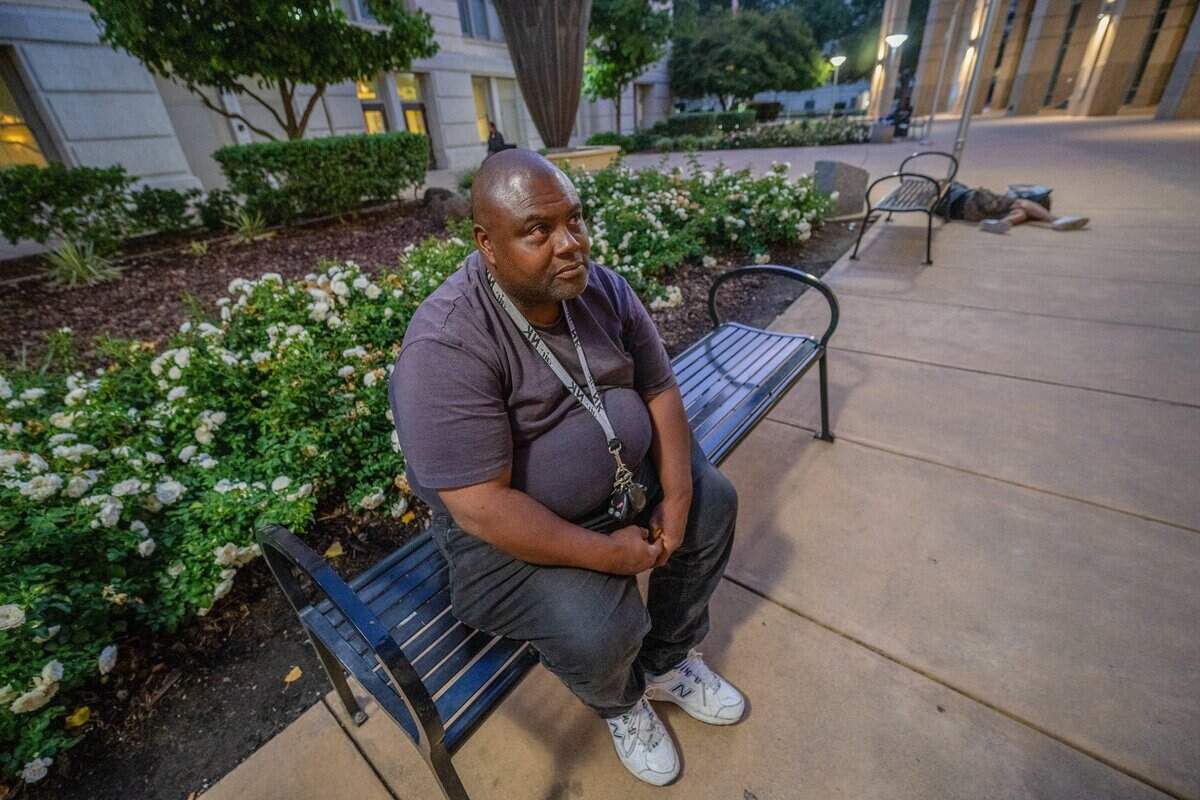
Clint Washington sat on a bench near Sacramento City Hall earlier this month, patiently waiting for a safe place to sleep.
Once his phone showed 9 p.m., Washington, 52, started his short walk to the building’s wall. There, he set up his sleeping arrangements — a gray blanket for warmth, bags of clothes for pillows and an episode of Magnum P.I. to put him to sleep.
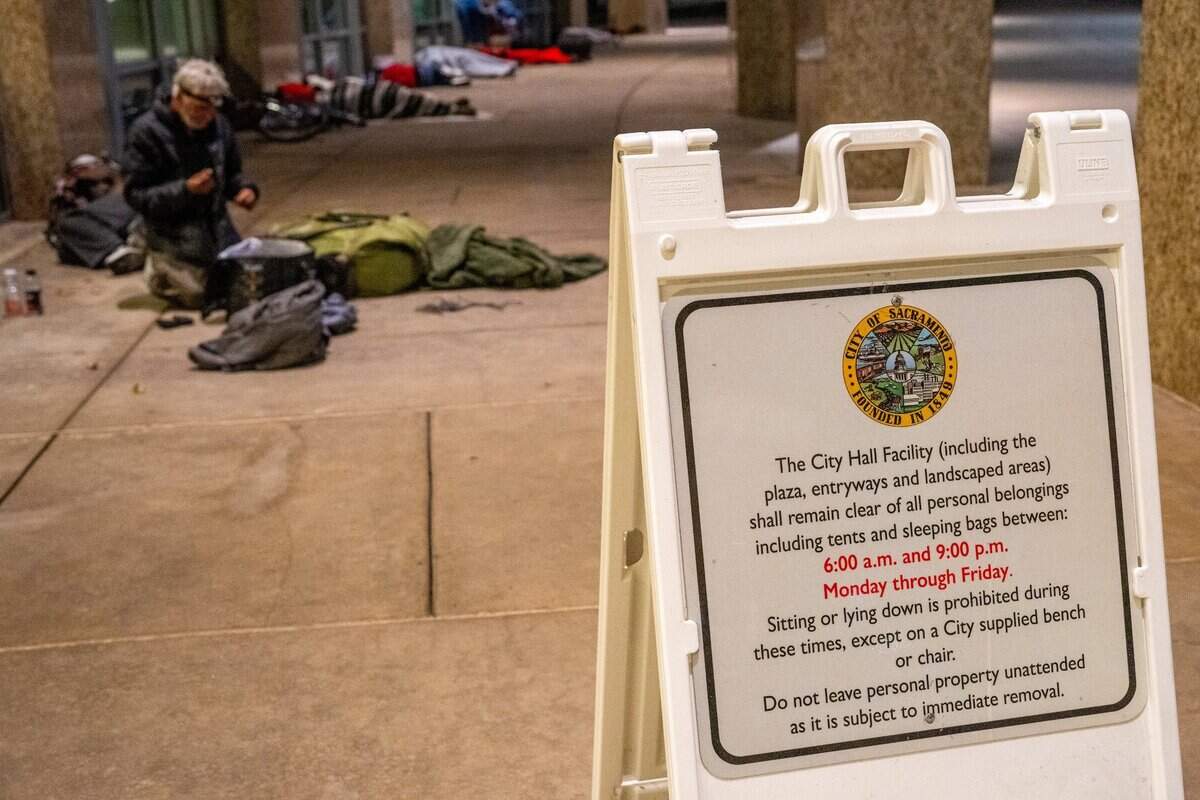
He leaves the premises by 6 a.m. each morning, a schedule he’s maintained for four years, as allowed by the city law.
But that routine may change by next week as Sacramento leaders consider banning overnight sleeping at City Hall.
The proposal, spearheaded by Mayor Kevin McCarty, would bar people from sitting or lying down on the property except in limited circumstances. Since its unveiling last month, the proposed change has sparked a debate over whose safety matters most in downtown’s public spaces.
Supporters of the new policy, including the city’s largest union, argue it would lead to a more secure environment for employees. About 55% of employees felt “somewhat unsafe” or “not safe at all” when on the property, according to a survey conducted this month by the city. About 621 city workers are based in the building, located at 915 I Street.
But opponents say the building’s lighting and security cameras make it one of the safest places in Sacramento for those without shelter. Advocates argue that the change would only further criminalize homeless people. Daytime citations at City Hall have already increased dramatically under the leadership of McCarty.
“I got to find somewhere to go,” Washington said. “It’s safe here.”
The City Council will vote on the proposal Tuesday. If the vote passes, it reverses an exemption added six years ago to allow people to sleep overnight at City Hall but prohibited sitting or lying down on the ground between 6 a.m. and 9 p.m.
McCarty has called his proposed amendment a “common sense” approach that will align City Hall with sit-lie laws at other government buildings and allow for reallocation of homeless resources.
The move also seeks to protect city workers, per a recent staff report that highlighted City Hall calls for services and a survey of employees.
Roughly 42% said they “felt personally threatened while on City Hall grounds,” according to the survey. Another 61% reported the area as “very dirty” or “somewhat dirty.”
“The survey reveals a strong and consistent concern among City Hall employees about safety, cleanliness, and the overall condition of the grounds,” said the staff report. “While there is clear empathy for unhoused individuals, staff express a need for boundaries and better infrastructure to support a clean and safe environment.”
Stationary Engineers Local 39, a union representing more than 1,700 city workers, echoed employee concerns in support for the mayor’s proposal.
“While we are sympathetic to individuals experiencing homelessness, Local 39 supports the mayor’s efforts to create a safer working environment around city hall for our members,” said union representative Payden Martin in a written statement last week.
Martin could not provide a specific number or examples of incidents affecting city employees in the union.
There have been 25 complaints submitted to 311 or on-site security about City Hall from staff since 2019, according to the staff report. Complaints coming from the public in that same period add up to 614.
Since 2019, there have been roughly 185 calls to 911 per year associated with homeless people at or around the property.
On a recent Tuesday night, Washington was unconvinced by the city’s argument about employee safety concerns. He said the people who spend nights at City Hall come to sleep when employees have already left the building and are gone before anyone arrives to work.
“They just want to move the homeless and get rid of people,” Washington said.
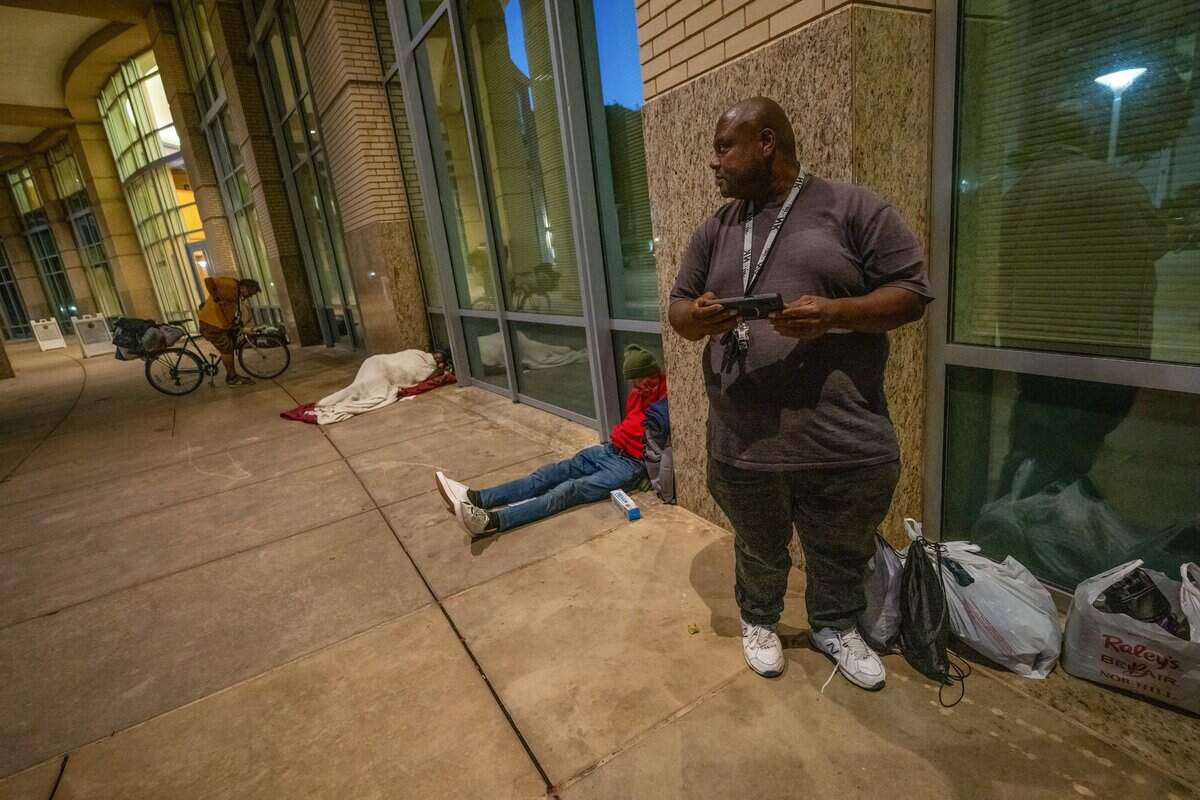
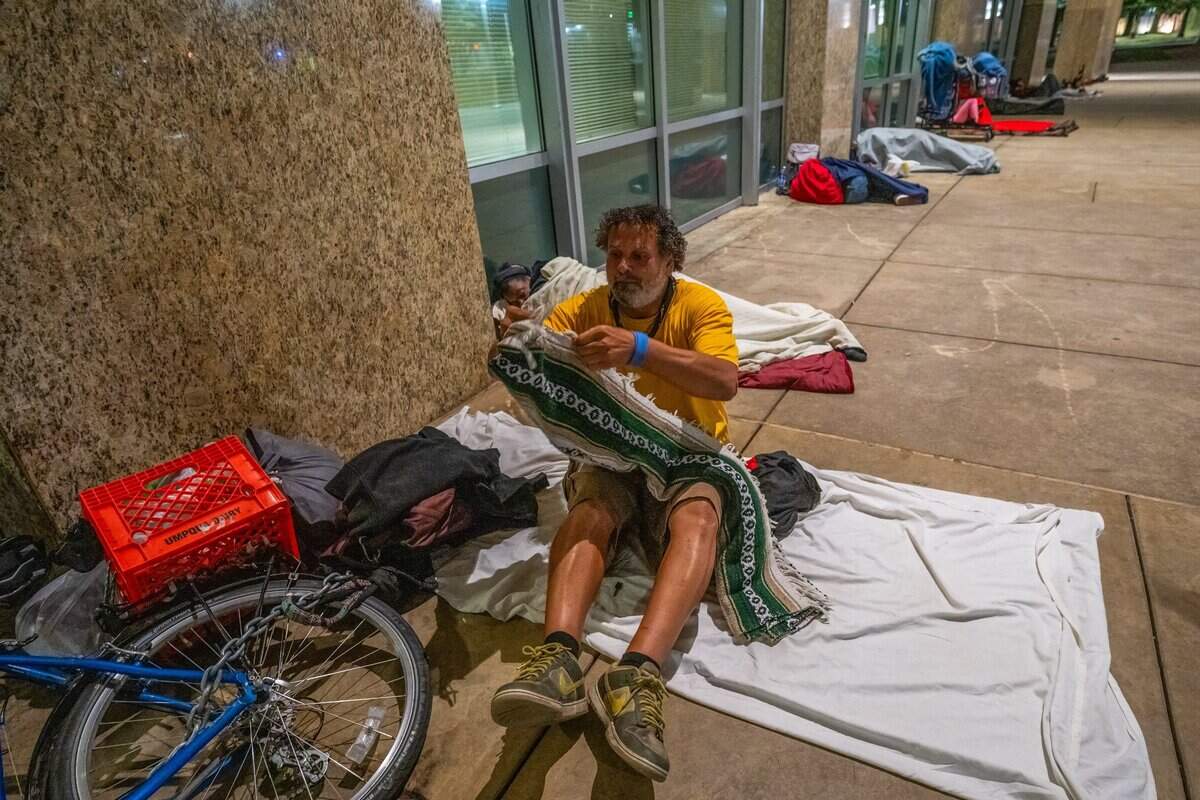
Washington was among the roughly 25 people sleeping around the City Hall building that night. Some stayed in large camping tents. Others used sleeping bags. A handful merely laid on the cold concrete floor.
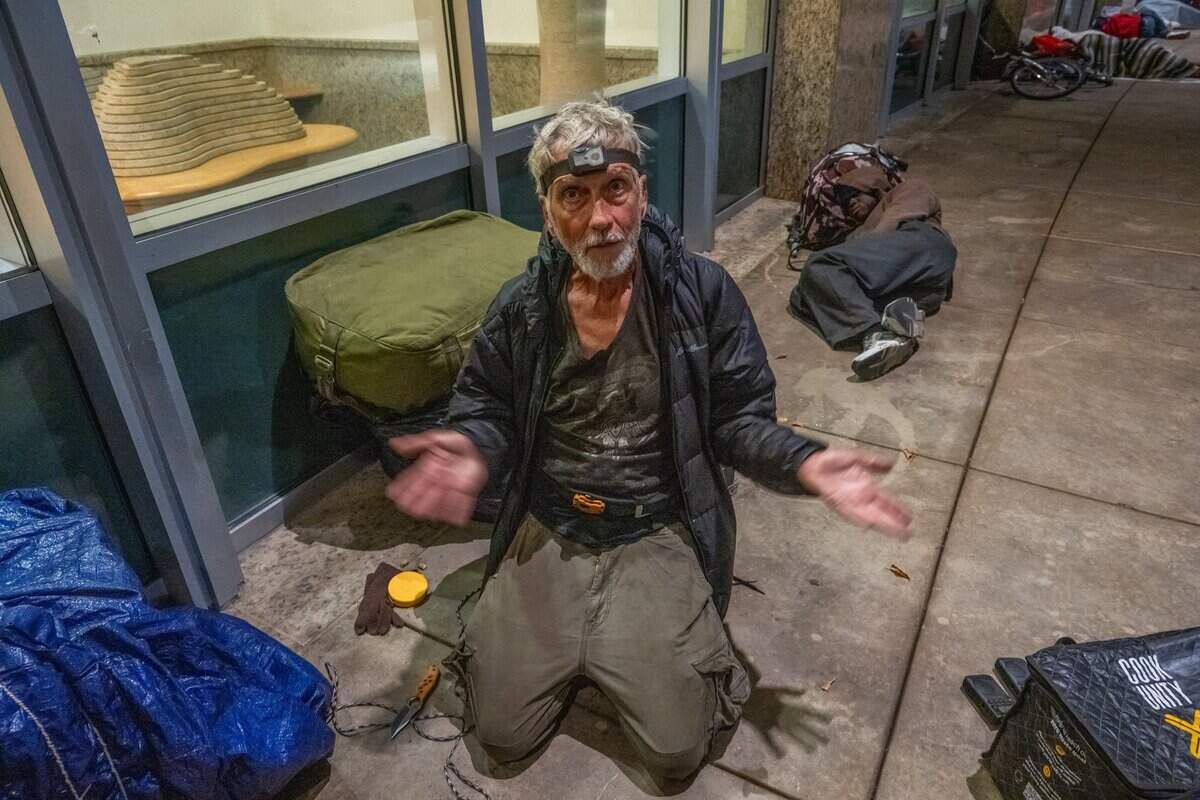
A few feet away from Washington lay James D’Errico, who used a tarp as a mattress and his backpack as a pillow.
D’Errico said he’s been sleeping at City Hall for more than a month. He quickly realized that the lighting and security cameras offer more protection than other locations in the city.
“It’s well lit,” D’Errico, 50, said. “You start to know people see the same faces. These people try to come in and rest in peace.”
The location also offers an alternative option for people with traumatic backgrounds who may not fare well in congregate shelters, D’Errico added. He said those shelters often put people in close proximity to others.
Roughly 500 more people entered homelessness than exited last month in the county, according to Sacramento Steps Forward, one of the regional entities for supporting homeless people.
“Everybody that’s out here may not be able to be in a shelter,” D’Errico said. “If there’s a better spot, I’m all for it but this spot has been pretty safe since I’ve been here.”
Concerns about the proposal passing are not isolated to homeless people.
Five business owners within two blocks of City Hall cited worries earlier this month that the change could lead to an increase in people sleeping outside their establishments.
Among them was Kumar Ankuesh, owner of the Indian food restaurant Tandoori Fire on 9th Street.
Ankuesh said the front glass of his restaurant has been broken twice by a homeless person in the last three months. Repairs cost him $1,000 each time.
In another instance, Ankuesh said he was attacked by a man with a wooden stick when trying to open the restaurant. The ordeal left him with a scar on his arm.
He was in support of the proposal, but only if the city made efforts to ensure more people did not gravitate toward downtown.
“This is good for City Hall, but not for our businesses,” Ankuesh said.
Hesham Hussain, owner of Sana’a Cafe, said he had endured similar business issues with some homeless people in downtown. He has owned the cafe for six months and recently closed one of the main entrances. The goal is to decrease homeless people from entering and help improve his business sales, Hussain said.
“If they keep affecting my customers, and I’ve already seen the number of women, kids and families starting to go down at night, I’m gonna run out of business,” Hussain said.
Still, Hussain remained opposed to the mayor’s proposal. He called the amendment “selfish” and limited in scope. He pushed for the city to develop more mental health resources and a sustainable solution to “help everybody.”
“I want them (the homeless) to sleep in City Hall,” Hussain said. “So they (the council) can feel the pain of the rest of downtown.”