Sacramento bans homeless sleeping at City Hall despite community pleas
AI-generated summary reviewed by our newsroom.
- Sacramento City Council voted 6-3 to ban outdoor sleeping at City Hall.
- Violators could face misdemeanors and civil fines between $250 and $25,000.
- Supporters cite employee safety concerns; critics argue lack of housing solutions.
People will be banned from sleeping outside Sacramento City Hall starting next month — ending a six year exemption.
The decision came at a heated City Council meeting Tuesday night, during which public speakers yelled at elected officials and questioned their humanity. The council ultimately approved the change 6-3, with Council members Lisa Kaplan, Caity Maple and Mai Vang voting against.
Under the new policy, people will be prohibited from sitting or lying on the ground outside City Hall during all hours of the day. Those in violation could be subject to a misdemeanor and civil penalties ranging from $250 to $25,000. The law takes effect in 30 days.
During the transition period, Mayor Kevin McCarty said the city would talk with the “regulars” to inform them of the change and offer them shelter. There are an estimated 20 people who routinely sleep at the property, said Brian Pedro, director for the Department of Community Response.
The proposal had been highly debated since McCarty unveiled the amendment last month.
Supporters argued the policy was a cost-saving measure, rooted in employee safety and would align City Hall with sit-lie laws at other government buildings. But opponents called it a callous idea that would eliminate one of the few safe places to sleep for those without shelter.
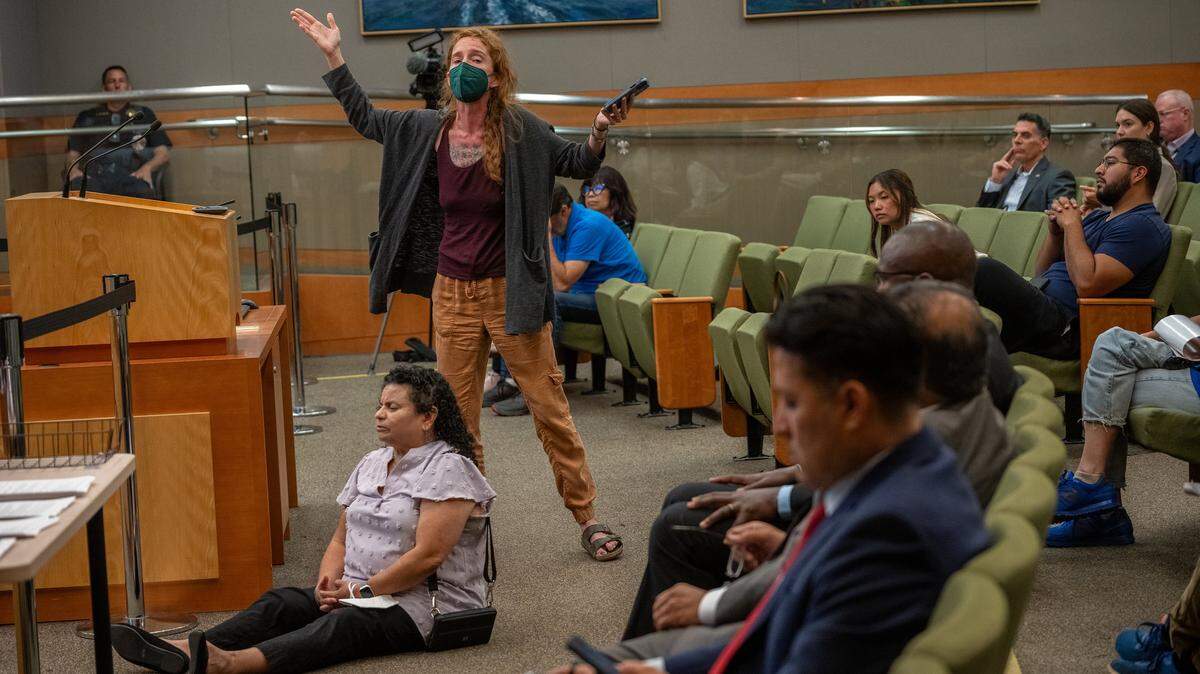
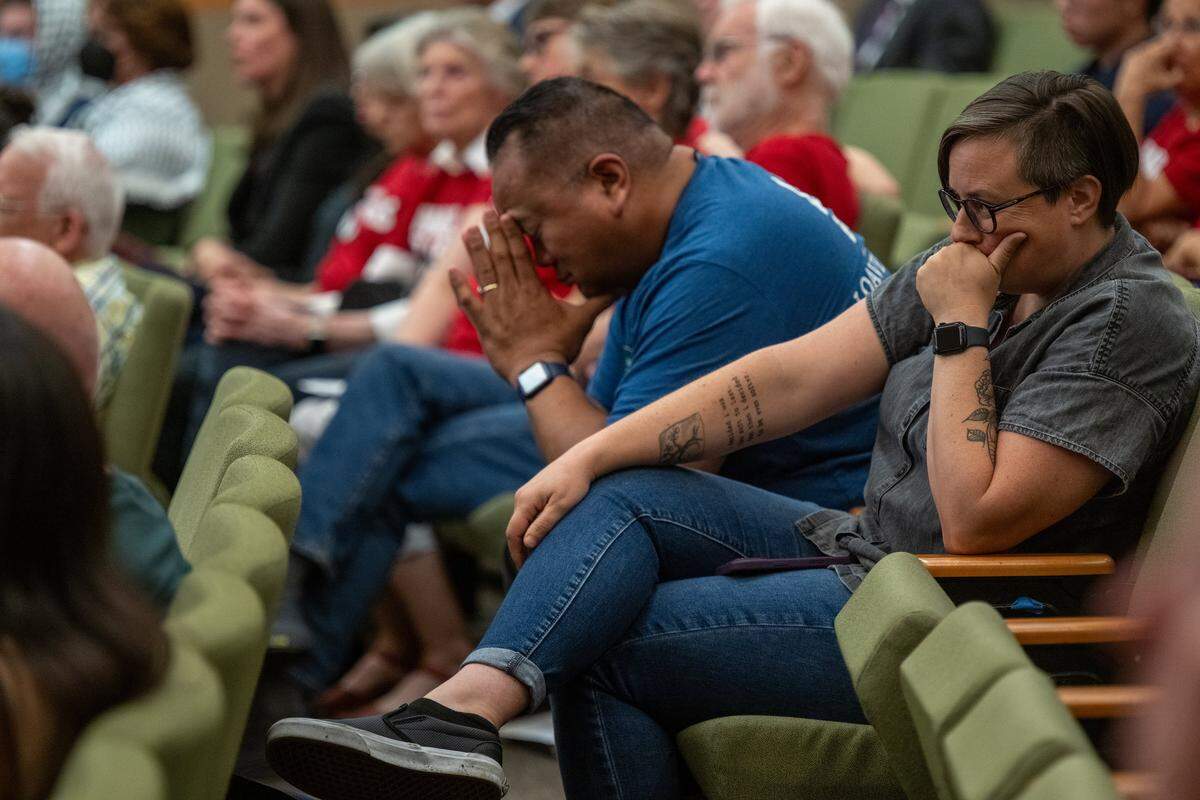
The debate continued in City Hall chambers Tuesday with 46 public speakers, nearly all of whom opposed the change. In emotional pleas that included shouting, profanities and crying, they urged the council to continue allowing overnight sleeping at the property.
“Please stretch your heart,” said Salwa Mrabe. “Help your brother and sister. In the end, we are all one people.”
Others attempted to convince the elected leaders with their actions. Following her public comments, Regina Brink took a seat next to the podium. Brink, who is blind and disabled, remained seated for the next hour and 20 minutes.
“I want you to see it’s going to be people like me that will be removed,” she told the elected leaders from the floor.
The council majority — McCarty, Phil Pluckebaum, Rick Jennings, Eric Guerra, Roger Dickinson and Karina Talamantes — remained unconvinced.
McCarty called the issue a matter of safety for city workers. Roughly 42% of employees at City Hall said they “felt personally threatened while on City Hall grounds,” according to a survey conducted this month by the city following the proposal’s introduction.
“There has to be some balance,” McCarty said. “There has to be some common sense.”
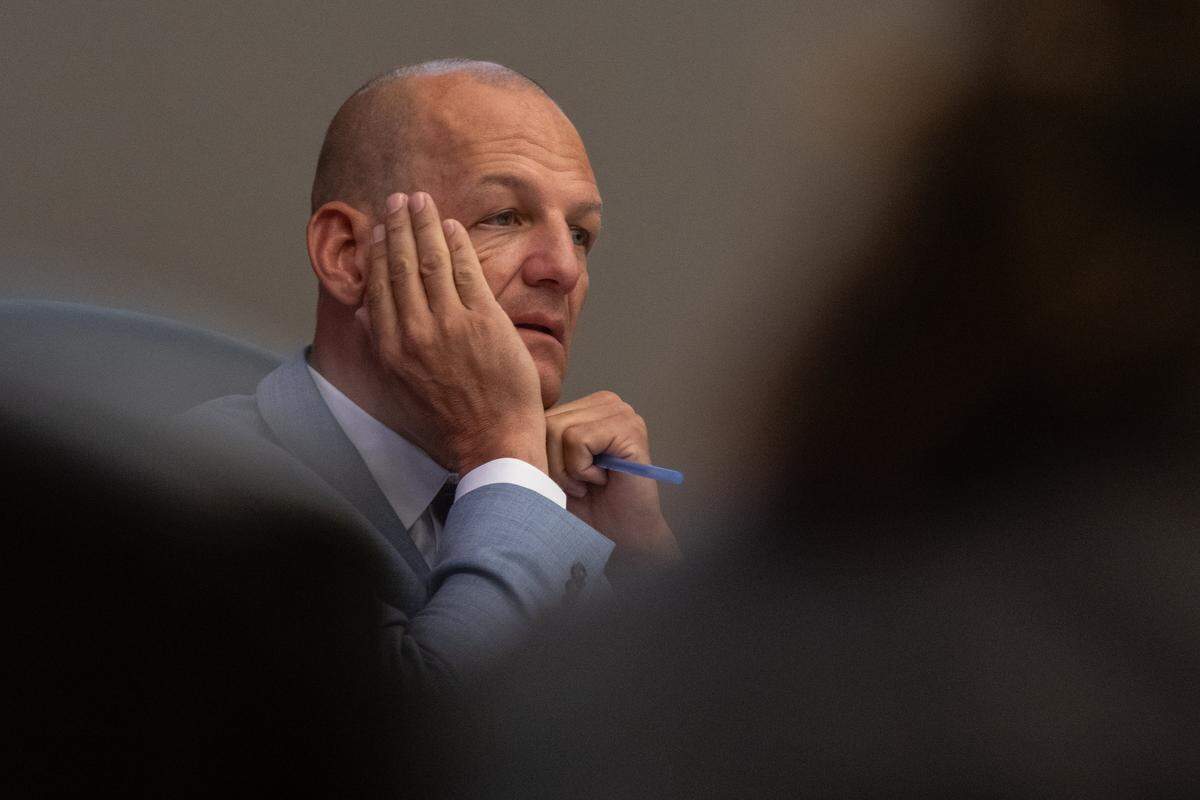
Guerra, who was part of the council which approved the nighttime exemption for sleeping at City Hall in 2019, backed the proposed ban. At that time, Guerra said, the city had less than 100 emergency shelter beds. The city had a 1,375 total bed capacity as of April.
“Today is a different situation. … We have options now,” Guerra said.
Roughly 500 more people entered homelessness than exited last month in the county, according to Sacramento Steps Forward, one of the regional entities for supporting homeless people.
“This policy does nothing to build housing,” Vang said. “This policy does nothing to treat the health of our neighbors, and this policy does not address the root causes of the crisis that we see on the street. We should be focused on more solution-based proposals.”
Kaplan, who concurred with Vang, said her opposition stemmed from the police not addressing housing or employee safety. There is no plan for enforcement, she added. DCR does not conduct enforcement from 10 p.m. to 6 a.m., Pedro said on Tuesday.
“I’m open to City Hall not being the place, but I have not been given information as to why this is the right thing we need to do,” Kaplan said.
McCarty, following the meeting, said he did not expect many citations as a result of the ordinance change. He believed most people would move after being asked by security. Eventually, McCarty added, an expectation would be created.
“We’re not going to be, I think, bringing in police personnel to enforce it,” McCarty said. “I think it’s going to take care of itself.”
Citations at City Hall have already increased significantly during the leadership of McCarty. In the past seven months, officers issued at least 187 citations to people sitting or lying at City Hall during the day. Only two such citations were issued in the final seven months of former Mayor Darrell Steinberg’s tenure. McCarty attributes the increase to a Supreme Court ruling last year.
Outside City Hall, the news of Tuesday’s night vote had already reached some of the homeless people setting up for the evening. Among them was Randy Horn, 72, who has slept at the property for almost two years.
He had grown fond of the location, particularly the feeling of safety. Other times, the building’s arches kept him dry on rainy days. Now, Horn was unsure of where he would go following the proposal’s implementation.
“It (City Hall) was nice ... but I guess those days are coming to an end,” Horn said.
This story was originally published July 30, 2025 at 5:00 AM.