No emergency homeless services at Sacramento’s 211 — even for a 4-year-old

Tanika Williams picked up her phone on the playground while her 4-year-old scampered around in the wood chips behind her. Night was approaching, and if she didn’t find $68 for a motel room in the next few hours, she, her husband and the little girl would have to sleep on the street.
To her, this seemed like an emergency. She and her husband, Michael, had managed to scrape together the money for a motel for a few weeks. Now, they were down to pennies, with six days left until she got her paycheck. And so on the afternoon of March 9, she reached out to 211, where the city and county of Sacramento direct homeless people seeking services.
It was her second time calling that day. The recorded outgoing message warned her that no hotel vouchers were available through 211. When she spoke to an operator, that person said, “It looks like you’re on the waitlist for all family shelters.”
“So there’s nothing for today, nothing I can call to check the status?” Williams asked.

“Yeah, unfortunately,” the operator said. They suggested calling Medi-Cal to sign up with CalAIM, which offers some housing services for Medi-Cal enrollees.
“OK,” Williams said. “But that won’t help me for tonight, will it?”
“No,” the operator said.
Williams said, “Thank you for your time.” The operator said, “You’re welcome,” and hung up.
It was a little after 4 p.m., about three hours before it started to get dark. The stroller where Makhìla might sleep bundled up in a blanket was ripped. Gnats buzzed around the park in the afternoon light.
Williams started to cry.

211 is generally the first stop for social services. Along with disaster victims, people who can’t afford to feed their children and seniors who’ve been scammed, those who lack safe housing are directed to call the number for help. Press 8 if you’re homeless, the system prompts. But as Williams found, 211 typically just leads families to a waitlist.
Sacramento County’s director of Homeless Services and Housing has said that 600 families may sit on the shelter waitlist on any given night. For adults in general, the waitlist typically has well over 2,000 names. Data show that between last March and January, the shelter system has seen a median of 275 “shelter enrollments” each month — a small fraction of the people clambering to get in.
The number of people entering a shelter each month is also 2.7 times as high as the median number of exits to permanent housing in that time: 102. The Coordinated Access System, which helps coordinate services throughout the city and county, largely through 211, said it helped prevent only 156 cases of homelessness in 11 months — a median of 14 preventions a month. In January, the system reported that only 11% of requests for shelter could be met.
In other words, a majority of homeless 211 callers who needed shelter received an answer much like the one Williams got: We have nothing to offer right now.
The city and county have more shelter beds than ever before — around 2,800. But over the 11 months between March 2025 and January 2026, reports from Sacramento Steps Forward show the percentage of unmet demand hovered between 84% and 90%. Even with these stark numbers of people reaching out from the brink, the city and the county have not yet created an emergency-level response.
The city’s Department of Community Response is working on a new family motel program, with the goal of placing families in hotels within 24 hours on 28-day vouchers, which can be renewed up to five times. Julie Hall, a spokesperson for the city, said that after an audit found that the City Motel Program left people stuck in the motel shelters for extended stays, DCR began working on a new “Emergency Shelter Vouchers for Families” program to replace it. Up to 200 families will be served at a time, for 28 days to about five and a half months. Hall said the new program is expected to launch in June.
“The new program will expand client choice by allowing more motels across the city to participate while simultaneously reducing operating costs,” she said.
In the meantime, the city stopped enrolling new families in its motel shelters on March 1. Even when the emergency voucher program debuts — and meets its goals — demand will still outstrip the availability of spots. Some families can now go to the congregate shelter known as the Outreach and Engagement Center, but that, too, has a waitlist.
Sacramento Steps Forward, a nonprofit that helps run the Coordinated Access System and 211, said that homeless people seemed to have noticed the pause on the City Motel Program.
“(T)he 211 team previously referred clients to the City Motel Program via the CAS waitlist, and those referrals have ended as of this month,” Kim Winters, director of communications at Sacramento Steps Forward, said. “The 211 team added a recording in response to the recent influx of calls from individuals seeking motel vouchers through the City Motel program.”
Hall said that while those intakes are paused, families can receive rapid financial assistance from Sacramento Steps Forward to prevent them from entering the shelter system. The Coordinated Access System shows that an average of just 41 families benefited from this program each month.

Sacramento County has its own similar services, and its own gaps. Its service providers do not offer an emergency motel voucher program, either, although they can get some families inside for short-term stays.
County spokesperson Janna Haynes said, “Our outreach team has a limited budget for vouchers.” But once a family is referred to the outreach team, the team “will 100% make sure that a family does not go unsheltered” until they “are connected to something more long-term.” The outreach team, however, focuses on people who are already on the street. In any event, the team’s vouchers wouldn’t be available quickly through 211.
In the park, Williams stood by the bags that held everything her family needed: one backpack stuffed into the stroller, one big tote bag, two duffels and a big navy sack filled with Makhìla’s toys to try to maintain a sense of normalcy for the little girl. A stuffed animal — Skye, the pink-vested dog from “Paw Patrol” — poked out from the top of the sack.
Williams felt like she was losing her mind.

One bill after another for families
Another mom, Jessica Rose, was part of 211’s “unmet demand” in January. On Jan. 21, she sat on the bed in the motel room she couldn’t afford anymore. She receives $884 a month in aid — not enough to live on, let alone to both feed a child and pay for weeks in a motel room. Rose was about to be out on the street with her 12-year-old daughter, Faith. She owed $96.
“I’m past due,” Rose said when she called 211. “My daughter and I are going to be sleeping outside again tonight if I don’t find housing.” She had applied for an emergency motel voucher at the Housing Support Program, but hadn’t heard back yet.
“I’m so sorry that you’re going through all that,” the operator said. The operator asked her if they could do a housing assessment.
“Yeah, definitely,” Rose said. “If it helps me get shelter tonight, especially.”
“OK, it wouldn’t be for tonight,” the operator said. “I’m so sorry, we don’t have any immediate shelter services available. But it would definitely place you on the waitlist.”
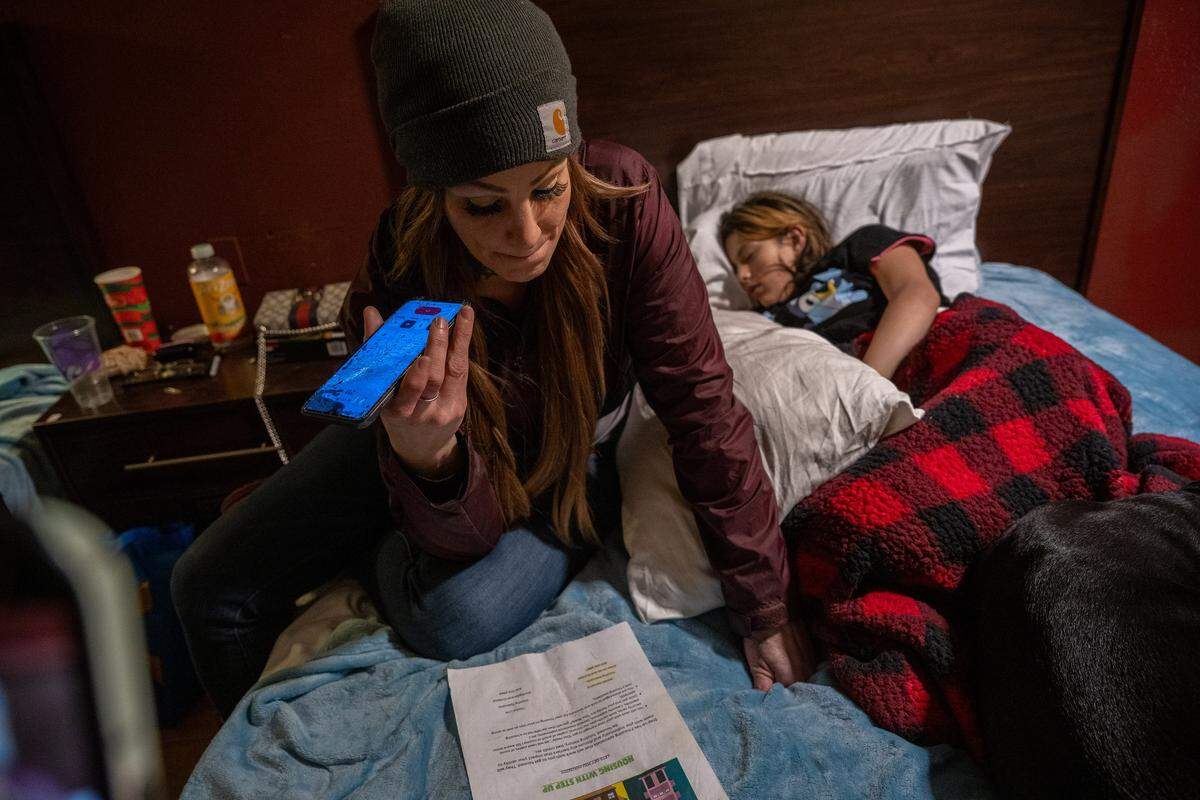
As far as Rose knew, she was already on the waitlist. She’d been calling 211 every day.
“I have a 12-year-old daughter with me,” Rose said. “We really have nowhere to go. I really don’t want to be on the street tonight. 211 — everybody keeps referring me to 211 as the emergency service line, but there’s nothing really emergency. Is there another number that’s close to 211, where they provide emergency services?”
“This is definitely the number,” the operator said. “Yes, that’s definitely very hard.”
“I know that you guys have limited resources; it’s not your fault,” Rose said. “It’s just frustrating.”
The operator said it sure sounded frustrating. The two of them completed the assessment in about 10 minutes.
“OK,” the operator said when all the questions were answered. “So we definitely have you on our waitlist for shelter, for family shelter. When something becomes available, we’ll give you a call.”
Rose asked how long the wait might be.
The operator said, “We never have a definitive answer for that.”
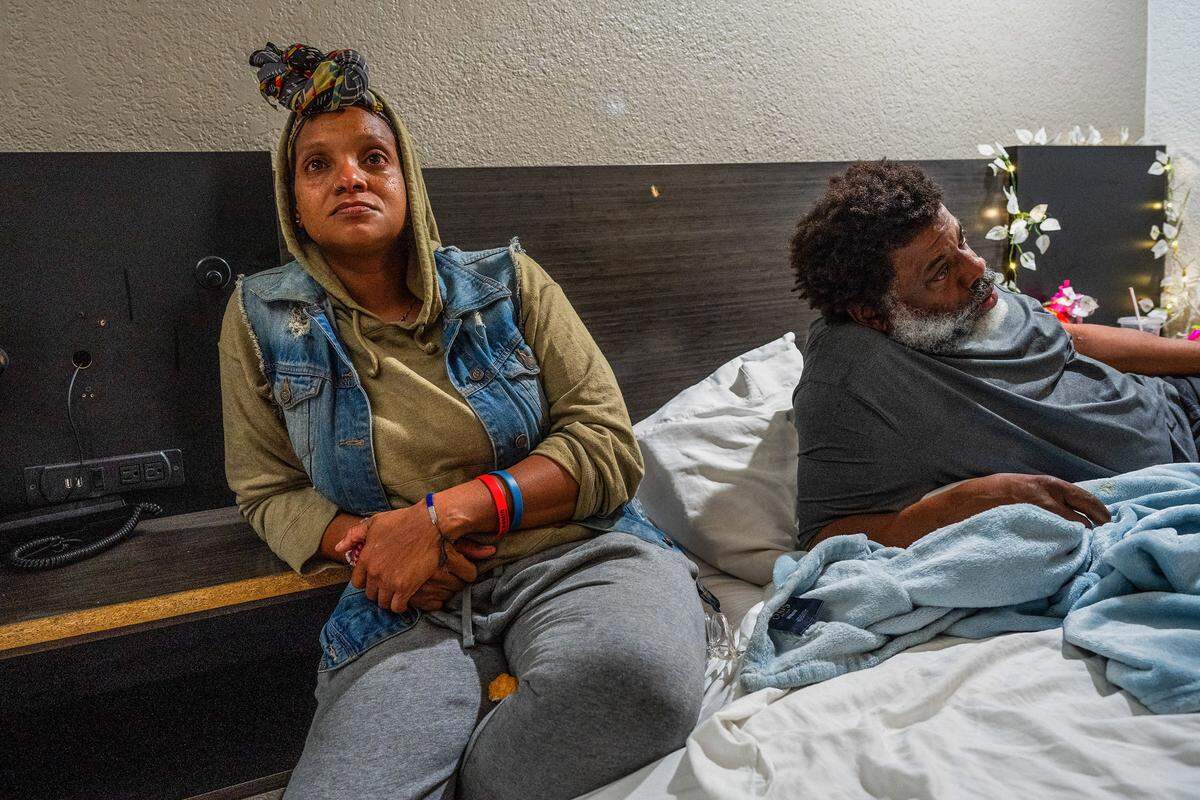
Rose and Williams both know their way around the homeless system: They have been homeless in Sacramento for years. The mothers — who do not know each other — happened to be kicked out of Sacramento family shelters with their kids in February 2024. They have bounced from program to program; Williams and her family actually secured a home for a while, until they had to leave because of mold that made them sick. Rose’s progress stalled at the Outreach and Engagement Center, where she languished for a year and a half without incident before being kicked out this January. The shelter, she said, didn’t make a plan for where she could go with her 12-year-old. A staffer gave her a tent. On Faith’s 13th birthday in February, they were still in a motel.

When Williams and Rose called 211 this year, neither mother was experiencing her first crisis. But they noted how dispiriting it was that no one seemed able to quickly help them or their young daughters.
After more than a week of panic and one night on the street with her child, Rose said that the Department of Human Assistance agreed to cover about 10 days in the motel. She’s been there since January, mostly getting by on her own. On Feb. 9, she dropped off a money order to pay the application fee for an apartment at the Sacramento Housing and Redevelopment Agency’s Mirasol Village. She’s been told that an apartment is hers, pending paperwork. As of March 24, staff were still processing the paperwork.
Both Rose’s family and the Williams family managed to stay at the motels with their daughters for another night. Williams panhandled with her 4-year-old in the stroller next to her and got lucky. Rose cut a deal with the front desk at her motel and used an antique $100 bill from her late father as collateral.
Both of them were glad to have figured it out for that night. It was a kind of relief.
Except that each of them woke up the next morning owing even more money.