Theodore L. Hullar, biochemist and fourth UC Davis chancellor, dies at 90
AI-generated summary reviewed by our newsroom.
- Hullar served as UC Davis chancellor (1987–1994), expanded campus, funding, enrollment.
- He authored UC Davis Principles of Community and advanced diversity, access, equity.
- Hullar, a biochemist, co-discovered the Hanessian-Hullar reaction used in drug synthesis.
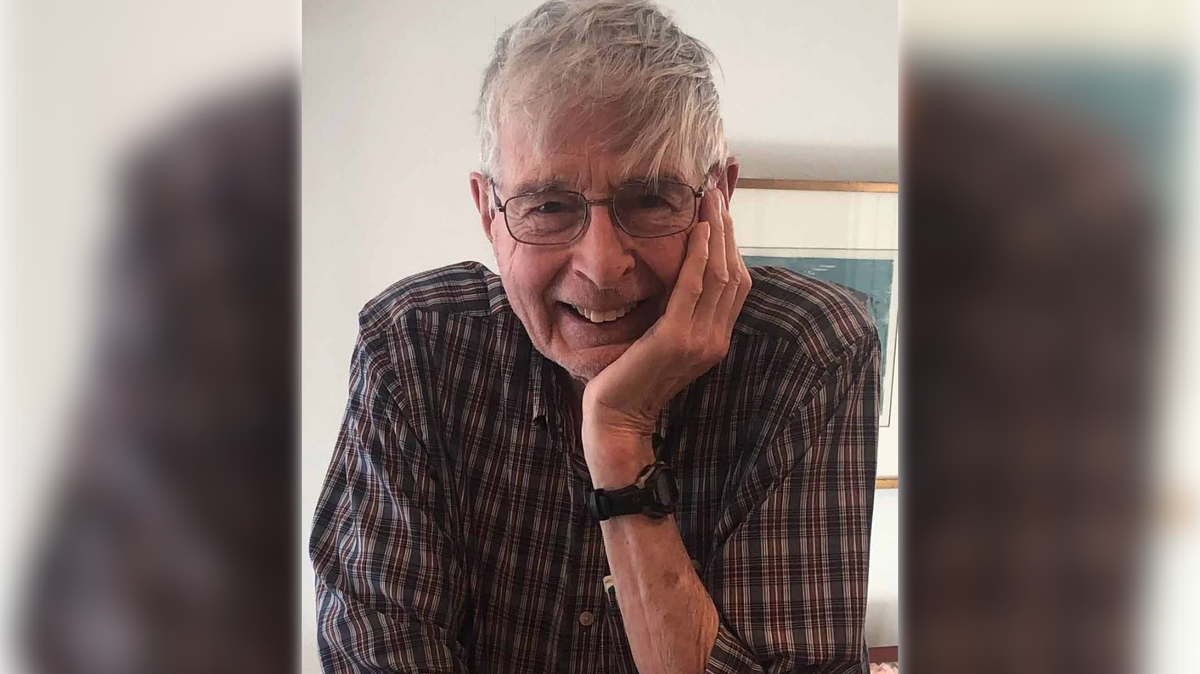
Theodore L. Hullar, the fourth chancellor of the University of California, Davis, who helped shape the university’s long-term growth and challenged students, faculty, and staff to serve a diverse and global society, died on Sept. 28, following a fall at home. He was 90.
Hullar championed diversity, equity and inclusion in his speech at his March 1988 inauguration ceremony, and he followed through by knocking down systemic biases and bridging gaps in access that had long excluded well-qualified students of color and women from attending elite colleges and universities.
“Like any good effort we must have our full measure of boldness, risk, and even — like adventurers everywhere — a goodly amount of derring-do, saying ‘yes,’ not ‘no,’ to the unknowns which lie ahead,” Hullar told his audience, according to a transcript from the university.
University leaders noted that, during Hullar’s tenure from 1987 to 1994, U.S. News & World Report named UC Davis one of its top five “up and coming” universities. Research funding and private gifts grew, and the number of women and people of color grew in both the ranks of students and faculty.
Hullar would oversee the drafting of UC Davis’ long-range development plan that was used as a guide for growing enrollment growth and the campus footprint through the 2005-06 academic year.
In the roughly six years that Hullar was chancellor, 21 buildings either started construction or were completed, and perhaps even more pivotal, he steered the 1990 acquisition of Russell Ranch, 1,500-plus acres of farmland west of Highway 113.
He also developed UC Davis’ “principles of community” that define values guiding how its students, faculty and staff should relate to the world and serve all people.
Here are examples of the grounding principles in that document: “We affirm the dignity inherent in all of us, and we strive to maintain a climate of equity and justice demonstrated by respect for one another. We acknowledge that our society carries within it historical and deep-rooted injustices and biases. Therefore, we endeavor to foster mutual understanding and respect among the many parts of our whole.”
Current UC Davis Chancellor Gary S. May, only the seventh individual to hold that title. said Hullar will be remembered for his seminal and enduring role in establishing those tenets.
“We are now celebrating 35 years of those principles,” May said, “and they still serve as our aspirational goals.”
His son Ted W. Hullar said that his family does not yet have an official cause of death but that his father died after a fall at home. The younger Hullar told Dateline UC Davis that his father played a linchpin role in establishing UC Davis as an academic and research leader in fields beyond agriculture and veterinary medicine.
“When you think of Davis as well-rounded institution — other areas outstanding in their expertise — I think that’s where my dad was able to bring a slightly broader view to campus,” said Ted Hullar, who worked at UC Davis until last year and heard similar observations from other employees. “I see my dad as really having been one of the main movers to start moving the campus that way.”
The elder Hullar led the university during a period of budget austerity, and some of his ideas met a wall of opposition. He proposed, for instance, that faculty’s success also be weighed by how much research funding they garner. The idea was scrapped.
In a history of UC Davis chancellors written for The California Aggie, veteran professors shared their thoughts on Hullar and other past UC Davis leaders.
Alan Hastings, a distinguished professor emeritus at UC Davis, described Hullar as the UC Davis chancellor most widely criticized by faculty members.
“His was a fairly short and tumultuous reign,” Hastings said. “I think he certainly was somewhat polarizing in a way. There was a sense that he did not do enough planning in order to carry out the programs he was working on.”
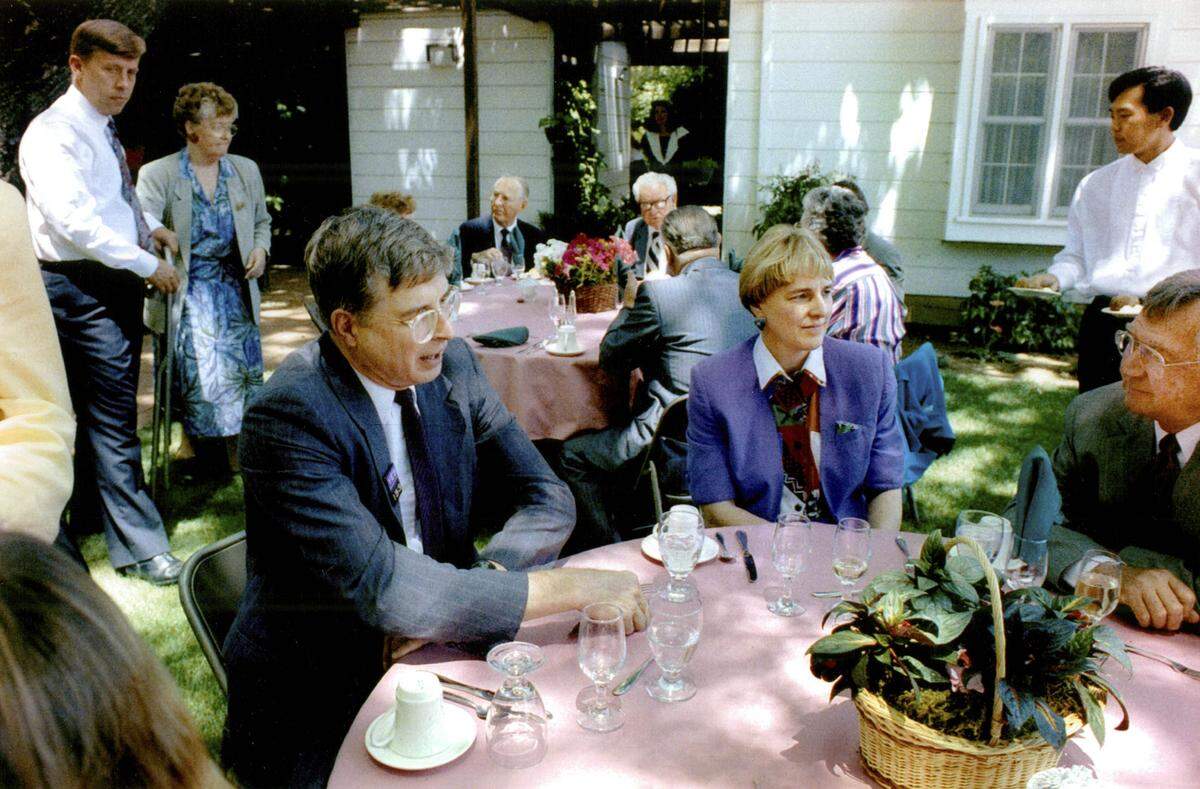
That was not how Linda Bisson, a professor in the Department of Viticulture and Enology, saw Hullar, though. She described him as a change agent who opened doors, set a new direction and generated much-needed dialogue.
Trained as a biochemist, Hullar worked in the past as an environmental toxicologist in the New York State Department of Environmental Conservation and later as director of Cornell University’s Agricultural Experiment Station. He was the chancellor for UC Riverside for two years before taking the reins at UC Davis.
Hullar will be remembered in the biochemistry field for his 1966 discovery of a chemical reaction known as the Hanessian-Hullar reaction, which has since become foundational in the synthesis of pharmaceuticals and antibiotics.
He shares the honor with Stephen Hanessian. The two men worked independently on this scientific puzzle and published their findings around the same time.
“I remember him as a brilliant synthetic chemist whose work was characterized by the highest level of scientific rigor,” said Hanessian, now a UC Irvine distinguished professor, in a Dateline UC Davis obituary.