‘It’s go time.’ Could 2020 finally be the year Sacramento turns the tide on homelessness?
Check out more our stories in the Tipping Point series. Click here.
***
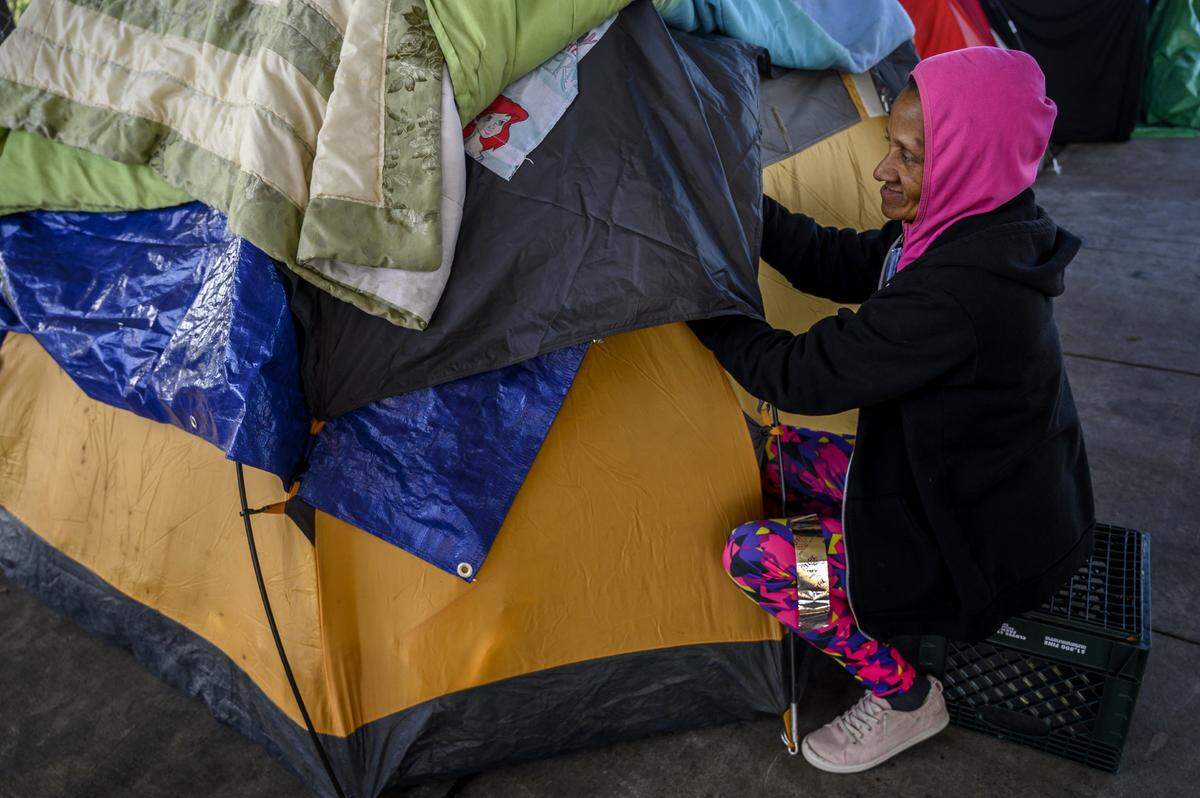
On a recent afternoon, Lois Caesar was crouched over on the sidewalk, taping strips of silver space blanket material to her tent, preparing for another night sleeping outdoors in near-freezing temperatures.
“I’m getting tired of the cold,” said Caesar, 57, who grew up in Oak Park and has been homeless for about a month. “I wish there were better places the homeless could go.”
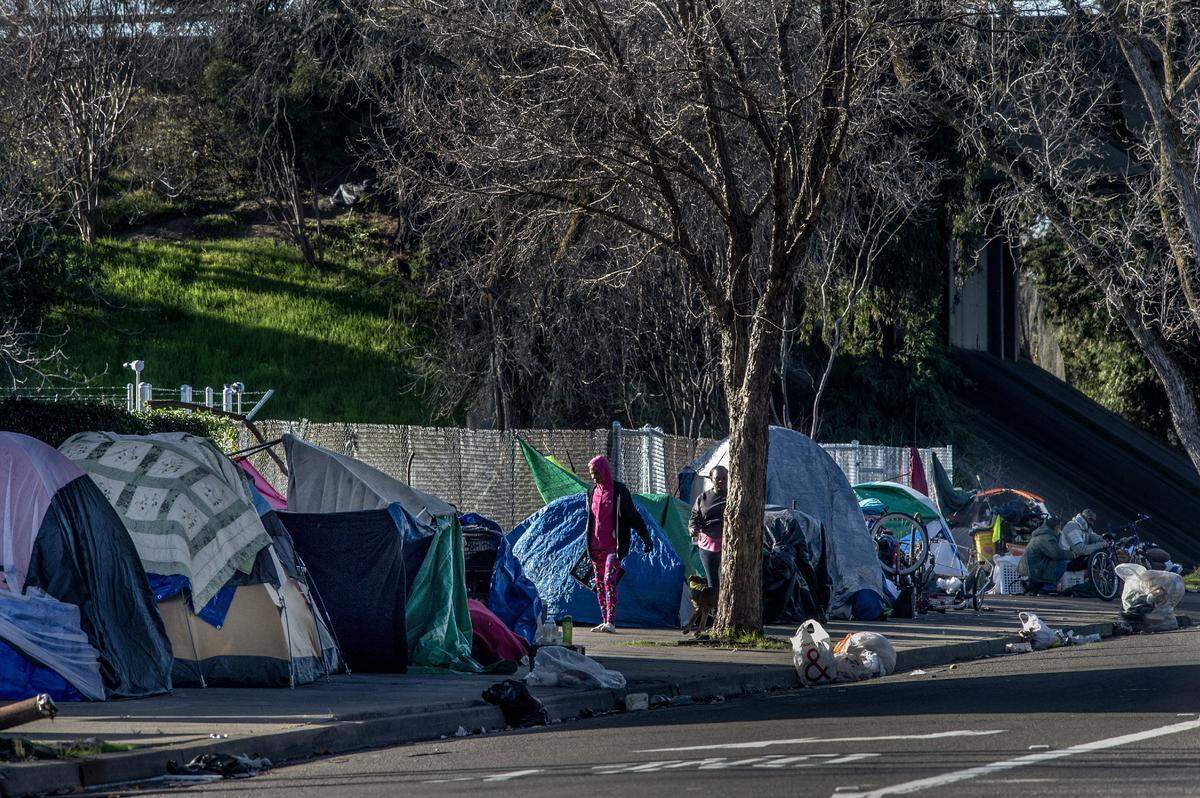
Caesar’s tent is one of about 15 lining X Street, just outside a recently-paved lot where the city of Sacramento plans to open a 100-bed homeless shelter in May. If Caesar is still homeless when the shelter opens, she will try to get a spot inside, seeking safety, warmth and the regular meals she needs to cope with her diabetes.
It’s a similar story all over the city, where shelters are typically full most nights. Homelessness in Sacramento is getting worse, and rising rents are among the highest in the country. Camps continue to pop up under freeways, on city streets and in parks. Meanwhile, elected leaders at City Hall are spending millions of dollars – not to mention a fair amount of political capital – trying to end the cycle.
But there are signs 2020 could be the year Sacramento gets enough people off the streets that residents finally begin to see a noticeable difference in the city’s most pressing social issue.
The city expects to receive roughly $14 million in state money – more than double what it got last year– and two large shelters are set to open in the spring. Meanwhile, nearly every City Council member has announced a proposal to help address the problem. Millions of dollars will be made available for affordable housing later this year, perhaps lending a spark to projects that have remained in limbo for years.
Mayor Darrell Steinberg – who pledged more than two years ago “to help make a tangible difference on homelessness” – said the city finally has “many more tools” in place to make that difference.
“It has been three years of very hard work to lay a very solid foundation,” said Steinberg, who took the helm in 2017. “I’m confident we are on the verge of people really being able to feel some difference.”
“It’s go time,” he said.
The city is opening 100-bed shelters with services in Meadowview and North Oak Park this spring. Those will join the more than 100 shelter beds at the Capitol Park Hotel downtown, which will stay open until October, along with scattered homes, improved shelters in the River District, and a Midtown shelter for LGBTQ youth.
Sacramento Housing and Redevelopment Agency officials are also working on a proposal to place cabin-style shelters at a north Sacramento site, as well as a parking lot where homeless could safely sleep in cars. Council members have also suggested opening shelters at the Motel 6 on Alhambra Boulevard; a former elementary school lot at Edgewater Road and Lampasas Avenue in north Sacramento; and a vacant lot across from Garden Valley Elementary School. Those ideas have not yet been approved or funded, however.
Still, it’s an improvement from a year ago, when the mayor publicly challenged each council member to find sites in their districts for 100 beds, and no definite locations had been identified.
Steinberg and other local leaders are striking a hopeful tone. But amid that new confidence is the fear that even as the city opens hundreds of shelter beds and gains access to large new pots of funding, the number of people becoming newly homeless will be even greater.
A revolving door
City Council members often talk about how it’s important for them to act now to fix the problem while it’s still manageable, and to avoid becoming the next Seattle or Los Angeles, where camps numbering in the thousands have grabbed national headlines.
But some worry we’re already past that point.
An estimated 5,570 homeless people are living in Sacramento County on any given night, mostly in the city of Sacramento and mostly unsheltered, a count conducted a year ago found. That’s a 19 percent increase from 2017.
BEHIND THE STORY
MOREAbout this story
Homelessness is the most serious social issue in Sacramento. Every day, new camps pop up throughout the city and region. Elected officials spend millions of dollars in taxpayer money on the issue, but it seems to be getting worse.
This year, The Bee is taking you to the streets of Sacramento and into the offices of City Hall to explain where the city is headed in 2020 as it tries to break the hopeless cycle of homelessness. Will this finally be the year residents see a difference?
Click on the arrow in the upper right for more.
Tipping Point
This story is part of Tipping Point, our new project focused on telling the stories of the Sacramento region’s evolution. We have formed a team of reporters and editors who are writing weekly stories focused on the challenges and opportunities in the region.
We’ve brought you stories about how Woodland is changing as new residents move there from Davis, the viability of downtown’s restaurant scene and where the Sacramento region’s real estate market is headed.
Stay in the loop and subscribe to our Local News newsletter here: https://bit.ly/2KMNh2i
“Hopefully there will be a visible difference on the streets, but three large shelters, even if they’re 100 (beds) each, that’s what? Five percent of the total?” said Bob Erlenbusch, head of Sacramento Regional Coalition to End Homelessness. “It’s gonna be hard to tell if it makes a dent.”
Steinberg said the city’s rent control ordinance, which caps rent increases and also prohibits landlords from evicting people without cause, will help fewer people get displaced. A statewide version of rent control also went into effect Jan. 1.
“That’s tens of thousands of people, many of whom are at risk,” Steinberg said.
But more affordable housing is also needed.
Affordable housing
The shelters at Capitol Park, at the W/X freeway and in Meadowview are designed to get people housed every four to six months, Steinberg has said. That means officials aim to place shelter residents into housing within six months of the first night they spend in the facilities.
But affordable housing construction in the city has not kept up with demand, meaning the inventory of available affordable housing in which shelter residents can be placed is low. Sacramento rents are now 11th highest among the nation’s largest metropolitan areas.
That presents a challenge for organizations tasked with quickly finding housing for people staying in the shelters.
Of the 658 people who spent time at the Railroad Drive shelter, 164 landed in permanent housing, and another 100 were placed in temporary housing, according to city data. Some of the people who were at the shelter the week it closed in May had been there since it opened, 17 months earlier.
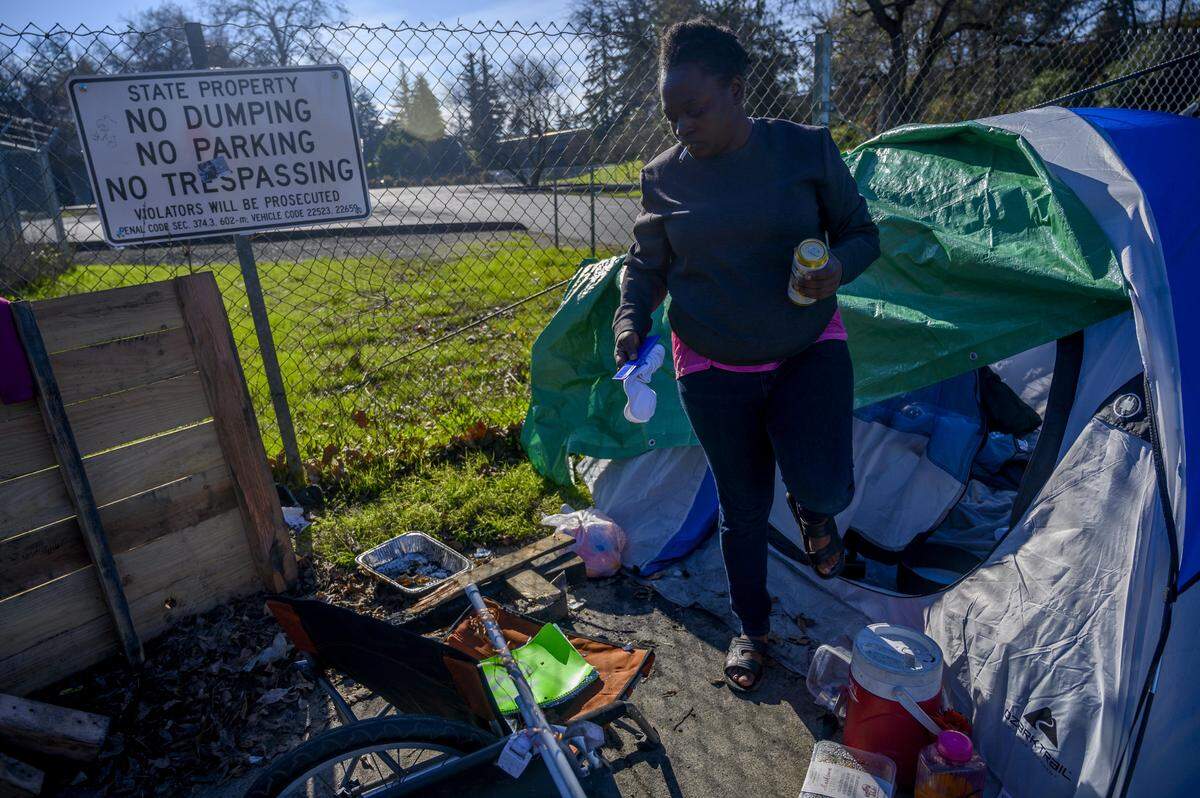
Loretta Evans, 36, said she was one of the 394 people who spent time at the Railroad Drive shelter, but never found housing.
She now sleeps in a tent on X Street, waiting for the new shelter to open.
Evans, Caesar, and several other campers used to camp in a tucked away alley near Bob’s Glass but officials recently ordered to move on to the sidewalk while they prepare the site for a shelter, Evans said.
“Since they’re not doing anything with it right now, why can’t we go in it?” Evans asked. “They’re building it for us.”
The new shelters at W/X and Meadowview will have “rehousing funds” to help organizations cover the cost of getting people housed by covering their first few months of rent, security deposits and other short-term expenses, said Emily Halcon, the city’s homeless services coordinator.
“We hope it will make the housing much more efficient,” Halcon said.
But the city still needs many more affordable units. An estimated 61,000 new rental units are needed to be built here in the next decade, a state study found.
The City Council is planning to use $100 million in revenue from the Measure U sales tax increase toward “gap financing” to spark construction of thousands of units of affordable housing that are essentially ready to go, but are just missing the final piece of funding they need. The city will start getting that money in August.
“We’re doing everything we can,” Steinberg said.
That money could help projects like a 56-unit affordable apartment complex at 14th and O streets downtown come to fruition. The Capitol Area Development Authority plans to start construction on the project, which is on state-owned land, this year after securing about $8 million in state tax credits, said Wendy Saunders, CADA’s executive director. But the project still likely will need $500,000 to $1 million, Saunders said. Many projects face similar gaps, especially after the state nixed its huge redevelopment program in 2011, Saunders said.
“We need a little bit more to get us to the finish line,” Saunders said. “Having the ability to go to the city for just a little bit more really helps ... I think it will help everyone working in this space.”
SHRA in 2020 plans to start construction on the long-awaited 227-unit housing development in the River District, near Richards Boulevard and Dos Rios Street. It will replace the World War II-era Twin Rivers housing development with the new Mirasol Village, and include a park and community garden. All but 12 of those units will be affordable, with a range of incomes accepted, an SHRA spokeswoman said.
Will shelters work?
To hear most city officials tell it, opening a large homeless shelter with services in a neighborhood will greatly reduce homelessness on the streets of that area. The theory: homeless individuals from that neighborhood will be given priority for space inside the shelter – and ultimately permanent housing.
North Sacramento neighborhoods like Woodlake, Dixieanne and Old North Sacramento did see a decrease in campers while the Railroad Drive shelter was open, the heads of those neighborhood associations say. But it doesn’t fix it completely. There were still several camps set up just across the street from the warehouse shelter, and several people sleeping in cars, which lined the street just outside the gate.
In downtown, the number of homeless people sleeping on the streets has not significantly decreased since the Capitol Park Hotel shelter opened in September, according to Downtown Sacramento Partnership data.
Last August, about a week before Capitol Park opened, Downtown Partnership staff counted 122 people sleeping on downtown sidewalks, parks and on the steps of government buildings. In late November, staff counted 116 people.
The shelter also admits people who are sleeping in midtown as well as downtown, said Lisa Bates, head of Sacramento Steps Forward, the organization that helps place people in the shelter. The shelter has so far housed more than 30 people, according to SHRA data.
The partnership is in favor of the shelter, but Dion Dwyer of the Downtown Sacramento Partnership said many of the people who are homeless in downtown need intensive mental health services, as well as treatment for drug and alcohol addiction. While Capitol Park offers those services, people have to choose to go.
“I think Capitol Park is a great program in helping individuals get off the sidewalks,” Dwyer said. “But I’m not sure if it is really addressing the population we tend to deal with on a daily basis in the downtown core. It may be a service-resistant population.”
This story was originally published January 9, 2020 at 5:00 AM.