
How do we honor the life of a beloved Sacramento artist? By talking openly about his death
Editor’s note: This story is part an ongoing series of journalism produced as part a collaboration between The Sacramento Bee, Sol Collective and other community organizations called the “Community to Newsroom Pipeline.” To learn more or to contribute, email us at voices@sacbee.com.
***
“There are thrones set in the house of kings.
Only soldiers with true hearts act this way, to redeem… So go ahead, scatter my home, slip skin and shatter my bones.
It doesn’t matter, I’m equipped with the knowledge of kin from the catacombs.”
Ali “Kara” Trotter.
It was the early morning hours on the first day of the new year. The sun wasn’t out. The birds weren’t chirping. The air was cold, it felt eerily still and most of the city was still tucked safely under the covers. That’s where I was when the news first came in. Ali Trotter, a long time contributor and supporter of the arts, music and cultural scene in Sacramento, had taken his own life after a long-fought battle with depression. A hip hop artist, an event promoter and an all around aficionado of music, his impact will be felt by so many of us for years to come.
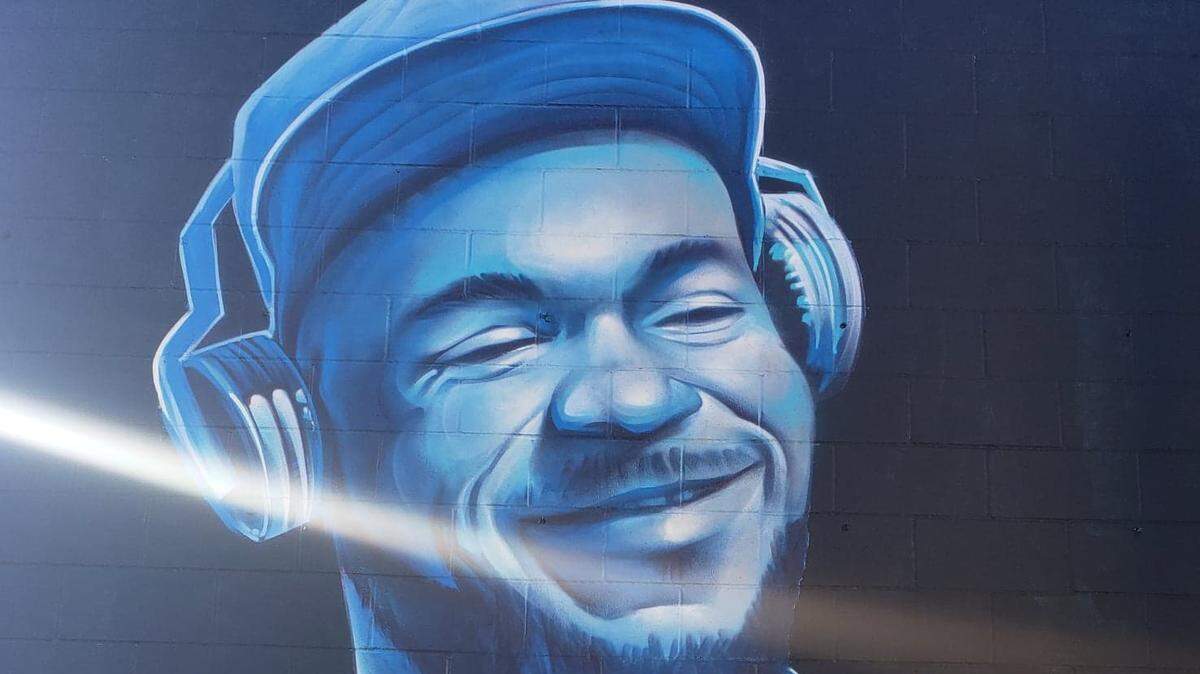
Ali was a sweet spirit, often surrounded by an un-sweet world. Known for a smile that always touched his eyes and a penchant for oversized headphones, you could easily spot him in a crowd. A hip hop show in Sac wouldn’t feel the same if you weren’t getting wrapped up in a hug from Ali before he pulled you into a corner to catch up on life while the bass thumped steadily in the background.
Though he wasn’t born in Sacramento, Ali was definitely from Sacramento. Having made the capital city his home for the past 20 plus years, his constant efforts to show love to the culture, along with his genuine care for the people around him, earned him fast friends that morphed into a tight knit family.
On the first day of the new year, that family slowly woke up to the realization that he was no longer with us. With each hour the reality hit more people, and social media flooded with pictures, memories and an outpouring of love as so many remembered their first, last and in between moments with Ali.
“It’s the inside jokes that you had to love about him,” Chuck Taylor reminisced as we spoke on Ali after he passed. “Things like him wishing you a Habby Pirthday every year. It was small, but it was his goofy way of being different from everyone else giving you the typical Happy Birthday response … and he always remembered to do it. Even when he wasn’t feeling so great, he wanted to make sure you knew you were loved. He was love.”
Death affects us all. There is no right or wrong way to feel your way through it because everyone feels things differently. When moments like these occur, and we feel that loss, we often rely on our friends, family, community to get us through the rough patches as we travel through the different stages of grief.
Yet when that grief is felt simultaneously by an entire collective, it seems to process through a whole new set of filters. It can leave many feeling lost or unsure how to proceed forward. Where normally you would reach out, you might hold back to avoid making anyone else take on your emotional baggage. Where normally you would cry on someone’s shoulder, this time you might shy away because you know they’re looking for a similar shoulder to cry on.
Getting through dark times
How do you parse through the emotions and find the light together, when you’re all stumbling in darkness together?
There are probably dozens of schools of thought on the right and wrong answers to that question. For the collective group of people here, however, the answer came as naturally as breathing. Mostly because it’s in our nature — partially because we’ve gone through this process before, with the sudden passing of Daniel Osterhoff in 2017. A local muralist, DJ, and another deeply embedded family member of the art community in Sacramento, “DanO” left his mark all over Sacramento with his art. Ali left a mark all over Sacramento with his spirit.
While death is never easy, we’ve learned a few lessons from it. We’ve learned to celebrate. To celebrate by honoring him. Through our words. Through our music. Through our art. We honor him by taking time to spend time together sharing stories, remembering long ago moments and talking openly about the things that we will miss the most.
“Ali and I met in ‘96 through hip hop, but over the last 20 years he became like a brother to me,” said Dustin Worswick, who works under the stage name DJ Epik. “He was always quiet at first, you know, but once you got to know him, he always had words for you. He was selfless, and always wanted to help out a friend who needed it. He was an artist but he was also one of the biggest supporters I knew. He was there for you no matter what and those kind of friends are so important. Ali was a legend. One who deserves to be celebrated. Which is why we’re doing it the way we are. Ali gave that kind of energy, so we’re giving it right back.”
Now, the rest of the city will be able to feel that energy as well. Less than a week after Ali’s death, a mural nearly 20 feet tall appeared on the midtown Sacramento landscape courtesy of local graffiti artists Shaun Burner and Ernie Upton. Located between J and K on 26th Street, the tribute features that big smile, those oversized headphones and a subtle tribute to one of Ali’s greatest loves: hip hop — his name is written in the same motif as A Tribe Called Quest’s album “Midnight Marauders,” one of his all-time favorites.
But a mural wasn’t nearly enough for this community. On Jan. 25, we held the Habby Day celebration of life at Harlow’s nightclub. In what can only be described as a hip hop high school reunion, groups of people who had not been in the same spot in years came together to put love and life into the night air as we paid homage to Ali, one of Sacramento’s biggest fans and truest supporters.
Stories were being traded like baseball cards, as each person tried to pull that classic tale out of the memory banks. Folks laughed, and clinked glasses in cheers as libations were poured and fingers were held to the sky.
Talking openly about depression
Still, in honoring his life, open discussions remained about what had led up to Ali’s passing.
“If you were close with him, you know that Ali posted a lot about his depression, and the setbacks he faced,” DJ Epik remarked, “He kept that dialogue open and is a prime example of why mental health issues need to be taken more seriously, and discussed more openly.”
This is another way we honor Ali, maybe one of the most important ways. We honor his life by being honest about his death.
“I’ll keep believing in Heaven, if it just keeps me here.”
“Nobody makes it on their own… I’m trying though.”
“Whoever said it’s lonely at the top, forgot about the bottom.”
— Ali Trotter’s social media account.
The topic of mental health still seems to have an antiquated stigma attached to it. Be it from religious teachings, cultural mores, or delicate sensibilities, that stigma is what prevents many from feeling comfortable enough to talk about the struggles that stem from it.
Ali was not one of those people. He was open about his depression and the effects it had on him. When you saw him in person, he was open about the things that were going on in his life and the things weighing on his heart. When he was online, he would opt to not hold back when he was feeling it. He wasn’t afraid to reach out when he needed it. In fact, he talked about it openly, in large part because he wanted others to know that they weren’t alone — a way of putting love into the world.
Through his words, whether knowingly or not, Ali was making progress every day on breaking the cycle, by breaking the silence, that surrounds depression.
That will forever be a part of his legacy. A legacy we will continue to carry on in his absence.
Ali — it’s all good homie. Tell Dano and Phife Dawg we said what’s up.
This story was originally published February 18, 2020 at 3:37 PM.