
Where suburbia meets the country: The Sacramento region’s unlikely real estate hot spot
Check out more our stories in the Tipping Point series. Click here.
• • •
An unlikely real estate hot spot has emerged during the mass migration to the Placer County foothills.
The town of Loomis – which drivers on Interstate 80 pass through often without even knowing it – is demanding more and more attention. The median home price is a whopping $800,000, up roughly 32% since last year alone. Families settle into their homes for years, and the houses that do go on the market often sell in a weekend.
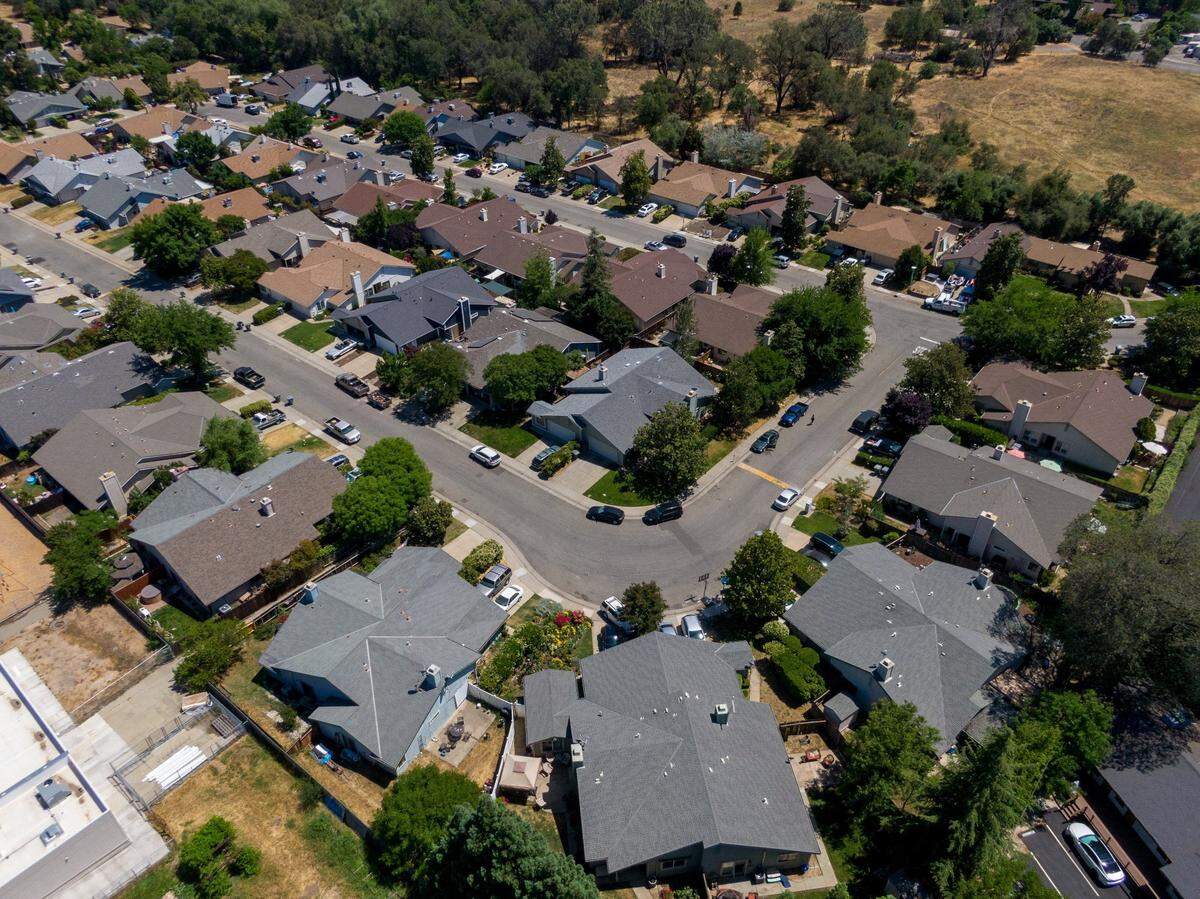
With its large lots and proximity to both nature and big city amenities, Loomis is just the kind of setting that is increasingly attractive to teleworkers, Bay Area refugees and others seeking to escape the crowds after a year of a pandemic.
That increase in demand – combined with a constant pressure to grow – has created a tension between long-time residents and the town’s new urban transplants.
“One of the biggest tensions that existed throughout ... was this sort of rural, urban divide,” Michele Reeves, a consultant hired by the town to help it navigate its growth, said at a planning commission meeting earlier this year. “And there’s a whole lot of, ‘We don’t want any big city, Bay Area folks coming in and telling us what to do.’”
Loomis sits as a last defense between the booming suburban sprawl of south Placer County and the rural, picturesque landscape that defines the Sierra Nevada foothills. Loomis bills itself as the “small town that feels like a big family.” It has one grocery store. It’s home to an antique shop named for a horse and buggy, as well as a burger joint boasting 300 flavors of milkshakes. It still has its own small-town newspaper.
It offers the slice of small-town living that Placer County was once well-known for, all within a 10 minute drive of a Target and the future home of a new Costco.
Kathleen Cawley and her family moved to Loomis from San Carlos in the Bay Area five years ago “and we love it.” It’s a big change from life in a metropolitan area: Cawley’s neighbors have llamas, goats and horses – and she can hear their cows “mooing in the morning.”
“We’ve got lots of space and lots of greenery and (it has) lots of small town sort of feeling to it,” she said. “We were very cramped and tight when we were back in the Bay Area and here we have much more space.”

Development in Loomis
The town has undergone a renaissance of sorts in recent years, doubling down on infrastructure projects to revitalize its downtown, making it even more attractive to potential buyers.
Last year, the Town Council approved funding for a facade improvement project, bringing attractive storefronts to previously dilapidated buildings. The project resulted in the conversion of a corner Subway restaurant and coffee shop into LBB Gastropub and Smokehouse. The new restaurant stands out with large windows, raw wood beams and a covered patio, giving the street corner a rustic, inviting look. On a Thursday afternoon in April, the restaurant had a patio full of patrons and a line out the door.
The town also worked to fill buildings that had been sitting vacant in an effort to draw in new business. In December, during the height of the pandemic, a hardware store opened on Loomis’ main street. The store, Loomis Ace Hardware, is operated by a graduate of Loomis’ only high school, Del Oro High. The business has become so successful, it’s now expanding into another vacant building across the street.
Most Loomis residents value its small town vibe and family focus, according to a survey conducted last year. If the town was a person, it would be Clint Eastwood or Sam Elliott, a survey respondent said.
That feeling is part of what drove voters to reject a housing development along Interstate 80 that would’ve added single family, mixed-use and high density housing to the area.
The Village project would have also added much needed roads and traffic improvements, said Greg Obranovich, chair of the town’s planning commission, which is one of the reasons he said he voted in favor of it. But residents petitioned for a referendum on the project. And in June 2019, the project was rejected by voters.
“A lot of people looked at the project and they didn’t like the, I would say, the general concept of it,” Obranovich said. “They wanted a lot of changes. The houses were a little bit smaller than they wanted. If you look at housing in Loomis, they’re more on single lots with good-sized homes, single-family dwellings, and now this (project) is kind of looking to the future in the sense that is was a little bit higher density.
“The problem is that they really didn’t offer a viable alternative, saying, ‘Well, we don’t like that, but this is what we do like,’” he added. “So it just got voted down and left there. It’s a dead, defunct project waiting for somebody to come along and pick it up.”
More housing needed
The failure of the Village project has added to the challenge of meeting the housing needs of the town. According to the town’s state housing mandate, Loomis needs to ensure there is enough space for 352 new units over the next eight years, 33% for very low income residents and 32% for above moderate income residents.
“Right now there’s a need for housing in Loomis because our kids can’t live here, they have to move out of the area, they have to live outside of town,” Obranovich said. “There just is no housing available, there’s no new housing being built. You can’t turn the clock back. All we can do is adapt. It’s not always going to be as rural as it used to be.”
The average lot size in Loomis is just shy of two acres, and homes range from the low $400,000’s to nearly $3 million, according to current listings. And the market is only getting more intense.
“You can’t keep anything on the market,” said Rachel Adams Lee, a Roseville-based real estate agent. “We’re putting properties on the market on Thursday and selling by Monday with multiple offers. People love where they live in Loomis, they tend to stay there.”
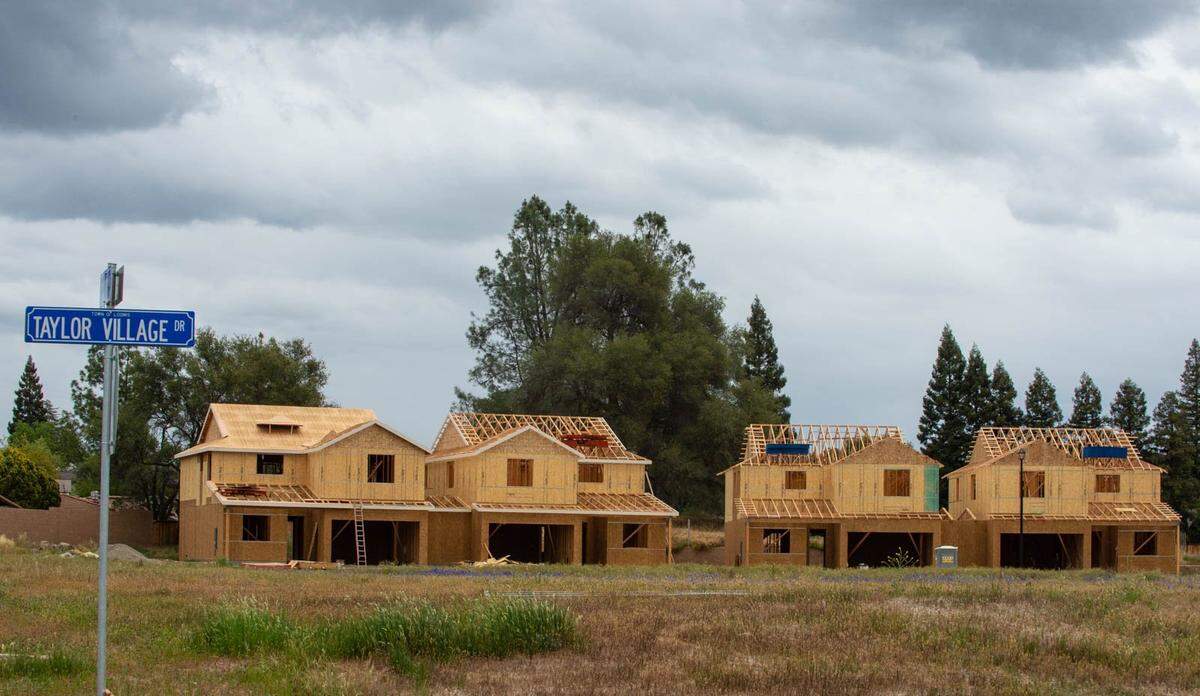
The only development currently in construction is a mixed-use project along Loomis’s main drag, Taylor Road. Thirty-five units are being built on the site but the project won’t be completed for months. And the 35 homes are nowhere near enough to meet the demand.
Lee said the housing crunch has led to intense competition among buyers. She said she recently had a client who offered to make a seller the maid of honor in her wedding if her offer was accepted. And those kinds of stories are not uncommon, Lee said.
Its location helps drive its popularity.
“Loomis is close enough to downtown (Sacramento) for a commute, but it’s also not full-fledged rural territory with total isolation,” said Ryan Lundquist, a real estate appraiser and Sacramento region housing market analyst. “Thus residents can enjoy the benefit of acreage and peace while still being close to conveniences.”
Demand is likely to remain high. Loomis doesn’t have any other imminent plans to build housing and it doesn’t have the funding to incentivize developers to build affordable housing, said Mayor Jeff Duncan.
“One of the problems of being a small town is that you have a small budget,” he said.
Duncan said Loomis’s large lot sizes make accessory dwelling units a “popular and doable” housing alternative. The dwelling units, also known as in-law suites or granny flats, can be up to 1,200 square feet, and can be used to help the town meet its housing needs. But the construction of dwelling units is at the discretion of property owners. The town can’t force them, he said.
And the rural resistance is a real challenge at times, he added. But the consequence is that the town is having trouble holding onto its seniors and young people.
“’There’s nothing for me to move to,’” Duncan said. “I hear that a lot.”
This story was originally published May 20, 2021 at 5:00 AM.