Unprotected bike lanes and 45 mph cars? Sacramento County wants input to fix Watt Avenue
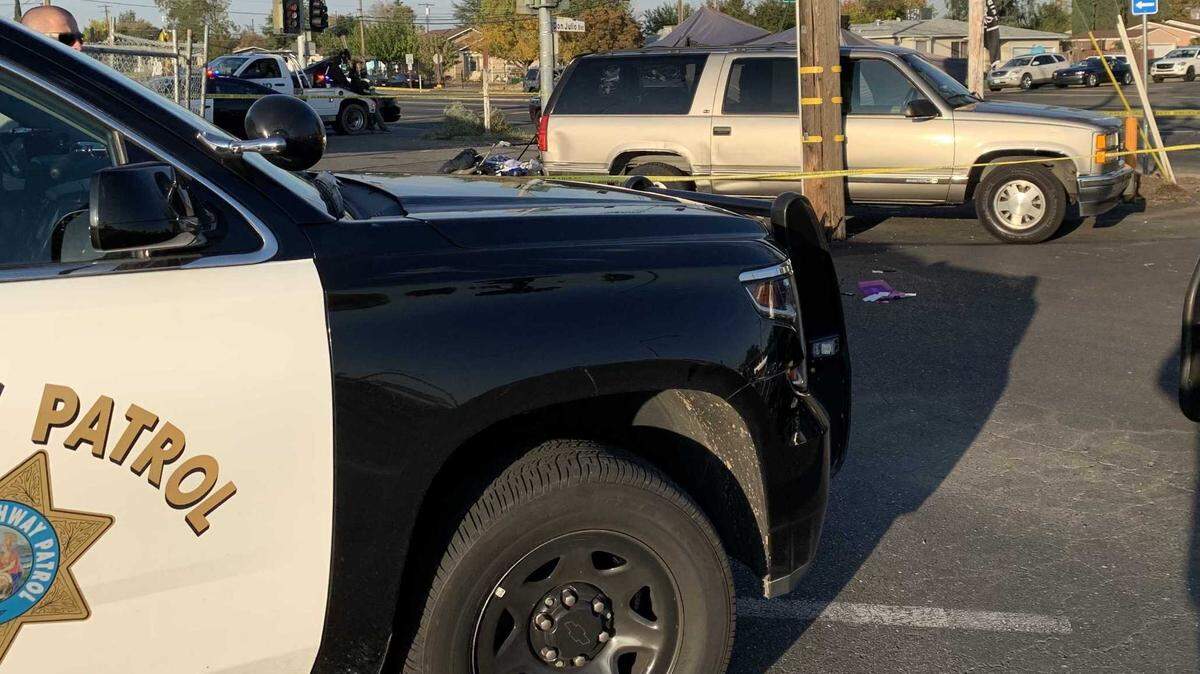
Sacramento County wants feedback from residents on proposed changes to a dangerous three-mile stretch of Watt Avenue in North Highlands.
Using a grant focused on sustainability, the county could make either significant or minimal changes on Watt from Antelope Road to just north of Roseville Road as the capital region faces a crisis in traffic fatalities.
The plans, which aim to “improve the safety and mobility” of the community, are still in flux, and may be combined. Residents can view and comment on the current North Watt options online.
One of the county’s four proposed road designs leaves cyclists exposed to six lanes in which drivers travel at lethal speeds. Watt’s posted limit in the area varies from 35 to 45 mph — speeds at which a collision is highly likely to kill a pedestrian or cyclist.
That risk has played out for at least a dozen people using this particular stretch of Watt Avenue. UC Berkeley’s Transportation Injury Mapping System shows that since 2012, 11 fatal crashes have killed 12 people on the part of Watt due for these changes. Five of the victims were pedestrians.
Additionally, since 2017, three pedestrians and a cyclist have been killed on Watt Avenue just south of the project area, in the block between Roseville Road and Peacekeeper Way, which marks the southern limit of the designated corridor.
Currently, the county’s plan does not include a lane reduction, which research shows can slow down traffic. Matt Robinson, a spokesman for the county, said that the county intends to have three lanes in each direction because “growth projections anticipate significant increases in traffic volumes from 28-38,000 vehicles per day today to 43-47,000 vehicles per day in the future, due to expected development along this corridor.”
One of the four roadway design proposals, however, offers something to the effect of a lane reduction. It would convert Watt to three one-way lanes and establish a two-way bike lane separated from traffic by a median. A parallel roadway, 34th Street, would become a one-way in the other direction. The Federal Highway Administration says that one-way streets encourage higher speeds.
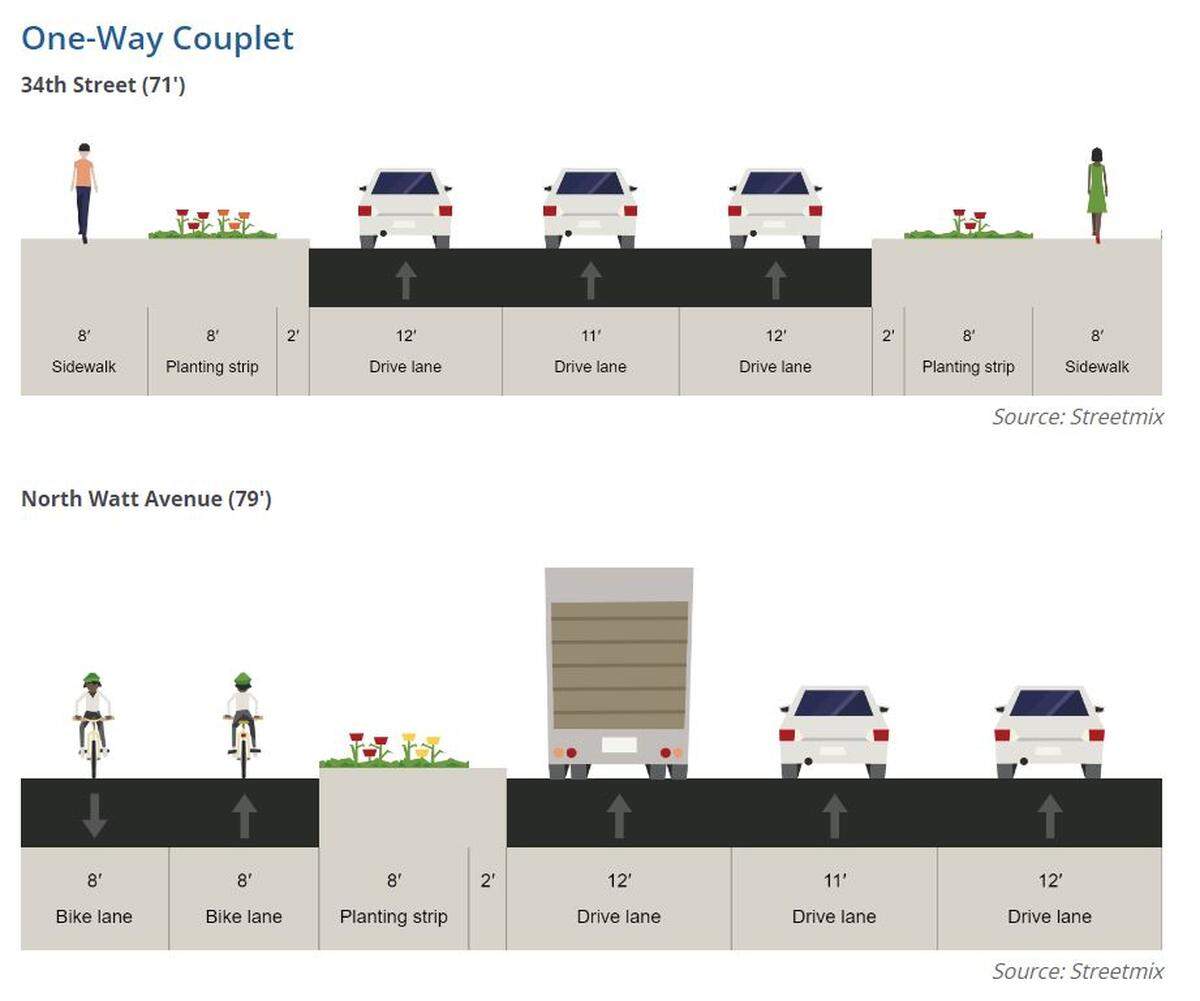
In one of the four roadway design options, titled the “minimum impact” design, Robinson confirmed that cyclists would have nothing separating them from cars except paint.

In another section of proposals describing specific bicycle infrastructure that could be integrated into the larger roadway design plans, the county has highlighted safer bicycle infrastructure.
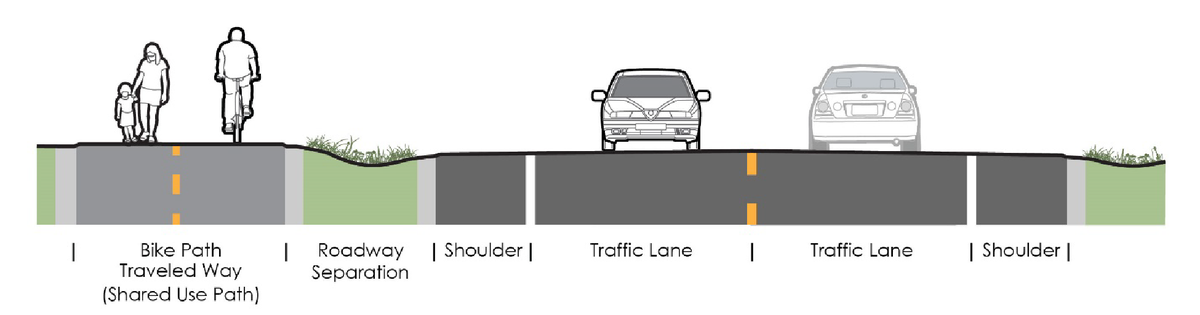
A “shared use” path would be open to cyclists and pedestrians and separated from the roadway.
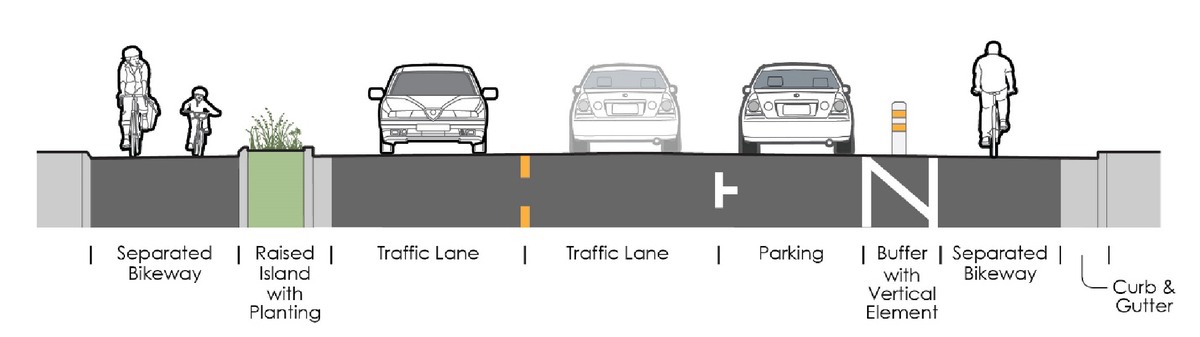
The county has also highlighted another, somewhat less safe option in its “class IV” bike lane pitches: either a bike lane with a low island separating cyclists from moving vehicles, or a bike lane with painted buffers and a “vertical element” — often a plastic pole that cars can knock over.
Other elements of the proposals include adding bus amenities such as bus shelters, widening sidewalks, closing gaps in sidewalks and changing signalized intersections so that pedestrians are allowed to cross before traffic starts moving.
Twin deadly crises in Sacramento County
Changes to road infrastructure are also part of the county’s strategy to combat a deadly climate crisis fueled by human carbon emissions. The county is trying to make walking, cycling and public transit more appealing to combat emissions from transportation. The proposed North Watt changes are part of that plan: Sacramento County won a $487,000 Caltrans Sustainable Transportation Planning grant for this phase of the North Watt project, and it is kicking in an additional $63,100 for its 11.47% local match.
As the county battles climate change, it also faces a crisis in road safety. A Consumer Affairs report from June found the Sacramento County has the fourth-highest number of traffic deaths per capita among large counties in California, while the capital city had the worst rate among large cities.
From 2019 through 2023, the Transportation Injury Mapping System shows that the county had an average of 192 severe pedestrian injuries and deaths each year.
And marginalized neighborhoods such as North Highlands experience a disproportionate amount of pedestrian deaths, said Pristina Zhang, a project manager at the local transportation safety organization Civic Thread. According to the U.S. Census Bureau, 21% of the North Highlands residents live in poverty, 29% were born in other countries, 10% are Black and 30% are Latino.
Zhang linked dangerous roads to environmental crises.
Risky streets “influence fear and (are) a physical barrier for people to walk, bike or roll in the neighborhood surrounding them,” she said. “Reducing avenues for active travel — thus fostering a car culture society —also impacts a community’s environmental health, leading to risks of respiratory distress, asthma and cardiovascular disease.”
As of Tuesday, the public database of the Sacramento County Coroner’s Office had logged 101 traffic-related deaths this year.
About 40% of the dead were pedestrians or cyclists.
Slower speeds save lives in New Jersey
Even at relatively low speeds, drivers present a risk of death or severe injury to vulnerable road users who are not in cars. A study published in the public health journal Accident Analysis & Prevention found that when a driver traveling 24.1 mph strikes a pedestrian, the average risk that the pedestrian will die is 10%; by the time the driver reaches 32.5 mph, the risk that the pedestrian will die is 25%.
If a driver is traveling 48 mph — slightly over the 45 mph speed limit on part of north Watt Avenue — hits someone on foot, the average risk that the person will die is 75%.
In Hoboken, New Jersey, which has eliminated traffic fatalities through changes to policy and infrastructure, the citywide speed limit is 20 mph.
“The facts don’t lie,” said Hoboken mayor Ravi Bhalla, who has spearheaded that city’s robust public safety reforms. “The data shows that the risk of serious injury is substantially less when you drive 20 miles an hour. ... That data kind of speaks for itself.”
This story was originally published August 7, 2024 at 5:30 AM.
CORRECTION: This story was changed to correct the number of proposed roadways that would only have paint separating cyclists from vehicles.