It was a quiet road near Sacramento. Now a mom fears her kids will die in a crash
Adair and Jago Martin walk about 20 minutes to and from their Fair Oaks school. Every time they do, their mother worries that a driver is going to kill them.
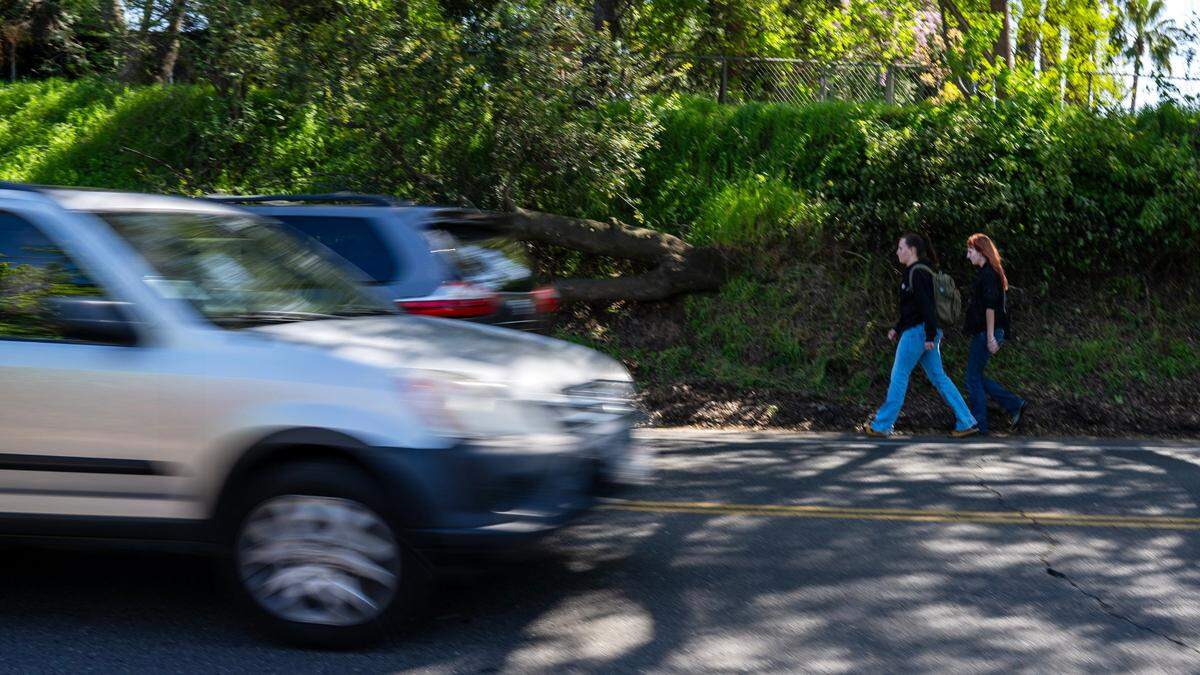
Susannah Martin’s daughters — Adair is 18 and Jago is 16 — worry, too. The only route available to them is just under a mile each way, and because most of it has no sidewalk, they’re usually on the shoulder, with only a line of paint between them and speeding vehicles. Adair is old enough to get a license but prefers to walk and rely on public transit; Susannah leaves for work too early in the morning to drive her daughters herself; and there’s no route that avoids Sunset Avenue. It’s a two-lane street lined with homes. Still, Jago said, “They’re going so fast.”
The idea that they would get hit by a car, Adair added, is “not a paranoid thought.”
The girls can tell the seasons by the roadkill on Sunset. In September, they walked by a dead fawn, with a head about the size of Adair’s hand.
A crash on this road could kill a person, too; it already has. The county says that 10,000 vehicles pass through every day, and the posted speed limit on the stretch of Sunset by the Martins’ home is 35 mph. Some exceed that limit. Over the course of just 10 minutes on an April afternoon, a small traffic radar gun measured the speeds of 28 cars traveling between 34 and 53 mph. Only five people were driving under 40 mph.
These speeds are lethal.
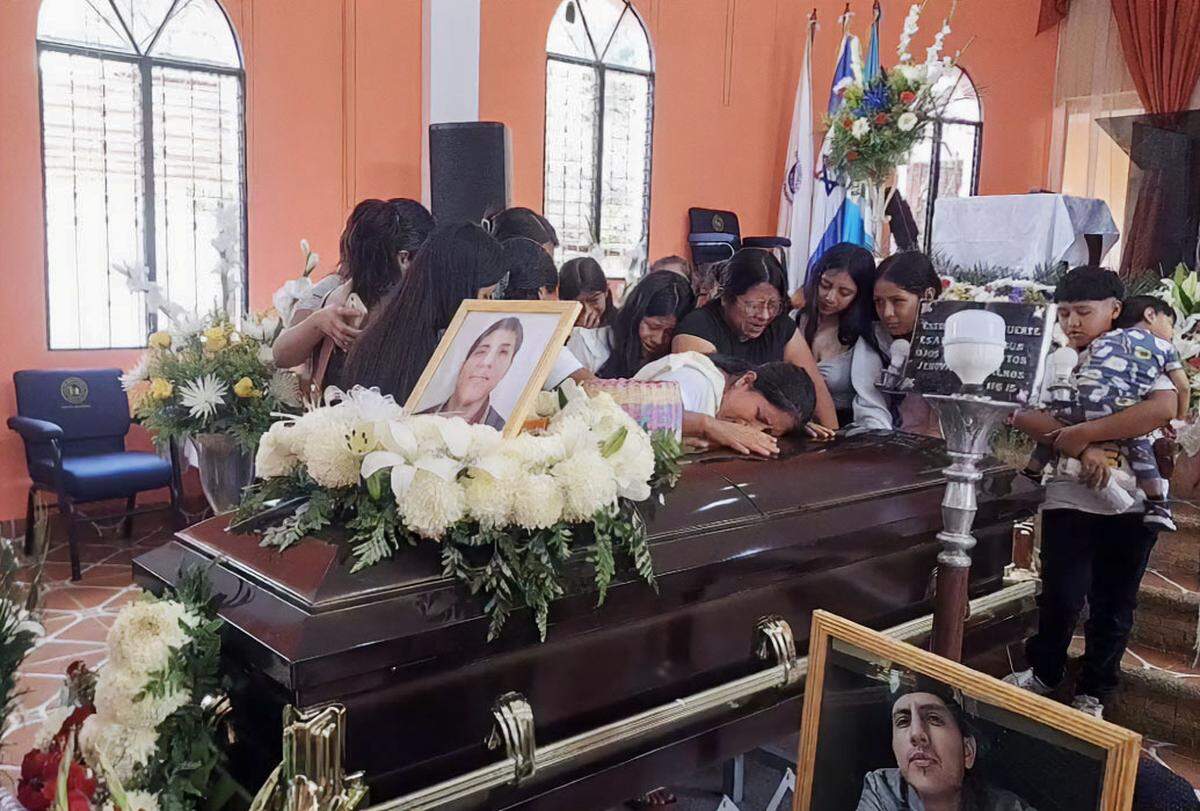
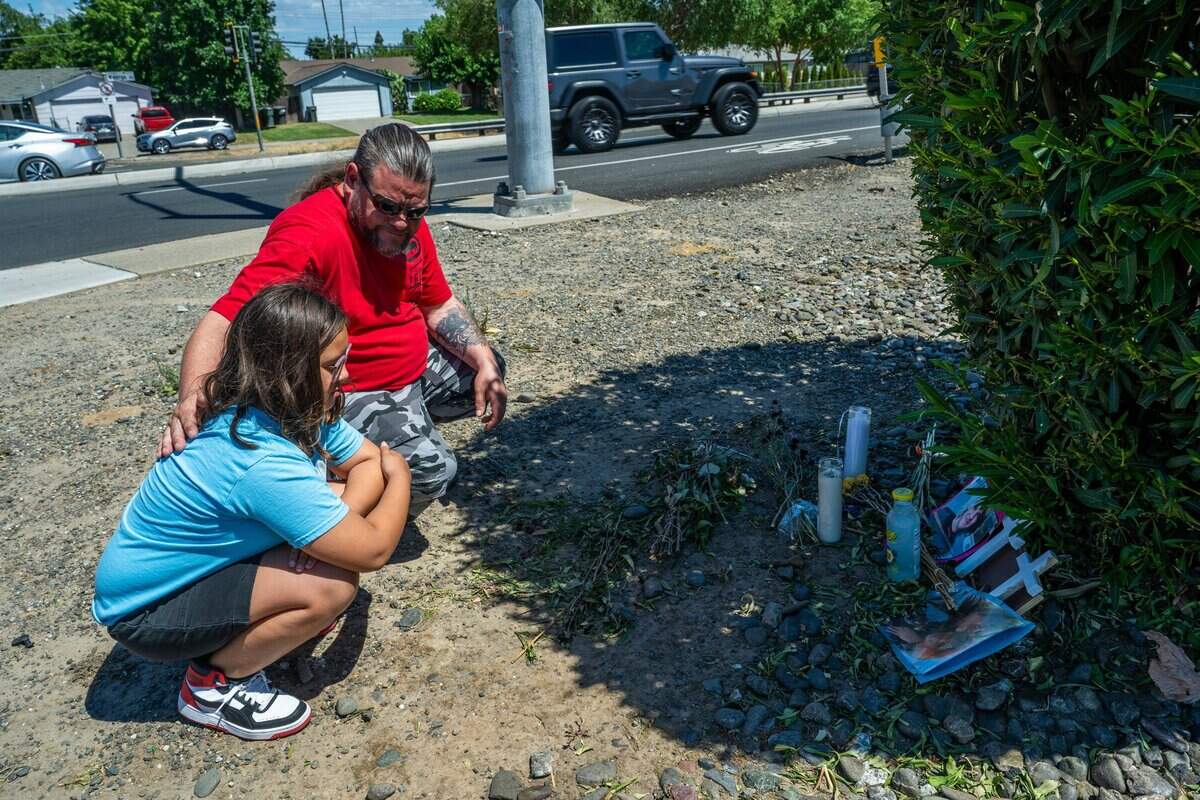
A study in Accident Analysis & Prevention found that if a driver traveling 24.1 mph strikes a pedestrian, the average risk that the pedestrian would die is 10%; by 32.5 mph, the risk of death jumps to 25%. Higher speeds become more dangerous for those inside cars, too, and Juan Israel Ratzan Chicajua died in a single-car collision March 12 on Sunset Avenue, about 2½ miles east of the Martins’ house. He was 25. At his funeral in Guatemala, his sister draped herself over his casket, weeping.
The road wasn’t always like this.
Martin knows that because she grew up in the house where she’s now raising Adair and Jago; her father bought it in 1979, and she moved back in 30 years later. After she saw a news story about Chicajua’s crash, she sent it to her local representative, Sacramento County Supervisor Rich Desmond, and requested traffic-calming infrastructure on Sunset. She thought the young man’s death had been preventable.
She had another haunting thought: If that could happen to a grown man inside a car, what would happen if a car hit one of her daughters walking home from school?
Pedestrians face serious danger in car crashes
The odds are high it would be another death.
The Accident Analysis & Prevention study found that if a vehicle hits a pedestrian at 40.8 mph, the pedestrian typically has a 50-50 chance of death. Even if that coin flip goes in the pedestrian’s favor and they survive, crashes at just over 40 mph have a 75% chance of leaving the victim with a debilitating injury.
So if a driver ran into Adair or Jago, it’s extremely likely she would be gravely injured — especially if the driver were traveling at or above the 35 mph speed limit.
Matt Malkin, an anesthesiologist at UC Davis Medical Center, has often treated patients harmed in car crashes. The hospital is the only Level 1 trauma center outside of the Bay Area, receiving the most life-threatening cases across 65,000 square miles in Northern California, western Nevada and southern Oregon. Many collision cases happen quite close by: The Sacramento-Roseville-Folsom metropolitan area was ranked as the 20th-most deadly place for pedestrians in the United States.
The extent of victims’ injuries, Malkin said, is often horrific.
“Obviously, the thing everyone thinks about is death, but disability is a very real thing afterward,” he said. “People spend weeks or months at a hospital or getting rehab to try to improve. But with some of those injuries, they will never be the same after.”
He’s seen people lose limbs. He’s seen infections. Blood clots. Shattered bones. People whose wounds are so deep that they have to have every ounce of blood in their body replaced. People whose skin is so ripped up with road rash that the burn unit has to treat them, as though their skin had melted off in a fire. He’s seen comas. He’s seen patients with brain swelling severe enough that surgeons have to remove a large chunk of the skull.
For the traumatic brain injury cases in particular, Malkin said, even the patients who recover have lingering problems.
With those stakes in mind, Martin thought it would be reasonable to write to the county, “My two daughters must walk on Sunset in order to get to school every day and I literally fear for their lives.”
The county conducted that traffic study.
The fallout of serious car crashes, Malkin said, is “really shocking, and it’s sudden. These life-long changes are happening within a split second.”
Malkin said he supports building infrastructure that forces drivers to slow down. Such roadway interventions can prevent most collisions and ensure that when crashes do occur, they’re much less likely to cause terrible injuries.
“If it’s entirely avoidable,” he said, “why wouldn’t you do that?”
Who pays for a dangerous road?
One answer to Malkin’s question is simple: money.
Multiple county representatives, including Desmond and officials from the Sacramento County Department of Transportation, told Martin and her neighbors as much at a meeting in February.
Matt Robinson, a spokesperson for the Department of Transportation, noted that Sunset Avenue mostly has no sidewalks and poor drainage. The neighbors have asked for speed lumps, which could effectively slow cars down. But, he said, to prevent flooding caused by any new speed lumps, the county would need to acquire strips of private property from homeowners on both sides to have space for new sidewalks and drainage before it could install any speed bumps or similar measures.
Such easements are pricey.
“Is it doable? Sure,” he said. “But how could they do it? It would take millions of dollars.”
With a limited budget and close to 4,700 miles of road to maintain, the department must prioritize. And so for now, Sunset Avenue remains a cut-through.
The danger to pedestrians has increased over time. Data from UC Berkeley’s Transportation Injury Mapping System shows the number of crashes that severely injured or killed pedestrians on unincorporated Sacramento County roads jumped significantly in a decade.
In 2014, there were 13 fatal pedestrian crashes and 38 severe injury crashes. The most recently available complete dataset shows that in 2023, there were 43 fatal crashes and 70 severe injury crashes.
As the neighborhood waits for change, families and medical systems bear a substantial part of the cost. “Prevention is everything,” Malkin said, pointing out that a severe crash can lead to millions of dollars spent on health care as victims try to recover.
“It adds up,” the doctor said. From his point of view, “It doesn’t make any sense not to invest in traffic safety, in terms of the lives as well as the medical costs associated as well as liability costs.”
Martin and her neighbors Abigail Hoiland and Elsie Lodde saw another cost: fear. Lodde visited the Martins’ home on a recent afternoon and strongly considered driving to avoid a walk, even though she only lives a few doors down. They said that many parents in the neighborhood wouldn’t let their children walk to nearby parks.
“It’s the stupidest thing,” Hoiland said. “That’s the best part of being a kid.”
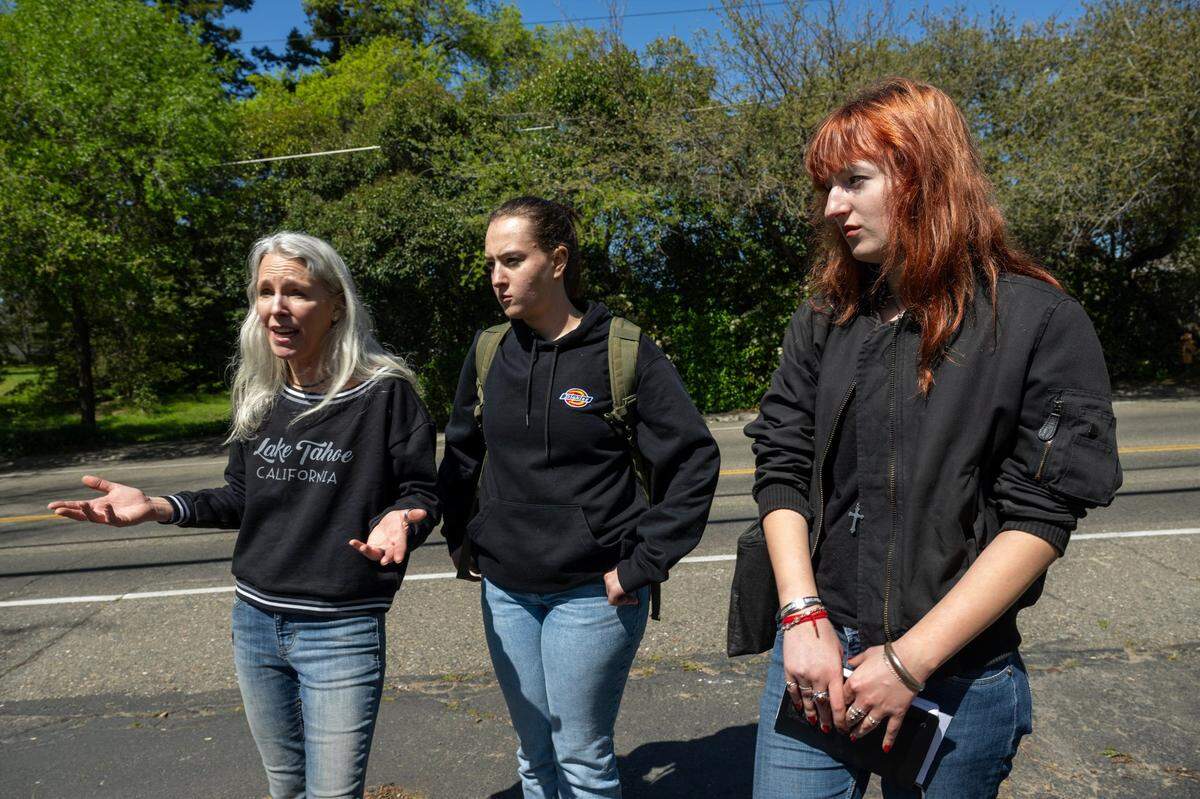
Lodde thought that if a child were hit by a car and killed, the county might be more inclined to act.
“I understand how expensive it is,” Lodde said. “How much is a child’s life worth?”
But another case suggests that she’s wrong to think a young person’s death would lead to action. Shawn Jordan, an 18-year-old who loved to listen to music with his 10-year-old sister, Lennox, was fatally struck while walking on part of a North Highlands viaduct with no sidewalk last June. The Walerga Road viaduct presents options similar to Sunset: Mostly, pedestrians walk in the shoulder, with nothing separating them from speeding cars except paint.
Though The Sacramento Bee observed children walking home from school on the viaduct right next to 50 mph traffic, the county has not implemented emergency measures to protect pedestrians in the 10 months since Jordan’s death.
More lanes led to more traffic, neighbors say
The county says 10,000 vehicles whiz down Sunset each day.
That level of traffic is a relatively recent development. Martin can still picture her father standing in the middle of Sunset Avenue, gabbing with the neighbor across the street. In the 1980s, this was a rural Fair Oaks neighborhood, and you could hear the cars coming from far off. Plus, there was no real sidewalk. Why not stand in the road?
Martin said the traffic patterns changed as the county widened a nearby thoroughfare: Hazel Avenue, which used to have four lanes leading to Highway 50, now has six. The county spent $50.7 million in local funds on the project. Since the changes to the other road, Sunset Avenue has become a cut-through street to get to and from the freeway, Martin, Hoiland and Lodde said.
That lines up with research on road widening. Scholars wrote in a 2011 article in American Economic Review that there is a “fundamental law of highway congestion: people drive more when the stock of roads in their city increases.”
Susan Handy, a UC Davis professor who studies transportation, said that the increased traffic on a feeder street would make sense.
“It might not occur in every situation, but generally, adding capacity on one facility will increase driving on that facility, which is likely to mean more traffic on facilities that those drivers are also using.”
In other words, building more roads or enlarging existing roads ultimately creates more traffic.
And now the residents of Sunset Avenue have to deal with the increased congestion, which they say came about as a result of the Hazel Avenue project that was supposed to relieve congestion.
The neighbors called 311 and were told to submit a petition to participate in the Neighborhood Traffic Management Program. But the day after receiving a complaint from Martin, the Department of Transportation conducted another traffic count that showed more than 9,000 vehicles used the street: That number meant Sunset wasn’t eligible for the program because the street had too much traffic. They were referred back to 311.
At the February meeting with county officials, the residents said they were told nothing could feasibly be done to slow down traffic.
To Martin, it was all maddening. She puts her trash cans out in the bike lane, and she watches drivers hit them. UC Berkeley’s Transportation Injury Mapping System shows that a driver hit a pedestrian east of her house in 2023, and another crash severely injured a pedestrian within a half-block from her house in 2019.
She stood in her driveway as dozens of cars roared by.
“This is not a speedway,” she said, exasperated. “This is still an effing residential street.”
This story was originally published May 8, 2025 at 5:00 AM.