Will roads of the future be 10% old tires? UC Davis researchers are finding out
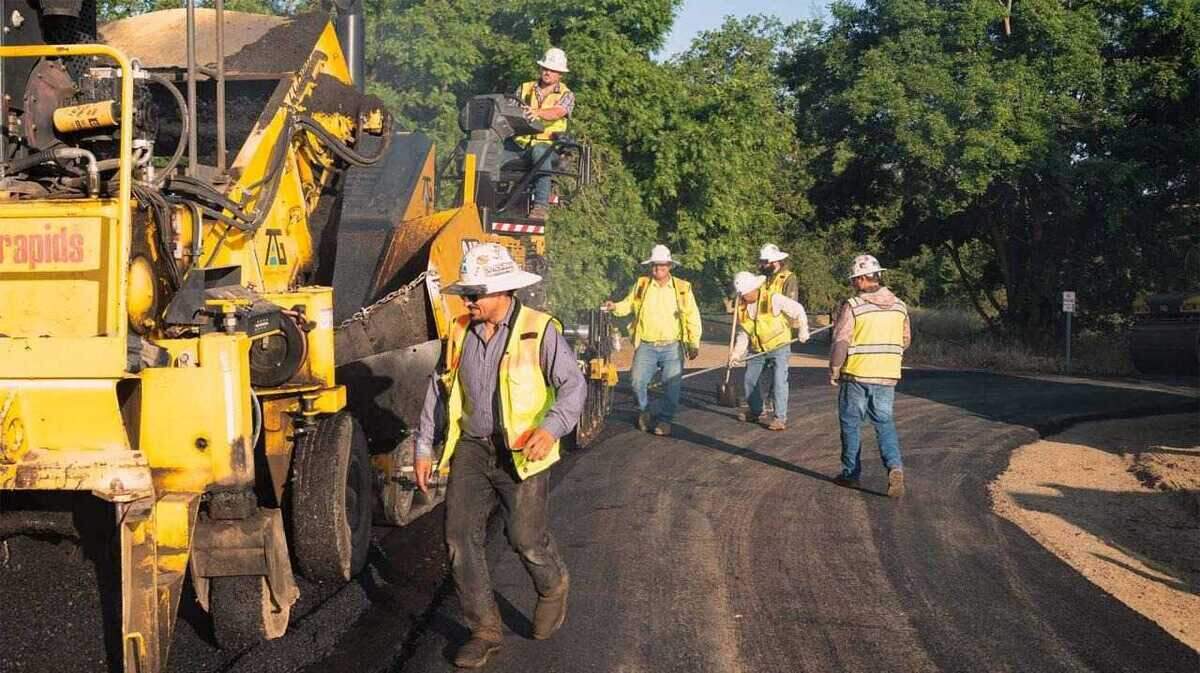
A mile of road on the campus of UC Davis got a rubbery face-lift this month when the California Pavement Research Center repaved it with an asphalt mix made with used tires.
A university news release said that Davis scientists in the UC Pavement Research Center worked with CalRecycle and Caltrans on the pilot project, which also has a project manager and research staff from UC Berkeley’s pavement center. New asphalt mixes can include up to 10% tire rubber and 25% recycled asphalt. California has used recycled tires in asphalt in some capacity since the 1970s, CalRecycle said.
Ultimately, researchers hope to create more durable and environmentally friendly road surfaces. The UC Davis project will evaluate the “life cycle” environmental impacts of the mixture — meaning that factors such as the amount of energy expended in creating the asphalt will be considered as part of its impact.
The Arizona Department of Transportation also uses rubberized asphalt. A spokesperson for the agency, Doug Nintzel, wrote that the old tires are chopped up into small pieces. Then, those pieces go through a freezing process that spits out tire rubber “the consistency of ground coffee.” That “crumb rubber” then gets mixed into hot asphalt.
Carbon emissions from gas-powered vehicles are a driver of the climate crisis that, in turn, may lead to a crisis on California’s roadways. Caltrans said in a 2020 report that high temperatures “can cause pavement heave or warping.” In the highest greenhouse gas emissions scenario, Caltrans said, average maximum temperatures over seven days could go up 14 degrees in inland areas of the state. Heat and other extreme weather due to climate change, the agency said, will “accelerate pavement deterioration and reduce pavement service life.”
“Our collaboration with the Pavement Research Center exemplifies how the university infrastructure can benefit while serving as a resource for innovative research,” Lucas Griffith, campus planning executive director, said in a news release. “These efforts align with UC Davis’ commitment to sustainability and provide valuable insights that benefit the campus and the entire state.”
This story was originally published May 9, 2025 at 5:00 AM.