Will traffic on Highway 50 ever end? Sacramento history suggests the answer is ‘no’
AI-generated summary reviewed by our newsroom.
- Highway 50 congestion persists despite decades of expansion and reconstruction.
- Fix 50 project costs rose from $433M in 2022 to $529M in early 2025.
- Experts warn added lanes offer only short-term relief and worsen long-term traffic.
If you’re eager for a powerful case of déjà vu, you could try reading old newspaper stories about Highway 50.
“Stuck in the driver’s seat for 15 years, David Rice watched Highway 50 change from a smooth-sailing freeway to a roiling, grinding sea of traffic that made him feel like a sardine in his Toyota tin can,” Stuart Leavenworth reported in The Sacramento Bee. The highway hadn’t changed much since the 1970s, Leavenworth wrote, even as more and more people moved into the capital region and contributed to gridlock.
The proposed solution — adding high-occupancy vehicle lanes — would “require a multi-year reconstruction of downtown freeways, snarling traffic.”
The year? 2001.
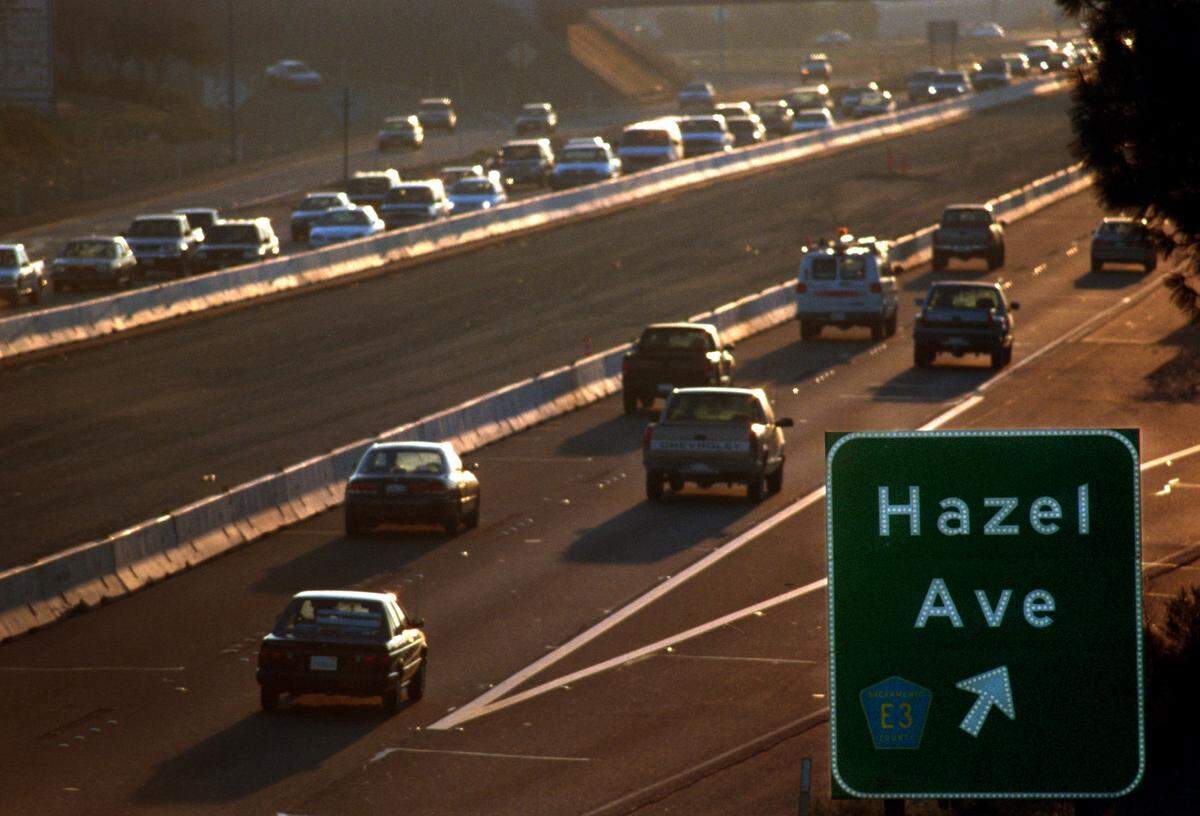
Or you could go back to 1989, when Dan Vierria wrote in The Bee that “the city’s traffic snarls have grown more and more tangled from all directions” and groaned about “the Caltrans work crew on the Highway 50 corridor at Sunrise (...why are they making repairs at rush hour?)” The story was published under an all-caps headline: “THIS IS GETTING US NOWHERE.”
An uncanny strain of hope echoes through the past, too. Sacramento Union reporter Donn Selhorn interviewed an administrator at the precursor to Caltrans who said that “Sacramento is the worst bottleneck from Reno to the Pacific Ocean.” Selhorn wrote that the official, Robert Bradford, “quickly added that the problem will be solved ‘on schedule’ before 1972.”
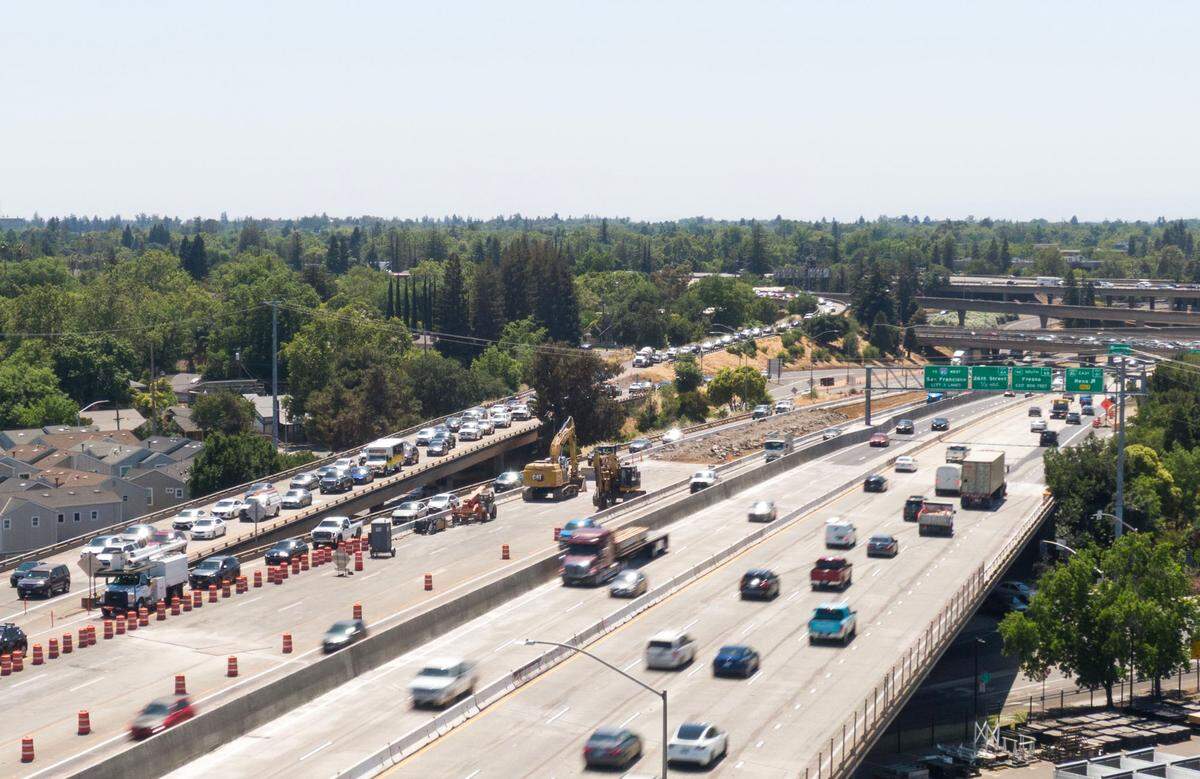
In 2026 — 54 years after Bradford promised the congestion problem would be solved with more lanes for vehicle traffic — the “Fix 50” project is supposed to solve congestion on Highway 50 with two more lanes for vehicle traffic.
The work was supposed to be finished this summer; it’s now expected to wrap up in July of next year.
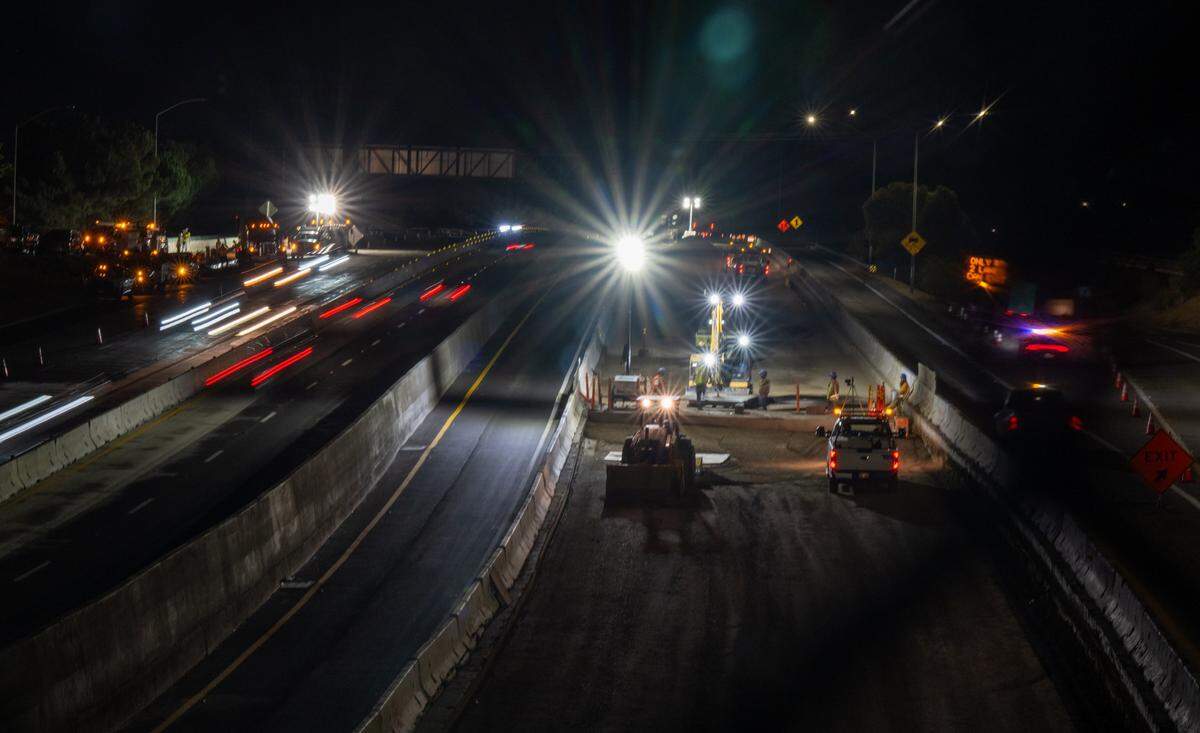
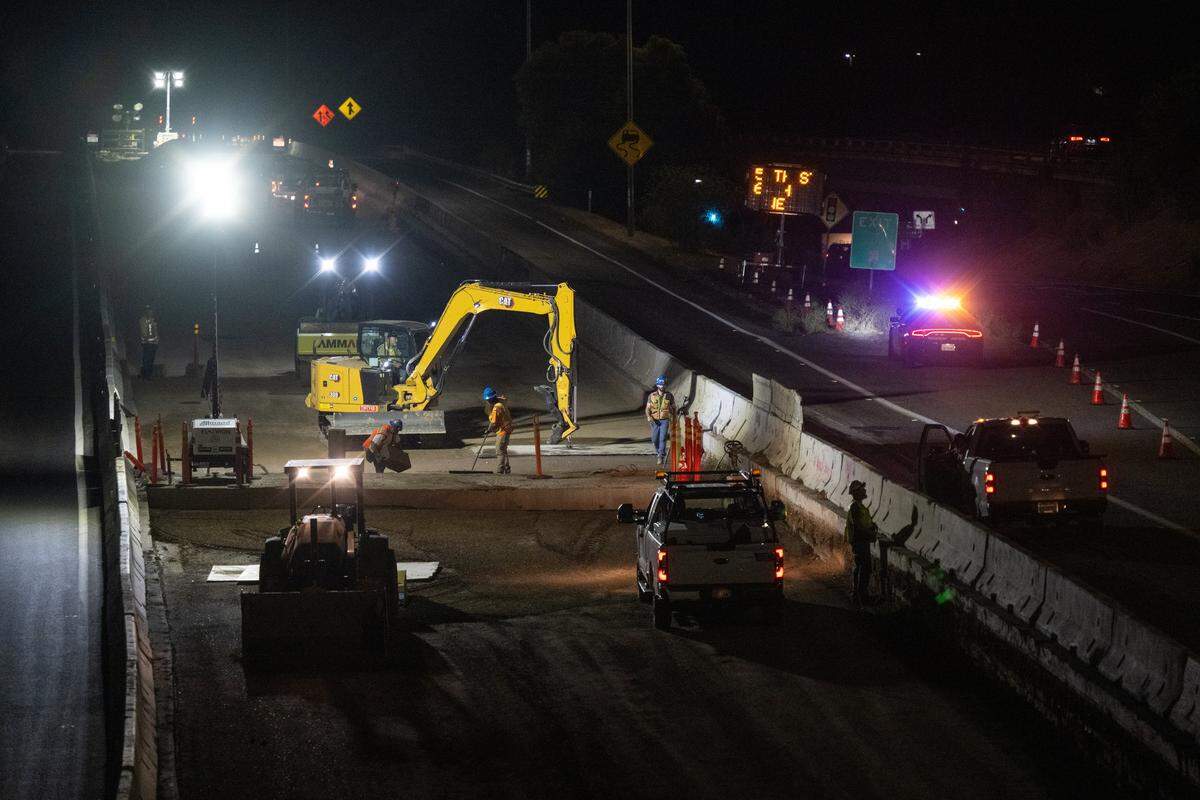
As Leavenworth predicted in 2001, the effort has mired drivers in construction zones since 2021. It’s also ballooned in cost. Between 2022 and this year, the price tag has gone from $433 million to an estimate first reported by KCRA: $529 million. The price went up by about $93 million in just three years.
If you’re worried that Fix 50 might not solve the traffic problem, decades of research and reporting substantiate your concern. Transportation scholars have consistently found that adding lanes temporarily helps, but doesn’t relieve congestion in the long term. The temporary relief just encourages more people to drive, which leads right back to the same old traffic jams, often within five years.
“I just kind of give in to the futility,” said Ansel Lundberg, who commutes on Highway 50 two days a week and often faces bumper-to-bumper traffic intensified by construction. “It feels like spitting in the wind a little bit. In five years, we’re gonna feel like we want another lane.”
With the high price tag, the long timeline for construction, the uptick in fatal crashes and the looming potential that the whole project is pointless, Lundberg said, “I don’t know if it’s worth it.”
On paper, the state doesn’t know that it’s worth it, either: Guidelines discourage the practice of widening highways. In 2021, the California State Transportation Agency, which oversees Caltrans, said in a report that “highway capacity expansion has not resulted in long-term congestion relief and in some cases has worsened congestion, particularly in urbanized regions.”
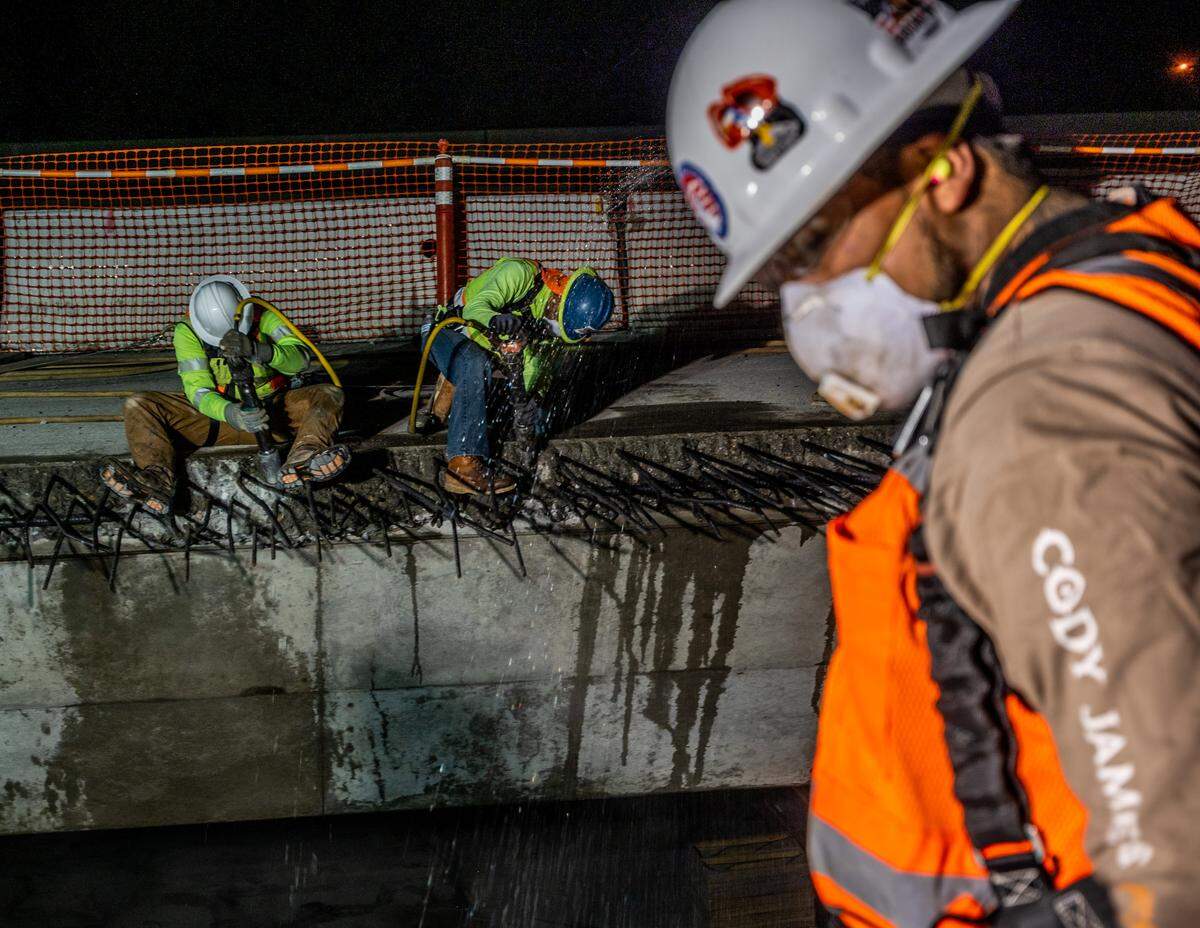
Sergio Ochoa Sánchez, a Caltrans spokesperson, pointed out that the Fix 50 plan was well underway before CalSTA said adding lanes was a failed policy. Separately, Caltrans has maintained in messaging to the public that adding carpool lanes to Highway 50 will reduce congestion. A transportation expert, UC Davis professor Susan Handy, said last year that there’s no real evidence that new high-occupancy lanes are fundamentally more effective than standard lanes. “Adding a carpool lane is still adding capacity to the system,” she said. “Not a whole lot different.” But the project has slogged forward.
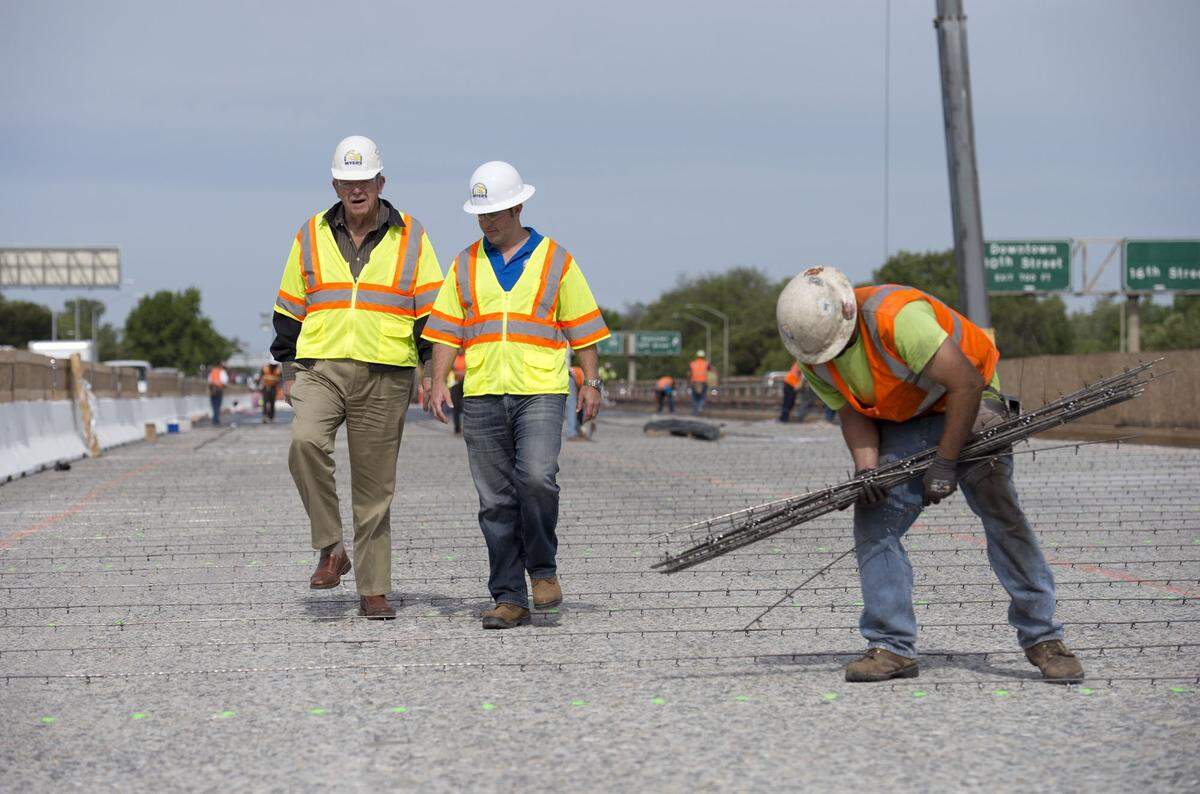
By the time construction is finished, workers will have built high-occupancy vehicle lanes and resurfaced 7 miles of Highway 50 from the Sacramento River to Watt Avenue.
CalSTA said in 2021 that “we cannot continue the same pattern of highway expansion investment in California and expect different results.” But the half-a-billion-dollar bet is that maybe Sacramento will get different results this time.
Before Sacramento’s highways, there was transit
Sacramento could have been so different if it had stayed the same. Maybe you would have taken the streetcar to work instead of sitting in your tin can in the mess on Highway 50.
Imagine: a time when the freeway didn’t exist at all.
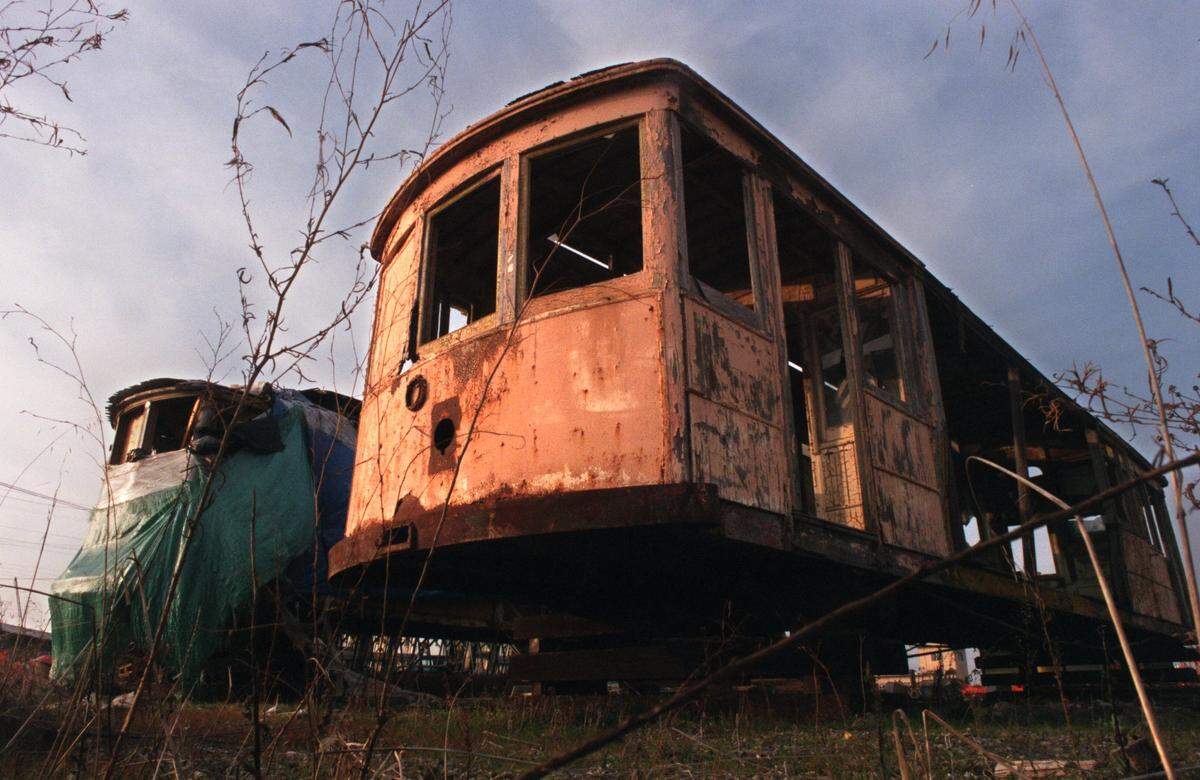
Maybe you would have taken the streetcar that picked up on Stockton Boulevard and hung right on Fourth Avenue. It turned on Sacramento Boulevard and took you up 28th Street; from there, you’d head toward the Capitol Mall down P Street. Southside Park was a block longer back then, stretching all the way to X Street instead of ending at W.
But as personal automobiles were given more priority, officials started to see streetcars as a cause of traffic that held up drivers. The president of Pacific Gas & Electric Co. told The Bee in 1943 that abandoning them would be “‘ridding the streets of entangling overhead wires, traffic congestion and noise.’” In the book “Carmageddon,” the journalist Daniel Knowles wrote that automobiles actually held up the streetcars and made transit less desirable, but that argument didn’t hold much sway in mid-century Sacramento. The rail lines were dismantled in the 1940s and replaced with buses.
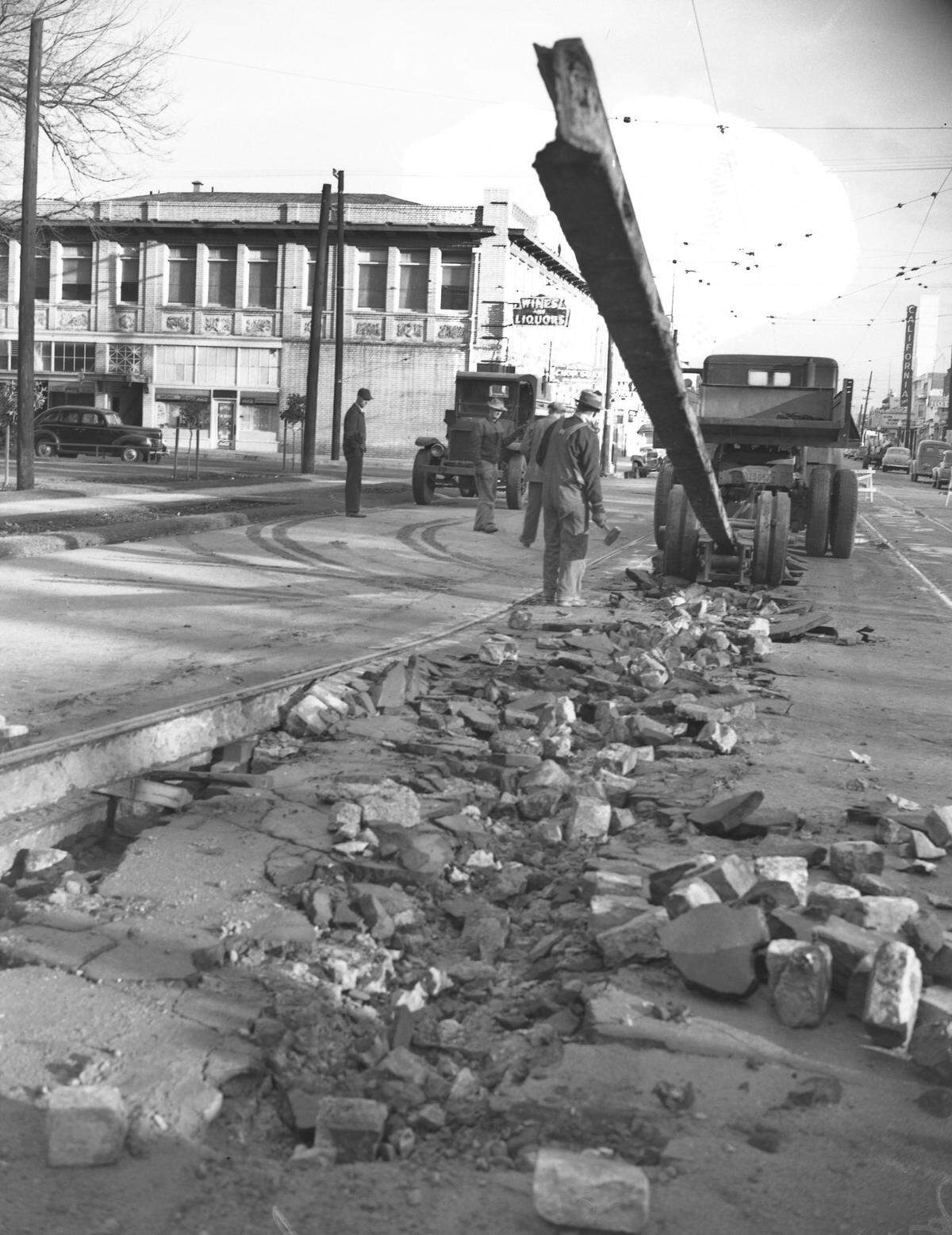
By the 1950s and ’60s, residents of the California capital agreed that getting around the city was terrible, and many seemed to agree that robust public transit was necessary — even the Division of Highways, a Caltrans predecessor.
When it came to the crosstown freeways, “The plan, like all traffic plans, concedes there must be a great increase in public transportation to relieve traffic congestion,” the attorney Walter C. Frame wrote to The Bee in a 1961 letter to the editor. But provisions for more transit had not been made, he said, even though “all the planners rely upon (transit) to explain away the fact that only a certain number of autos will be accommodated in the core area.”
The Bee’s Editorial Board made a similar point in 1965: “When the interstate highways were first launched there was a tendency to assume they could be used to meet city transportation needs. It is clear now this is not a fact.” Public transportation was essential. The board, as if foreseeing decades of future research, observed that as the nation created its highway system, “the congestion within urban areas has increased.”
Because highway expansion has repeatedly failed in its aim, the California State Transportation Agency’s climate plan encourages other strategies for reducing congestion. Caltrans is partially responding to this call in Fix 50: It paid to increase light rail service to Folsom to provide more opportunities to avoid the freeway. Another proven strategy is “congestion pricing,” a type of toll that can increase during peak travel times to discourage driving. Using that approach, New York City has successfully reduced traffic in Manhattan and increased vehicle speeds at rush hour.
Tolls were considered and then rejected on Highway 50.
Lundberg, the Curtis Park commuter, lamented it. “If I had one wish, I would put some kind of pricing,” he said. “That’s the only way we’re gonna get this under control.”
Despite the push for alternative traffic solutions, transit remains underfunded in Sacramento County. Jessica Gonzalez, a spokesperson for the Sacramento Regional Transit District, said, “Currently, SacRT receives one-fifth of a penny in local sales tax support, while many other transit agencies receive a full penny or more.”
Gonzalez said almost exactly what The Bee’s Editorial Board said 60 years ago: “A more equitable level of local investment is critical,” she argued, “to ensure we can continue to meet the Sacramento region’s mobility and climate goals.”
In 2025, SacRT has an annual operating budget of $267 million — half of what Caltrans now estimates it will spend to add lanes and fix the pavement across Highway 50 in the city’s core. In 2022, the Fix 50 project was supposed to cost $433 million. By early 2025, Caltrans said that it would cost $484 million. This year, the price has jumped again, to $529 million.
And some people argued in the 1960s that the freeway came at a cost that couldn’t be measured at all.
‘From being a neighborhood to ... being nothing’
At a public meeting in 1961, The Bee reported that residents came out in droves to object to the elevated W-X Freeway alignment. Gene B. Hedglin, who lived in Fair Oaks, called the freeway a “tapeworm across Sacramento.” He said, “Our biggest parasites are real estate men and highway managers.” Homes in and around Southside Park, Richmond Grove and Newton Booth were at stake then, but later, Highway 50 would cut through Oak Park and choke a thriving Black business district.
Orietta E. White, who lived on W and 22nd streets in a Poverty Ridge home that would later be flattened, told the Division of Highways that she was afraid. It was “just my home, that’s all,” she said. “Just my security, that’s all. Just my health, that’s all.”
The businessmen at the 1961 meeting, however, supported the highway. They countered that the freeway would solve traffic and funnel shoppers downtown. Back then, the Macy’s was a twinkle in the City Council’s eye: a department store slated for a spot right next to an offramp. The business leaders thought the destruction of dozens of blocks of housing was a necessary trade-off.
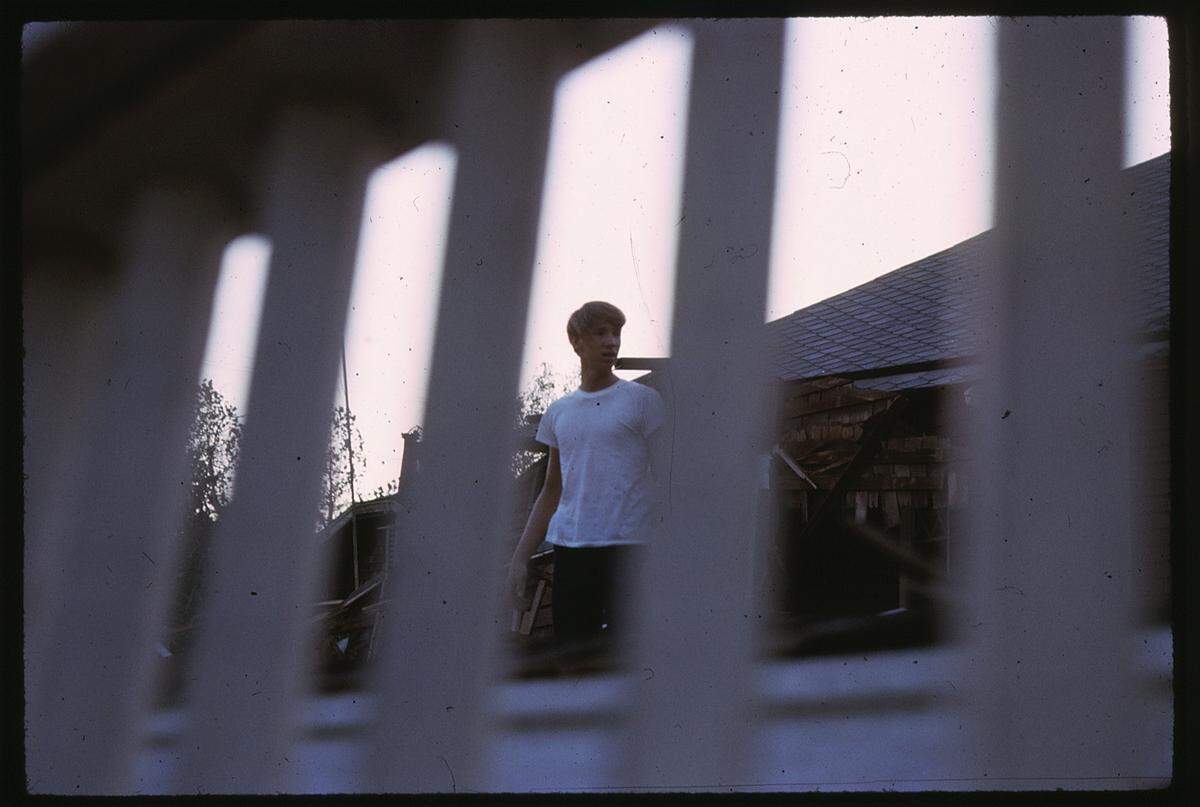
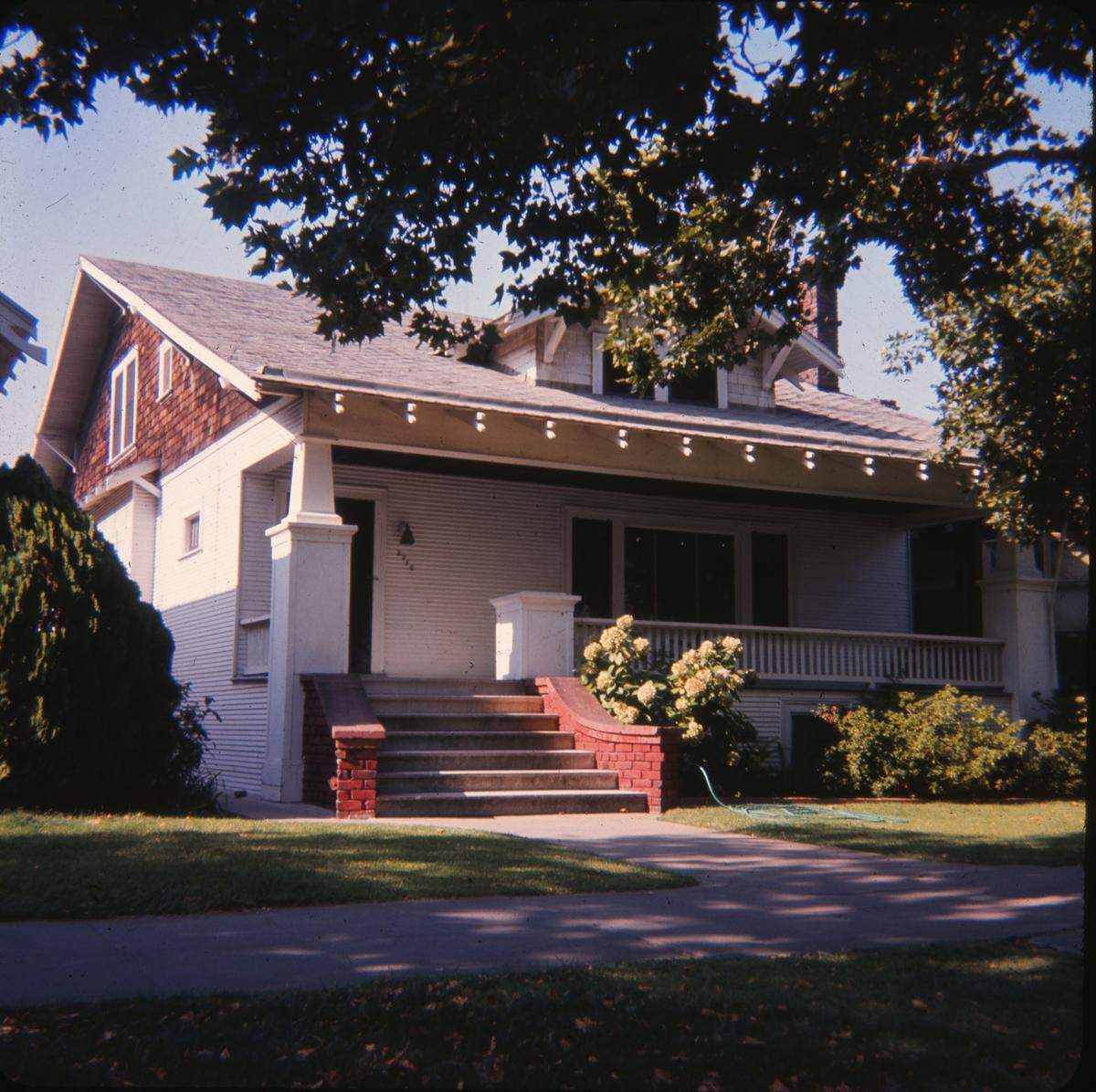
Dennis Sorgen’s family was recorded in the public 1950 census population schedules as living in a house on W Street. He answered the phone in May and heard a question about the W-X; immediately, he said, “The freeway took our house.”
Sorgen, 75, said his mother was upset to lose the place. She bought it on her own, before she was married. In the back, Edna tended an abundant garden full of fruit trees; in the basement, she stacked grapefruits in bread boxes to eat virtually all year long. Sorgen used to ride his bike safely through the neighborhood as a small child. His mother thought the state hadn’t accounted for the garden or the sense of community when it compensated her for her loss.
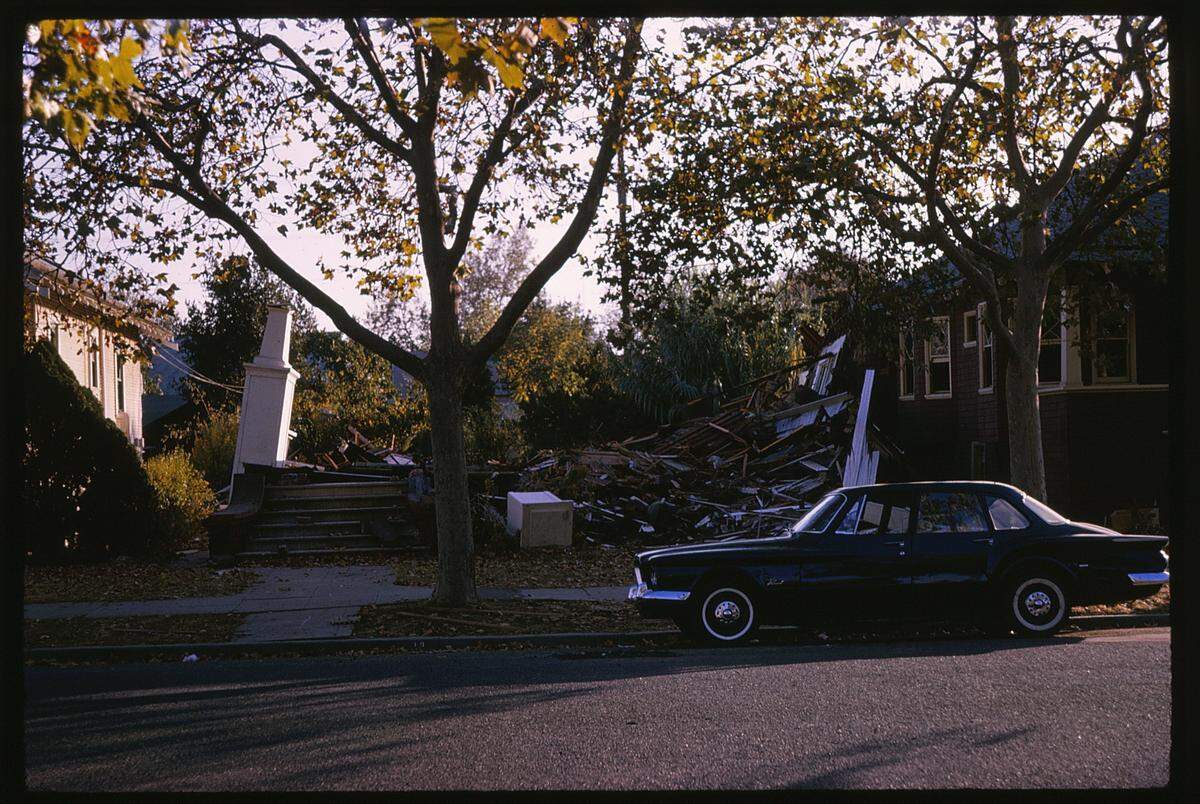
After the house was knocked down when he was around 14, he, his brother and his mom went back so his brother could take photos.
His brother wanted to “record the change from it being a neighborhood to it being nothing.”
Families near W-X freeway left with noise, air pollution
It wasn’t quite nothing: Like many others, Sandy Matsui’s family stayed in their home on X Street and witnessed the fallout close-up. She said in May, “I can remember them tearing down our neighborhood.”
Before the destruction, “It was safe,” she said: a working-class neighborhood that had become fairly racially integrated. Her grandparents had emigrated to the U.S. from Japan and her family was Buddhist, but Sandy, now 72, struck up a friendship with an older white woman in the neighborhood and accompanied her to church on Sundays. As a little girl, she would sometimes “gallivant” around from house to house, chitchatting and accepting all offers of cookies.
The construction, which started near Fifth Street in 1965 and proceeded east, left a layer of dust on her childhood. She remembered her mother, Julia, said she wished their two-bedroom home on X Street had been wrecked, too. Then they could have taken the settlement from the state and moved.
After all the houses were demolished, Sandy used to sneak out on weekends when her parents were at work and her less strict grandparents, Shigezo and Yoshi Matsui, were caring for her at the house they all shared. “It was a fun place to go exploring when you were not supposed to go exploring there,” she said. She’d clamber over the rubble left behind, like her own desolated jungle gym.
Historian William Burg recounted in “Sacramento Renaissance” that, after a so-called urban renewal project on the Capitol Mall wiped out Sacramento’s Japantown, many of the families moved to the Southside Park area. Then the freeway sliced through.
“It displaced many Asian families,” Sandy said, but the Matsuis stayed put. Six of them lived in the two-bedroom house — Sandy, her parents, Julia Nobuko and George Toshio Matsui, her grandparents and her younger brother, Craig.
The house was supposed to be a fresh start after years of hardship. Her family had scraped together the money to buy it at the end of World War II. Along with more than 100,000 other Japanese-Americans, they had been forced out of their home during the war and incarcerated in concentration camps, often referred to as Japanese internment camps. A 1988 law celebrated by then-President Ronald Reagan said the internment policy was “motivated by racial prejudice, wartime hysteria, and a failure of political leadership.”
Although the adults in Sandy’s family tried to protect her from their traumatizing experience by not talking about it, they loudly embraced their culture after they were released. Her parents ran a business screening Japanese movies for Japanese farmworkers throughout California. In their new house on X Street, her grandparents set up a Buddhist shrine in the living room. Julia, who had grown up on a strawberry farm in Florin, presided over a beautiful garden: lemons, cucumbers, tomatoes, eggplants and an ume tree. Yoshi pickled and canned the ume, a tart stone fruit, and happily passed it out to family and friends.
Her parents were tight-lipped about their emotions, but Sandy said she knew they were unhappy about the freeway. Eventually, they all grew used to the dust and noise from construction and, later, to the hum of traffic.
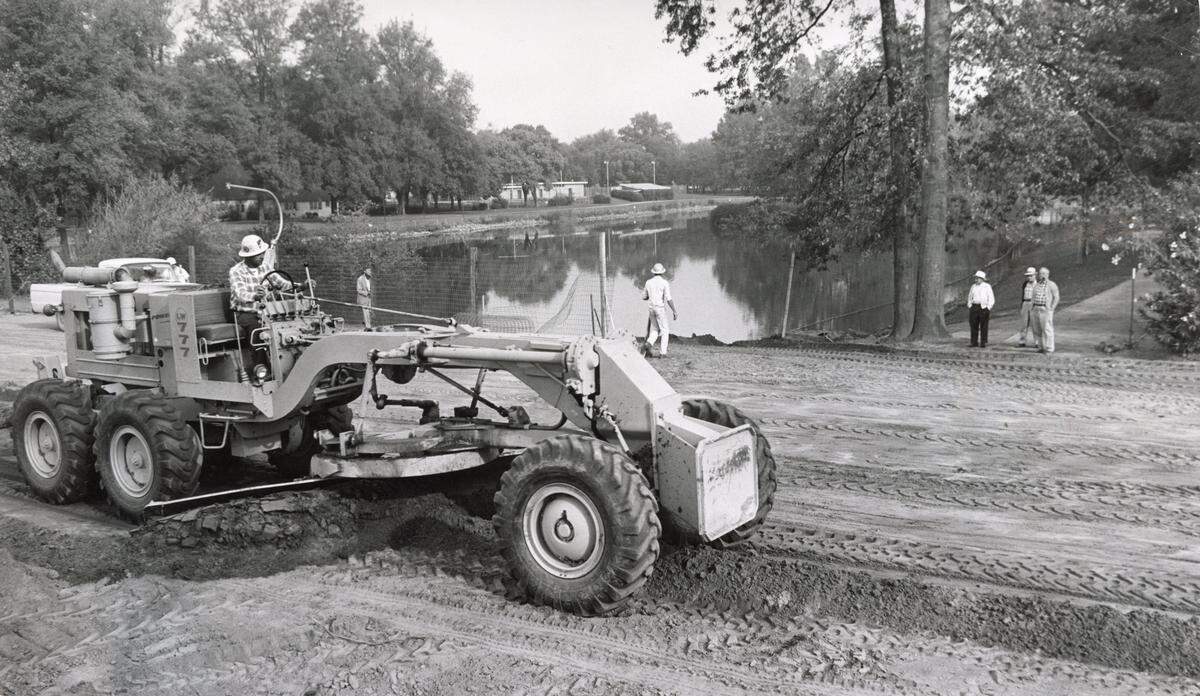
When relatives visited from other neighborhoods, however, they would remark on how incredibly loud it was in the home. It likely had an unrecognized effect on the Matsuis: Research shows that even people who feel accustomed to persistent noise suffer stress and negative health consequences. High blood pressure is a common response to noise pollution, and although it’s difficult to draw a conclusive link, Sandy said that everyone in the family had high blood pressure.
The Matsui home at X and 24th streets was not only right across from Highway 50, but also just five blocks west of the Highway 99 interchange: the air became heavily polluted. Sandy wonders whether her asthma is a result of the construction and traffic. When she was young, every time she got sick, it seemed to turn into what her parents described as “bronchitis”; she was not diagnosed with asthma until adulthood, but now she believes that’s what her childhood illnesses were.
The California Office of Environmental Health Hazard Assessment currently says the census tract where the Matsuis lived for decades is in the 66th percentile for asthma. Studies have linked traffic exposure to childhood asthma, but air pollution also makes existing diagnoses worse. A study of nearly 20,000 individuals published in “Environmental Health” found that the closer a person lived to a major roadway and the higher the traffic density on that roadway, the more likely that person was to have a serious asthma attack.
The findings are partly reflected in a disagreeable distinction: Today, the California capital is considered an “asthma capital.”
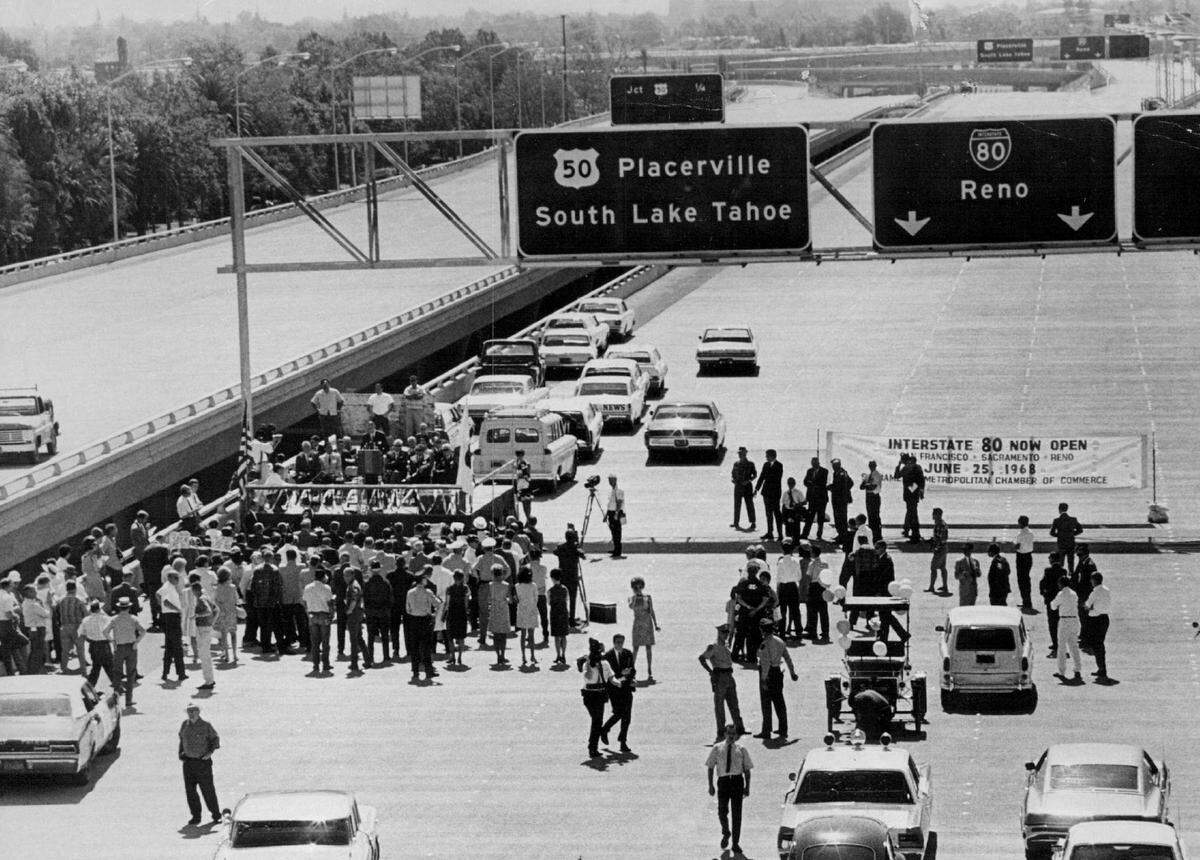
The Sacramento homes were gone. Were the bottlenecks?
“I see how the building of these infrastructures displaces people,” Sandy said. “I was just a child then, and so my relationship to that action happening was me losing my grammar school friends and my neighborhood. But I can see now how, when decisions are made to do those kinds of things, it really does have a powerful impact on people — on neighborhoods, on families, on lives.”
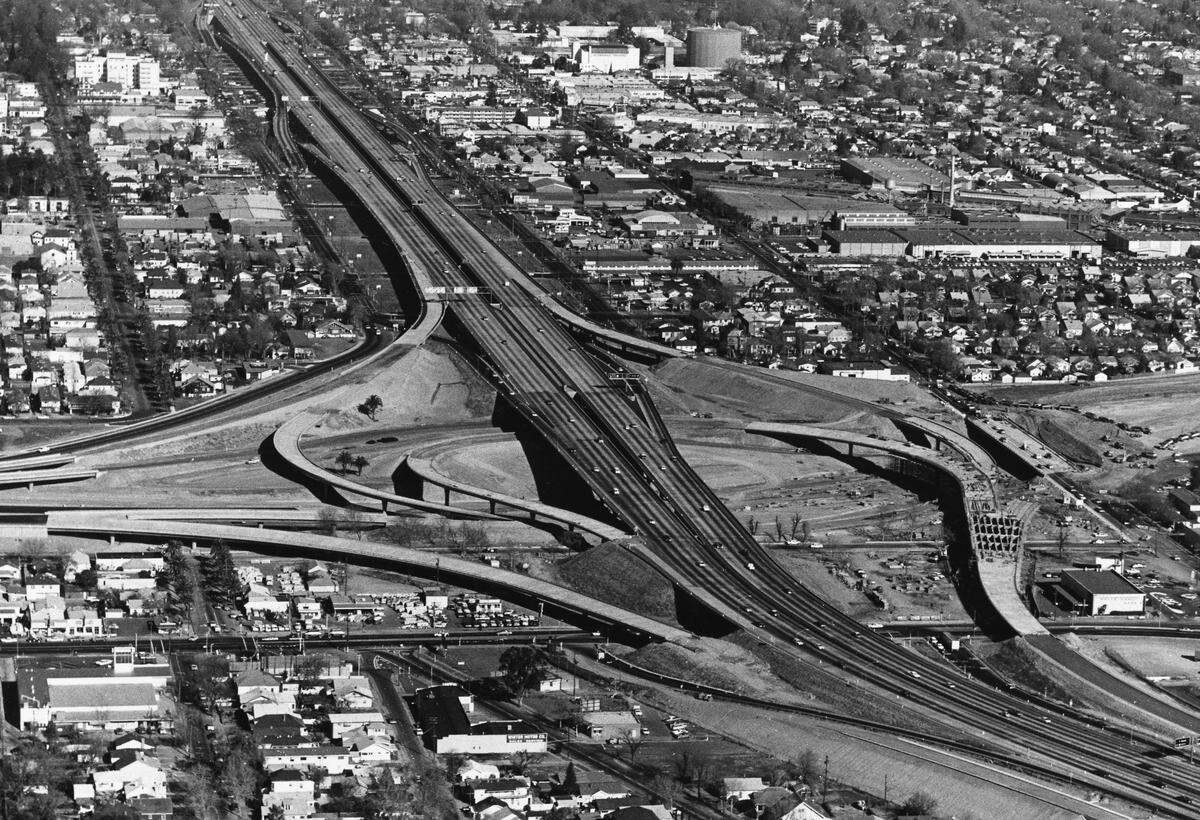
The upside in Sacramento was supposed to be that traffic could move more swiftly. On Nov. 18, 1965 — Sandy was 12 — The Bee reported that the Division of Highways would construct the last leg of the W-X, which ran right outside her home. That “final link,” the article said, “will provide an eight-lane freeway through the Capital City and eliminate most of the bottlenecks which have plagued motorists traveling between the Sierra and the bay area.”
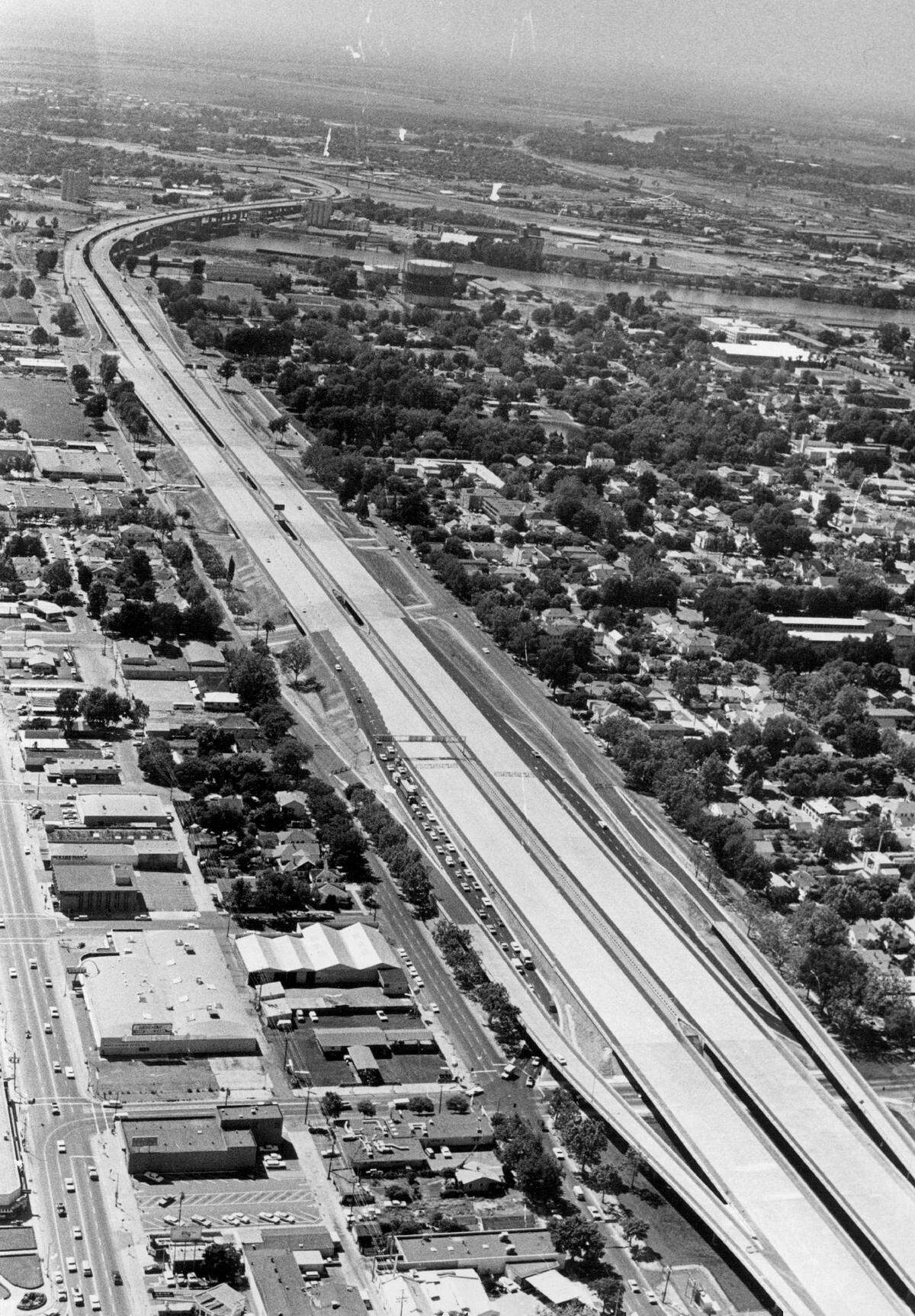
Two and a half years later, on June 25, 1968, “Miss Sacramento” Patti Smith stood in the roadway and waved a checkered starting flag. The ceremony represented a kind of salvation: Cars would whisk people to and fro above the surface streets, flying over the homes and businesses left below.
By 1977 — a little over a decade later — officials from Caltrans and Sacramento County were working together to install signals on freeway onramps.
They hoped the new lights would relieve rush hour traffic.
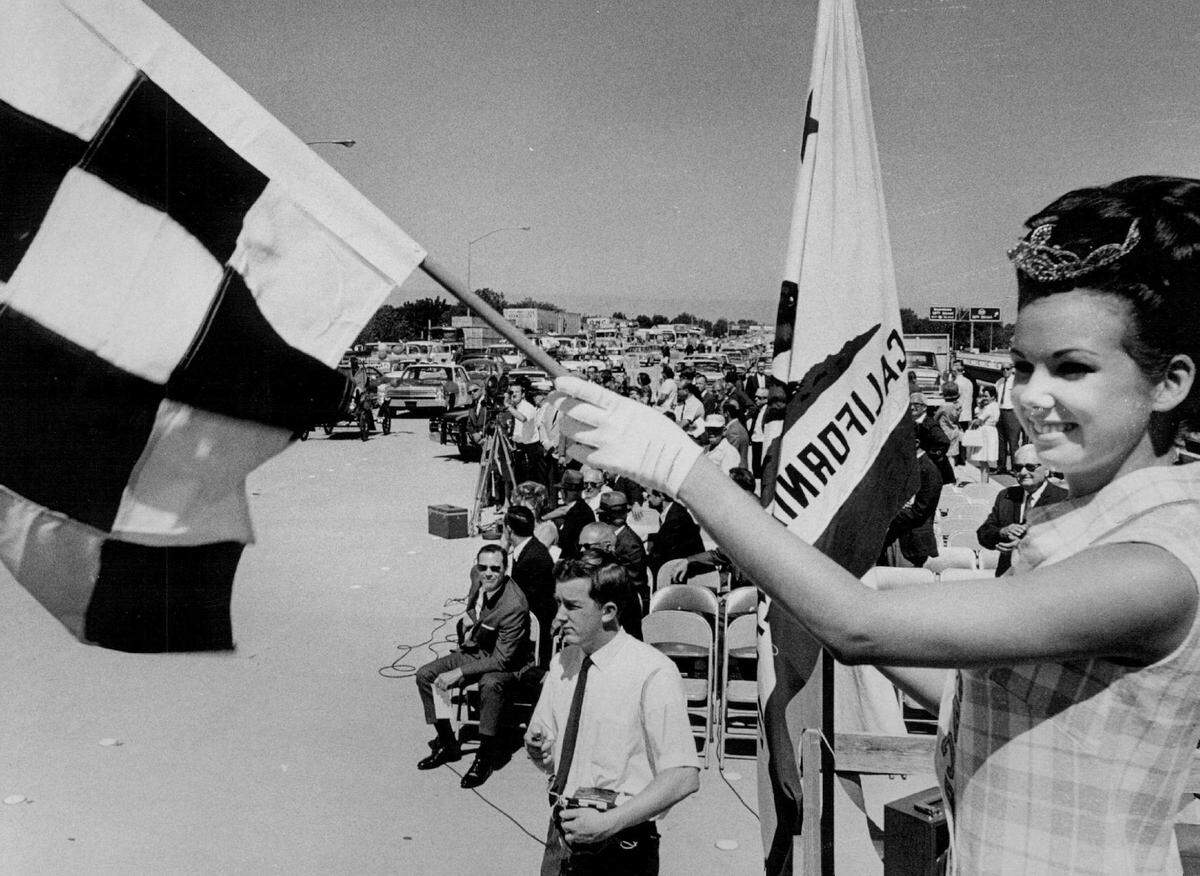
This story was originally published September 15, 2025 at 5:00 AM with the headline "Will traffic on Highway 50 ever end? Sacramento history suggests the answer is ‘no’."