Sacramento airport TSA officers receive some pay as DHS shutdown drags on
Sacramento International Airport transportations security officers received some pay Monday — their first paycheck in over a month — as the partial government shutdown continues.
James Mudrock, a Transportation Security Administration worker of about 21 years, said he and many coworkers received pay for two pay periods, with one half pay period not accounted for. Other workers across the country also reported being paid, according to The New York Times.
Mudrock and his coworkers had been operating without pay since Feb. 14, when funding lapsed for the Department of Homeland Security after Congress failed to reach an agreement over immigration enforcement reforms. Airport security lines increased, some stretching multiple hours in hubs such as Houston and Atlanta, as TSA officers called out and hundreds across the country quit.
In Sacramento, callout rates were “a little higher than normal,” Mudrock said. That did not result in significantly longer wait times but led to fatigue among security workers.
On Feb. 28, TSA workers received a partial paycheck for some work completed leading up to the shutdown. For Mudrock, that partial paycheck was $600. For Mary Becker, another TSA officer, that paycheck was $100.
That was the last pay TSA workers received until Monday.
Workers told The Sacramento Bee they borrowed money from family, contacted creditors — some of whom were less lenient than in previous shutdowns — and forwent medical care due to the lack of pay. Others, such as Susan Braverman, also reported feeling stretched thin after being required to work in stressful conditions with higher-than-normal callout rates while not receiving compensation.
“We are happy that we have gotten some back pay, which will help our officers keep their heads above water,” said Mudrock, who is the Northern California vice president for the American Federation of Government Employees Local 1260. The union represents transportation security officers in California, Nevada and Arizona.
“But the situation is not resolved,” Mudrock added.
The paycheck came after President Donald Trump and Homeland Security Secretary Markwayne Mullin directed TSA on Friday to pay its workforce, according to a DHS spokesperson. The shutdown, however, continued as Congress failed to reach a solution before a scheduled two-week break.
Competing bills moved forward in Congress. The Senate approved funding for DHS but not immigration enforcement and deportation operations, while the House approved a stopgap spending measure that would fully fund DHS through May 22. The Senate bill was approved early Friday but quickly unraveled when House Speaker Mike Johnson rejected it.
“The Speaker of the House decided that it was more important to go home for two weeks than to complete the funding process,” Mudrock said. “This is not acceptable. The Senate unanimously passed a funding bill, and he chose to ignore it.”
Becker said she felt some relief Monday after receiving pay for two pay periods.
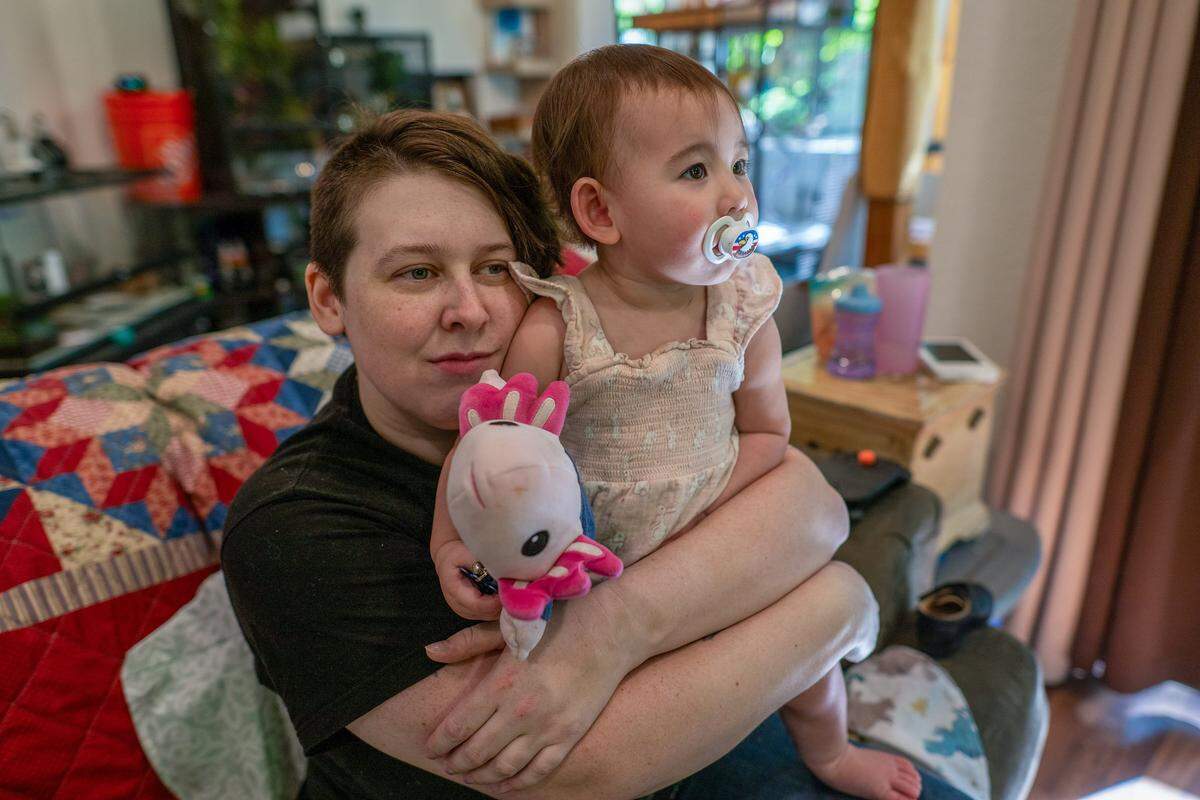
This is the third shutdown that Becker, her colleagues at Sacramento International Airport and about 50,000 TSA agents across the U.S. had experienced in half a year. The first shutdown took place in October 2025 and lasted 43 days — setting a record for the longest in U.S. history. A partial shutdown occurred for four days in early February.
The current shutdown reached day 44 on Sunday, surpassing the previous record set late last year.
Becker said she had built up savings leading into the shutdown in October 2025. She had not rebuilt those savings by February.
Because of the shutdowns, Becker said she canceled her 14-month-old daughter’s swimming and gymnastics lessons, along with specialized doctor appointments that require up-front payments. She said that because of this paycheck, she will be able to pay her rent and reschedule her daughter’s doctor’s appointment, though she is “worried this will all resume.”
“We have to continue stretching our dollars,” Becker said Monday. “For now, I’m not going to sign her back up to her classes until I know that stability is in our future, rather than more uncertainty.”