Grieving mom says ‘to get away with murder in California, do it with your car’
On the one-year anniversary of her son’s death, Allison Lyman couldn’t mourn in peace. She had found none after the vehicle crash, and she didn’t want state lawmakers to know peace, either.
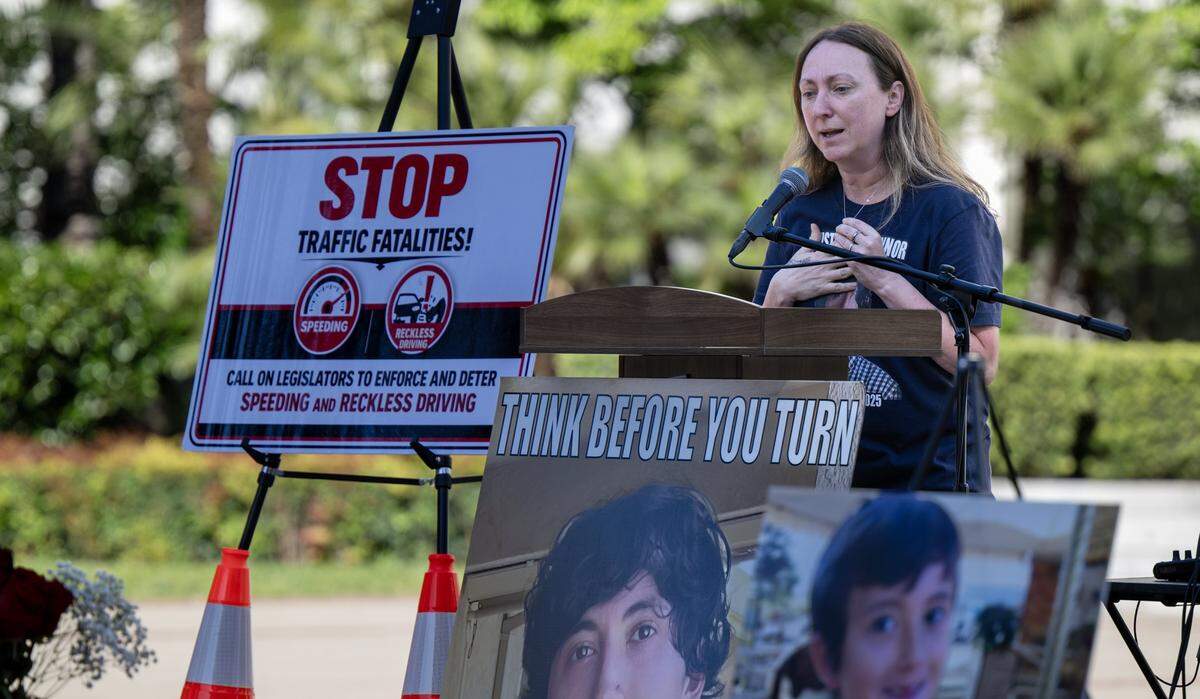
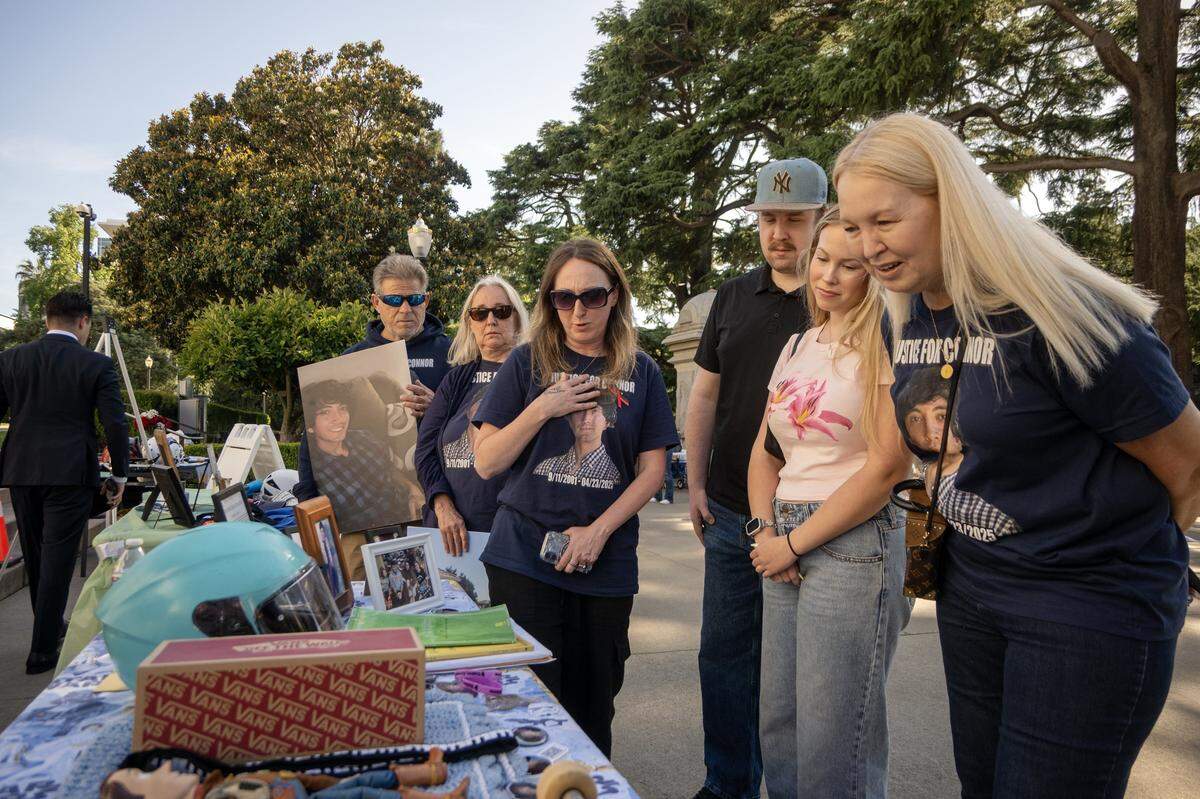
Lyman and a group of other women whose loved ones were killed in collisions organized a rally on the west steps of the California Capitol on the anniversary Thursday to lambast the lax criminal penalties faced by drivers who kill people.
“We shouldn’t have to be standing up here fighting for change,” said Erika Pringle, one of the organizers. Her brother Andrew Pringle, 21, was killed while crossing Folsom Boulevard. The day was also the anniversary of his death in 2023; the woman who ran a red light and hit him in the crosswalk was charged with a misdemeanor.
“We haven’t even had a chance to grieve,” she said, “because we’ve had to be the voice of our loved ones and fight for justice.”
Unlike most deadly drivers in California, the individuals who killed the organizers’ loved ones were all criminally charged. One mother even saw the driver face felonies — an unusually strong charge in the aftermath of a fatal crash.
And yet the criminal proceedings still seemed completely inadequate to all the women.
Lyman has connected with dozens of families going through the same grief. A driver fatally struck her son, Connor Lopez, 23, in Elk Grove while he was riding a motorcycle on April 23, 2025. The driver has been charged with a misdemeanor and, prosecutors warned the family, she will be eligible for diversion under state law. With diversion, the misdemeanor could ultimately be dismissed altogether.
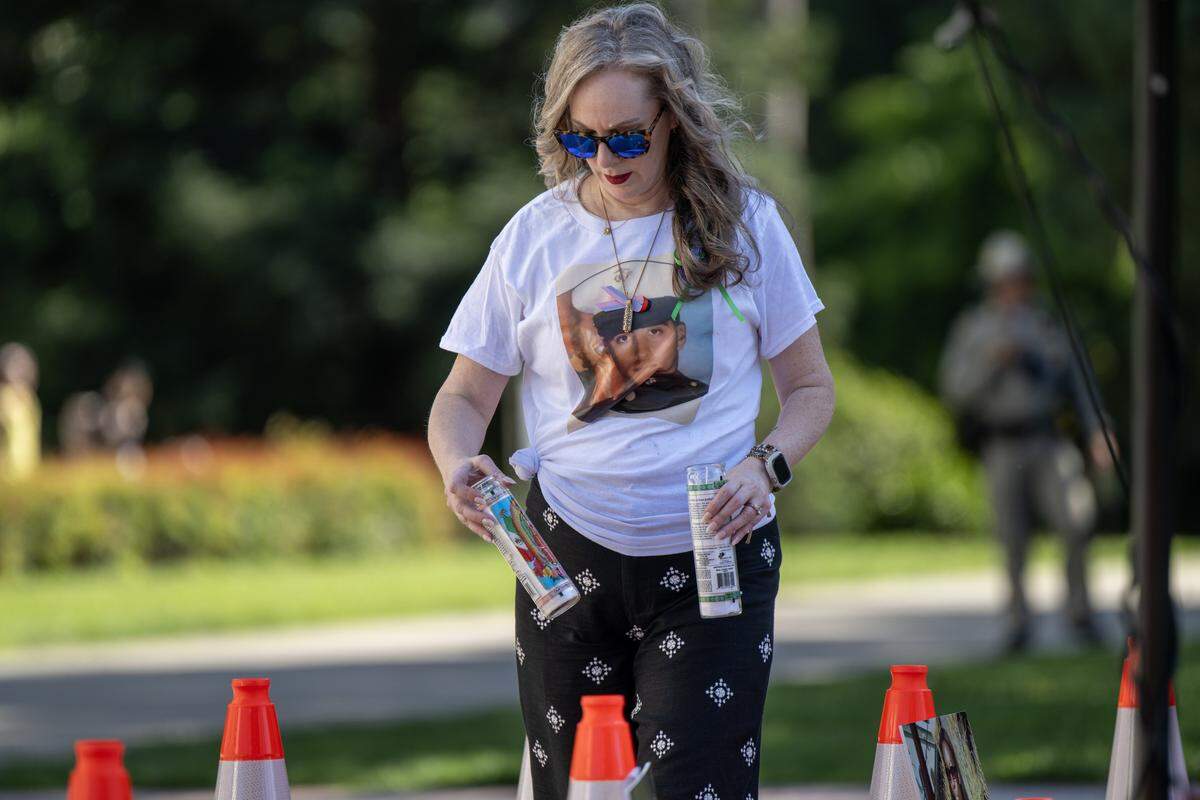
The other women who helped plan the event include Amelia Snyder, whose 17-year-old son Julian died in a crash in Roseville in 2024; Michelle Silva, whose husband José Luis Silva, 55, died in a midtown crash in 2024; Julia Romanenko, whose son Misha Romanenko, 27, was killed in a crash in San Francisco last year; Melissa Grant, whose son Braiden Flynn, 20, was killed in a crash in Folsom last year; and Kelly Lancellotti, whose daughter Giada, 13, was killed in a crash in South Lake Tahoe while riding her bike last year.
Another mom, Anna Montanez, also spoke at the rally about her son, Julian Munoz, 45, who died in a crash on Roseville Road in 2023. She had felt isolated in the sudden, violent loss of her son and the criminal case that followed it.
The women repeatedly called for an end to diversion for vehicular manslaughter cases. Pringle said that if a person breaks the law in their car and kills someone, that should be charged as a felony.
Several of the speakers advocated for a bill before the California Legislature, Senate Bill 953, which would require that the Department of Motor Vehicles receive notification for all vehicular manslaughter convictions and which would also require that drivers who complete diversion and have the charges dismissed would still get two violation points on their DMV driving record.
Deadly crashes, Romanenko said, “have become normalized. And they are dismissed as accidents.”
The response of the criminal justice system, she said, showed that automatic mercy for drivers, and the lack of care for safe roads. Lancellotti noted that her 13-year-old daughter underwent a toxicology screen for drugs and alcohol after she was killed riding her bike to a kids’ fishing derby. The driver who killed Giada, she said, did not.
‘If you want to get away with murder...’
Two state lawmakers — Sen. Roger Niello, R-Fair Oaks, and Assemblymember Tom Lackey, R-Palmdale — addressed the crowd Thursday. A majority of the attendees were themselves mourning someone who died in a vehicle crash.
Lackey, who worked for the California Highway Patrol for 28 years, said he had been profoundly shaped by his experience repeatedly notifying families that their loved ones had died.
“It’s horrific,” he said, recalling the looks on their faces as he delivered the news. “It’s unforgettable.”
Niello authored SB 953 to make sure a deadly crash was reflected on a driver’s record even if they completed diversion. Lackey has introduced several bills on this topic — including Assembly Bill 1686 and Assembly Bill 1687 — to increase the penalties for drunk driving and committing vehicular manslaughter while under the influence, in particular. Both legislators were influenced by a CalMatters series investigating the loopholes and oversights that allow dangerous drivers to stay on the road.
They urged the families present on Thursday to continue their advocacy.
The families at the Capitol that day are a small fraction of the population of mourners affected by collisions. The California Office of Traffic Safety has reported that 4,000 people have died in vehicle crashes each year since 2021. The vast majority of fatal crashes are preventable with changes to infrastructure that forces drivers to slow down — a crash at 20 mph, for example, is extremely unlikely to kill anyone involved, but the risk multiplies very quickly at all speeds over 20 mph.
Lyman said the amount of grief had shocked and enraged her. At one point, between recordings of Lopez playing the piano, she walked to the microphone to address the crowd. At 5:28 p.m., she told dozens of people what she had been doing exactly one year prior: Sitting in the hospital, holding her dead son’s broken hand.
She had known months ago that she wanted to spend the anniversary at the Capitol, lobbying for change.
With the laws as they are, she said, deadly drivers faced no meaningful consequences.
“If you want to get away with murder in California,” she said, “do it with your car.”
This story was originally published April 24, 2026 at 12:26 PM.