Report alleges Sacramento transit agency ignored disabled riders. Agency disagrees
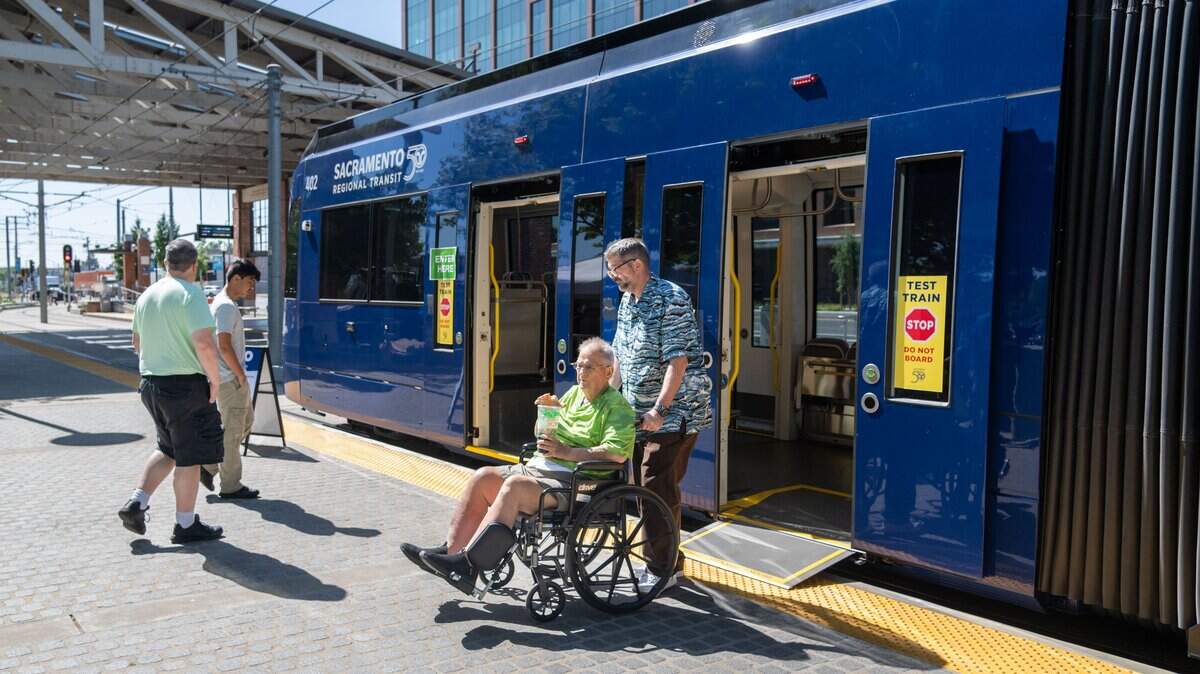
A Sacramento County grand jury found that Sacramento Regional Transit failed to adequately communicate with disabled riders regarding certain actions and changes; findings the transportation agency said were not accurate or lacked context.
The grand jury, which is an independent “watchdog” body that checks public service agencies, released a report on June 30 detailing an investigation into the rollout of the current app and scheduling platform for SacRT GO, the paratransit service. The report also digs into interactions between leadership and the agency’s Mobility Advisory Council, which represents and includes members of the disabled community.
The investigation began after the caregiver of a rider informed the 19-person grand jury that RT had cancelled the previous tracking app, managed by software from Ecolane, for SacRT GO buses “without effective notice,” according to the report. Following the cancellation, riders who previously used the app to track the vehicle’s location had to communicate directly with the dispatch center, which “overwhelmed customer service” and led to a “significant volume of late pick-up complaints,” the report said.
The Ecolane app had been cancelled because RT transitioned to a different scheduling platform, QRyde, that used different software from HBSS Connect, cutting off communication between the legacy app and new system, RT spokesperson Devra Selenis said. The new scheduling platform offered more benefits like trip booking and management. The new app, which went through multiple rounds of testing, was released in May.
Sacramento Regional Transit acknowledged that the app rollout was extended, but maintained they continued to serve disabled riders well, according to a statement released Wednesday.
“Prior to the transition to the new mobile app, approximately 100 of more than 15,000 registered riders (less than 1% of GO riders) used it, with only one documented complaint,” RT said in a statement, adding that the Ecolane app was only available for Android devices. “The vast majority of customers continued scheduling trips by phone, which is the only ADA required scheduling method. “
The grand jury asserted that RT did not provide enough warnings to riders before the app switch occurred.
Multiple disabled riders spoke with the panel and complained about inadequate warnings. The jury noted in its report that RT sent emails to riders about the new app, put up posters on buses and included an announcement about the app change at the end of the introductory message for the dispatch line. However, on the latter option, “callers could, and did, easily bypass the notifications when they scheduled a ride,” according to the report.
The grand jury said in its report that the transit agency did not confirm if it used other communication methods, such as social media, to discuss the app change. The panel also “learned that the District did not inform senior communication officials of the changes until after the fact,” the report said.
In response, RT said in a news release that “during this new software implementation process” the agency shared its outreach efforts via “our website, email blast, mobile app push notifications, news releases, social media announcements, onboard vehicle signage, and letters/postcards to targeted riders.”
Other grand jury findings of note related to RT’s communication with the Mobility Action Committee, which was established by the agency in 2005 and represents the disabled community. The investigative panel found that at times the agency fell short when it came to speak with the committee, in turn causing RT to “expend additional time and resources that might have been prevented had the MAC been consulted earlier,” according to a news release announcing the grand jury report.
One situation involved the installation of bus operator safety barriers on standard buses, which was in response to increased aggression against drivers industrywide. The barriers were acquired through an “emergency procurement to meet the urgent request of our labor partners,” Selenis said.
Sacramento Regional Transit, according to the grand jury, did not consult with the MAC or conduct tests before installing the barriers, which met ADA requirements, on 71 buses. One rider with a larger electric wheelchair had difficulty getting into the vehicle and had to adjust their seat to do so.
RT plans to adjust the about 100 remaining installations, which Selenis said will cost an additional $50,000 for design, materials and staff time.
The report also noted that even though RT asked the MAC for input on the request for proposal document for the current SacRT GO scheduling software and app, the MAC did not do a final review before it was submitted. Sacramento Regional Transit included the advisory council’s recommendations, but the council would have preferred to see everything before it went live, said the MAC Chair W. Charles Johnson, who has been on the council for about nine years.
“(RT) understands the importance of our input, so they’re doing a much better job now of providing us the opportunity to give input during the production of the RFP,” Johnson said, adding he has noted an increase in the last four years.
Johnson said that he believes RT overall is doing a good job of serving the disabled community, but he hopes the grand jury report “turns out to be a positive thing.”
“There are areas of improvement and (RT’s) sense is that they want to do good by the disable community, and they do a better job than a lot of other public transport systems,” Johnson said.
Sacramento Regional Transit’s board of directors is required to respond to the report within 90 days of it being issued.
This story was originally published July 7, 2026 at 10:54 AM.