
PBS documentary series takes an in-depth look at ‘how Asians shape America’
%20Willem%20Hester.jpg "A storefront of a Chinatown meat and vegetable market in San Francisco, California, 1895. “Asian Americans” premieres May 2020 on PBS.")
Coinciding with May being Asian Pacific American Heritage Month, PBS launched a documentary titled “Asian Americans.” Told through individual lives and personal histories, the five-hour, three-episode series walks through Asian American history and how this group shapes America.
The series, which premiered May 11, unpacks crucial events and remarkable people that defined Asian Americans and examines their critical roles in molding American history and identity from the first Asian immigrants in the 1850s through present times.
The production was led by a team of Asian American filmmakers in 2018, including series producer and documentary filmmaker Renee Tajima-Peña, who was nominated for an Academy Award for her 1987 documentary film “Who Killed Vincent Chin.”
Tajima-Peña, an Asian American Studies professor at University of California, Los Angeles, said they have been trying to do a film for decades to raise enough funds and get the right team together.
“We want to make sure there is a narrative about Asian American history we write ourselves, from our own point of view, visually,” she said.
With movies and TV shows produced by and starring Asian Americans, such as Lulu Wang and Awkwafina in “The Farewell” or the Mindy Kaling’s “Never Have I Ever” series on Netflix, and Taiwanese American Andrew Yang running for president before withdrawing from the race, 2020 was supposed to be the year everybody talked about Asian Americans, so the timing couldn’t be better to air the series, Tajima-Peña said.
Then the coronavirus pandemic broke out, coinciding with the release of the series. With the scapegoating of Asians as the source of the virus, including a White House official calling COVID-19 “Kung Flu” in front of a journalist, the rising anti-Asian sentiment follows the fault lines of xenophobia dating to when Asians first arrived in the U.S., Tajima-Peña said, citing the Chinese Exclusion Act in 1882. Her family members were Japanese Americans incarcerated in internment camps during World War II under a wave of anti-Japanese suspicion and fear. After the Sept. 11 attacks in 2001, many South Asians and Muslims faced increased discrimination.
But the series is not one long tale of woe. It features Asian Americans who created films and literature and communities that help create America. Tajima-Peña cited examples of native-born Chinese American Wong Kim Ark, who was denied entry to his country after visiting China under the Chinese Exclusion Act in late 1890s, took it to the U.S. Supreme Court and set the precedent for birthright citizenship. Korean immigrant and first Dreamer Tereza Lee became an advocate of immigrant rights after Sen. Dick Durbin, D-Ill., heard about her story and co-authored the Dream Act in 2001.
“From Wong to Lee, it is not stories of how Asians become Americans, but how Asians shape America,” Tajima-Peña said.
The series also records the rising Asian American entertainers and artists, like pioneering actors Sessue Hayakawa and Anna May Wong, who helped advocate for diversity within the industry. For representation in today’s times, Korean American actor Daniel Dae Kim – who narrates the documentary along with Japanese American actress Tamlyn Tomita – left the rebooted “Hawaii Five-0” television show “because Asian American stars were not treated equally,” Tajima-Peña said. Another Korean American actor, Randall Park, who starred in the lead role for “Fresh Off The Boat” and was interviewed for the documentary, recently started a production company dedicated to Asian American stories.
Like Hayakawa, Kim and Park opened doors for other Asian Americans, Tajima-Peña said.
“They were all people who always show up for the communities and show real investment in Asian American stories,” she said.
Sacramento region is highlighted
Several early Asian immigrants came to Northern California, Tajima-Peña said. Photos and archival footage dated to the 1860s of transcontinental railroad workers taken in the Sacramento and Sierra Nevada region were used in the documentary series. The first episode covers the California Gold Rush.
But finding visual evidence of Asian American history was hard, Tajima-Peña said. The Chinese laborers, who played a vital role in building the transcontinental railroad, were erased from a famous photograph taken at the hammering of a golden spike in Utah to commemorate the completion of the first transcontinental railroad in 1869.
In other cases, Asian Americans were included in the photographs, but were not indexed in archives, like the speech in support of civil rights by Patsy Mink, the first Asian American woman to run for president, at the Democratic National Convention in Los Angeles in 1960. The production team went through the footage of other speakers and found her speech with CBS News.
A lot of footage for the series came from home movies filmed by families or from institutions like the Japanese American National Museum.
“That is another way of documenting the Asian American story back when everyone was ignoring us,” Tajima-Peña said.
Fitting the diversity of 150 years of Asian American history into five hours proved to be a challenge, Tajima-Peña said. Geared not just toward an Asian American audience, the team foraged dramatic yet focused stories, covering the major Asian groups and weaved their history into a compelling narrative for all viewers.
“We didn’t want to do an academic overview,” she said.
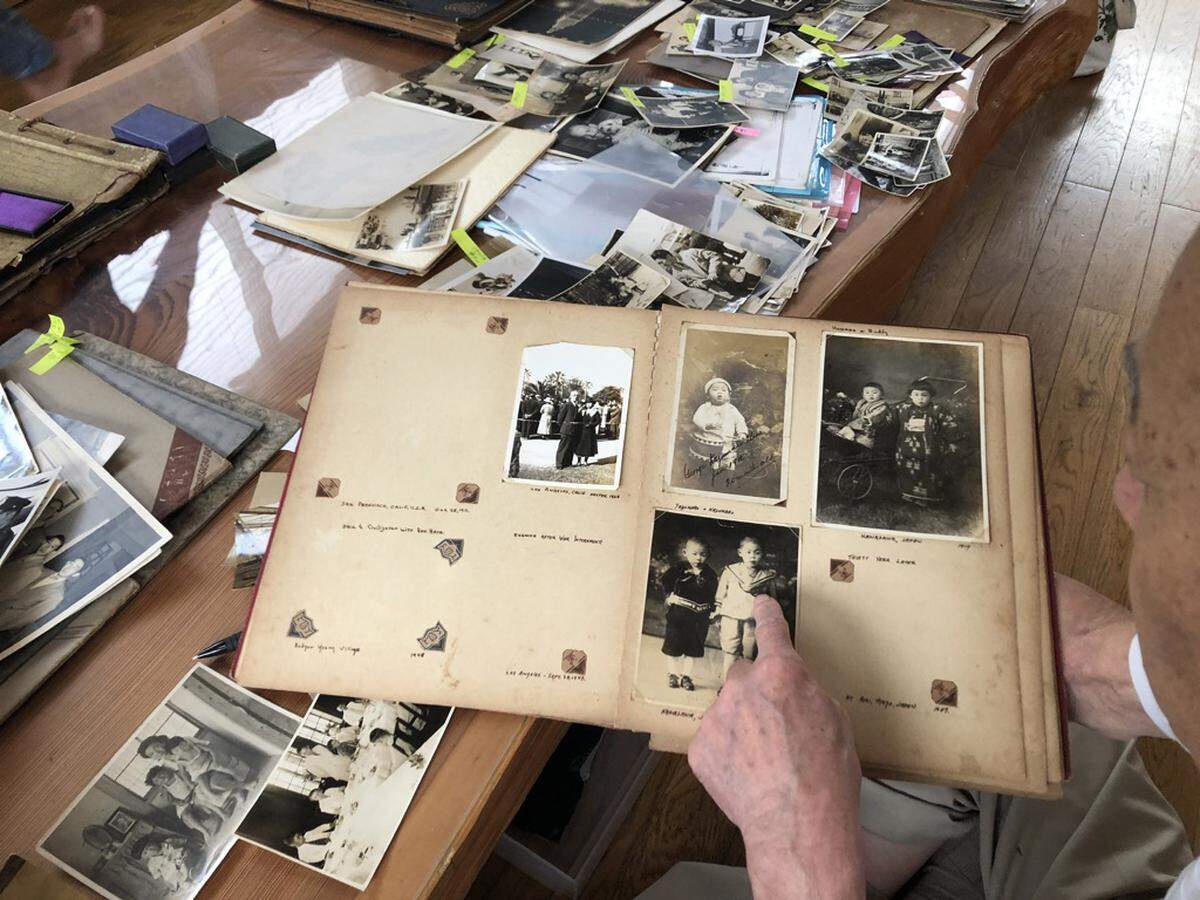
The filming journey made Tajima-Peña realize that a lot of the knowledge came from her own family. Her father, who died as production began on the series, grew up with the Uno family, who was featured in the documentary series in Salt Lake City. She found photos of them in her grandfather’s photo album.
“You’ve got to ask your parents and grandparents their stories,” Tajima-Peña said. “I always talked to him (my father), but now I have so many questions I never asked. So I really appreciate spending time sitting with my mother going through photos and getting their names right.”
Tajima-Peña said the team hopes that viewers will take any story from the series and create their own films from the stories they gathered to build the capacity of telling Asian American stories on screen.
“We hope we could give birth to a lot of other films,” she said.
“Asian Americans” can be streamed on PBS.org through June 8. It’s rated TV-14.
This story was originally published May 20, 2020 at 3:23 PM.