Dangerous jellyfish population is booming off Hawaii’s beaches. Shipwrecks could be why
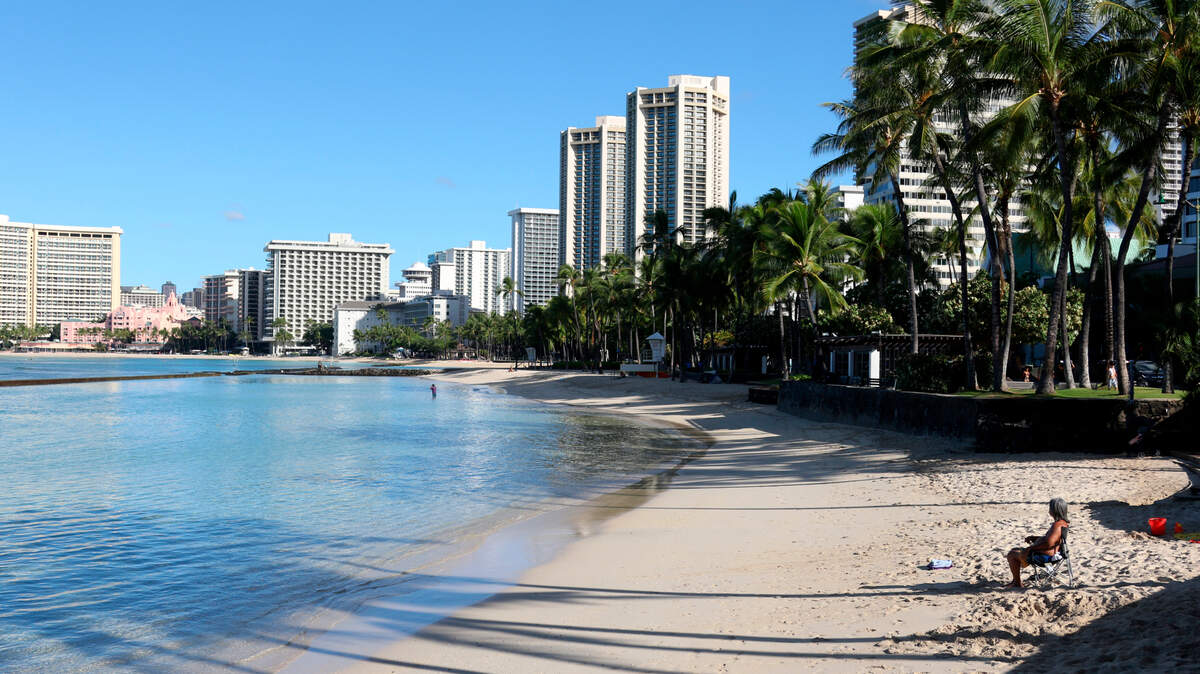
The growth in Hawaii’s box jellyfish population might be the result of three shipwrecks off Waikiki Beach decades ago, a new study shows.
Since the 1980s, the box jellyfish population has boomed in and around Waikiki, according to the study from the University of Hawaii. With the popularity of Hawaii’s beaches, the growth in box jellyfish may present a “significant challenge.”
Box jellies primarily live in coastal waters off Northern Australia and throughout the Indo-Pacific. Their stings can cause paralysis, cardiac arrest or even be fatal, according to the National Ocean Service.
Box jellyfish appearances used to be sporadic, but due to the population’s increase, their beachings now occur regularly, the study says.
Since 1994, “the once sporadic aggregations and beachings have now occurred every lunar cycle for at least 2 days during the period of 8–12 days after each full moon,” the study says.
The more than decade-long study, which involved researchers regularly sailing at night off Waikiki to conduct jellyfish censuses, aimed to answer why these mass beachings have become more frequent off Honolulu. The study specifically looked at the Alatina alata species of box jellyfish.
The increase in jellyfish population, the study says, could in part be the result of three shipwrecks: the YO-257 in 1989, the San Pedro in 1996 and the Sea Tiger in 1999. The wrecks remain at the bottom of Mamala Bay and have become artificial reefs for nearby wildlife, including jellyfish.
“You suddenly have all this new real estate to attach to,” the study’s lead researcher, Angel Yanagihara, told Honolulu Civil Beat.
Offshore metal structures have been shown to increase jellyfish populations in the previous studies.
Another potential cause for increase in jellyfish populations, according to the study, is the depletion of jellyfish predators, including certain fish species and turtles.
“Similar coastal mismanagement activities have been shown to cause an increase in jellyfish populations,” the study says.
With the popularity of Hawaii’s beaches, the increase in the jellyfish population leads to potentially hundreds to thousands of stings annually, the study says. This presents a “major public health and safety concern.”
This story was originally published May 31, 2022 at 11:23 AM.