Beetles don’t die after being eaten by predator, video shows. They crawl out its butt
What should have been a “so long” turned into a “see you later.”
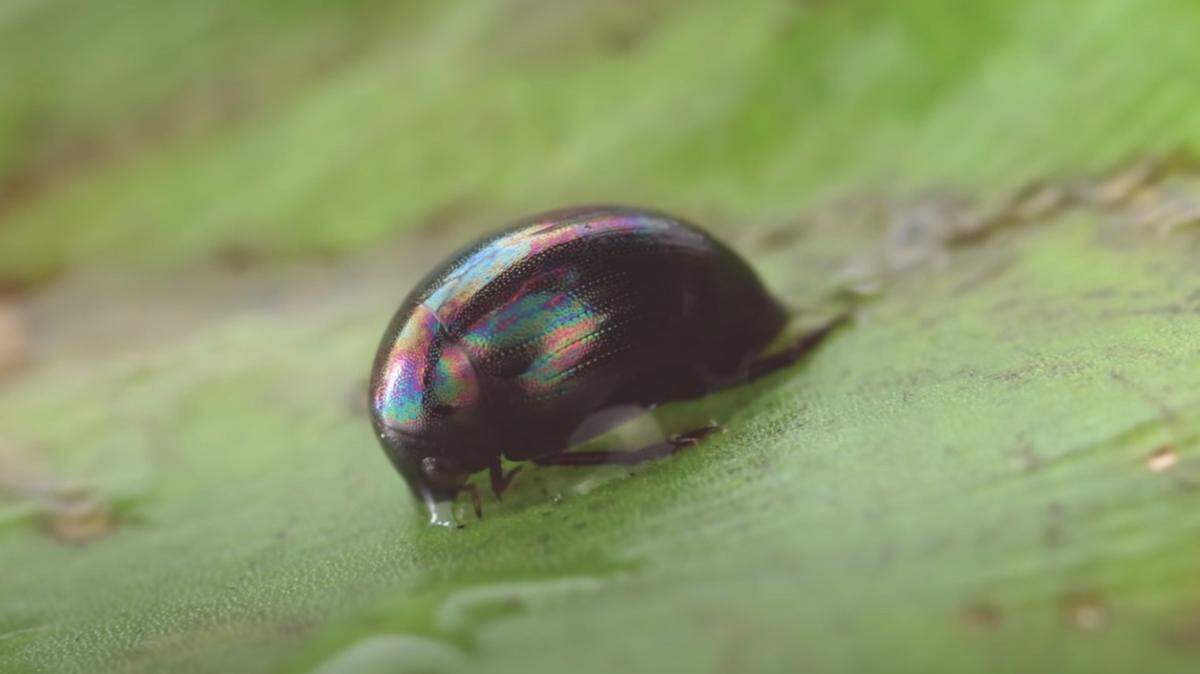
For the first time, a prey insect — in this case, a water beetle — was observed to successfully escape the wrath of its predator after being eaten alive, using its tiny legs to crawl through its digestive tract and plop out of its anus.
A video of the scene shows the predator, a dark-spotted frog, unharmed and unfazed as its meal decides to live another day.
The researcher behind the finding says the study is also the first to suggest that the prey “promotes” the excretion as part of its escape plan. The paper was published Monday in the journal Current Biology.
The species of frog studied always releases the undigested parts of its prey in its feces about 24 hours after swallowing it, according to study author Dr. Shinji Sugiura, an ecologist at Kobe University in Japan.
During this process, the prey sometimes survives the extreme pH and low oxygen environment that is a frog’s digestive tract, but it depends on the speed the victim can travel through it, Sugiura said. Usually, the ring of muscles surrounding a frog’s anus is shut tight, meaning tiny beetles cannot exit without inducing the frog to open it.
But within 6 hours of eating its food, the frogs in the experiment excreted a fully live beetle, thanks to the insects’ ability to crawl out to the light at the end of the tunnel. About 90% of all swallowed beetles made it out alive, according to the study.
In a separate trial, Sugiura glued the beetles’ legs together with wax to see if the insect was actively traveling through the frog’s digestive tract or if it just flowed out naturally. He found that all of the treated beetles died in the frog’s belly, eventually making its way out in its killers’ feces after 24 hours.
“Therefore, [the beetles] may stimulate the frog’s gut to promote excretion” in order to make a speedy return to the outside world, Sugiura said.
The same behaviors were also observed in four other frog species, according to the study.
Sugiura said the beetles’ quick response could have stemmed from “selective [evolutionary] pressures” in favor of escaping frogs’ lethal stomach environment.
This story was originally published August 3, 2020 at 2:55 PM with the headline "Beetles don’t die after being eaten by predator, video shows. They crawl out its butt."