
World’s longest fossilized human footprints found at national park, researchers say
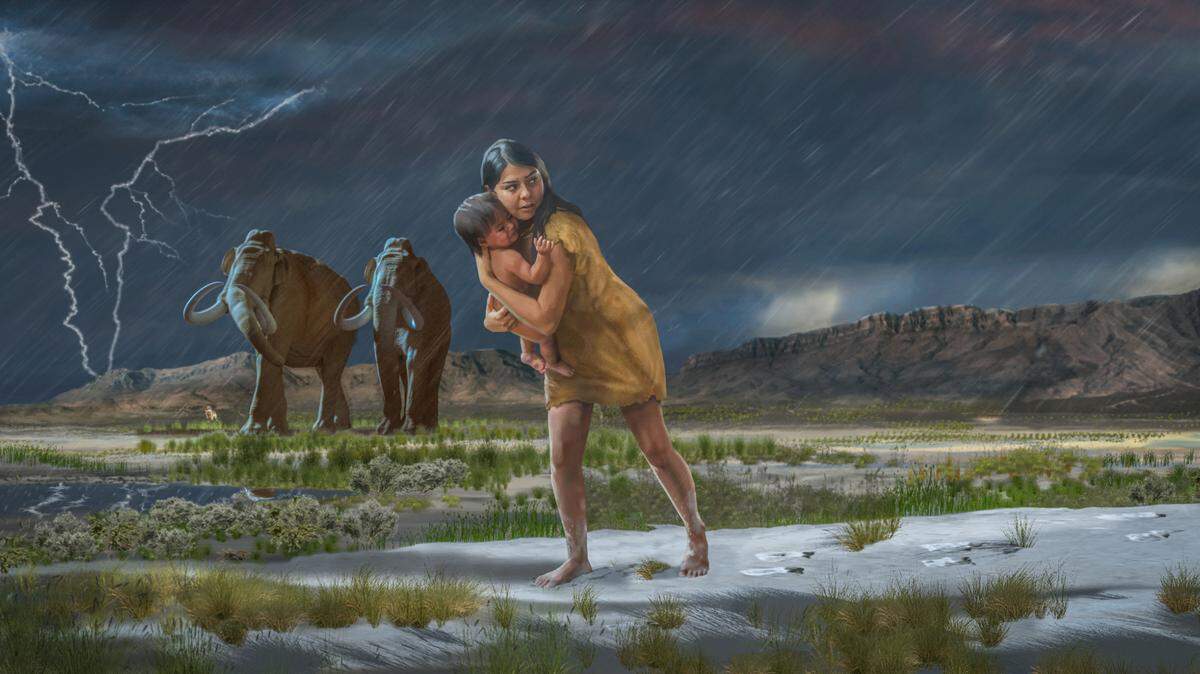
The world’s longest fossilized human footprints — more than 10,000 years old — can be found in one of America’s national parks.
The ancient tracks are thought to have come from either an adult woman or adolescent male walking with a child, according to the National Park Service. It captures their trek through a muddy shore of what was formerly Lake Otero.
The footprints were found at White Sands National Park in New Mexico in 2018, and new research published in the peer-reviewed journal Quaternary Science Reviews shows it is the longest-known fossilized human trackway in the world. It stretches almost a full mile, researchers said.
“These ancient footprints, found on a playa at White Sands in 2018, show what researchers believe to be a female or a young male walking for almost a mile, with a toddler’s footprints periodically showing up alongside,” the National Park Service said in a Friday news release.
The footprints are “broadened and slipped” from the weight of carrying the child and shifting it from side to side, officials said.
“What makes the fossilized footprints at White Sands so unique is the incredible interactions we see between humans and other ice age animals,” White Sands’ Resource Program Manager David Bustos said in the news release.
White Sands is home to the world’s largest collection of ice age fossilized footprints, the National Park Service said. Researchers have found mammoth, giant ground sloth and dire wolf prints throughout the park.
In these tracks, researchers found the footprints of a sloth and a mammoth that crossed their path. The footprints show the sloth was aware of the humans and caught the scent. The mammoth tracks cross the human footprints without any hesitation because the animal probably did not notice the humans, researchers said.
“I am so pleased to highlight this wonderful story that crosses millennia,” White Sands National Park’s Superintendent Marie Sauter said in the news release. “Seeing a child’s footprints thousands of years old reminds us why taking care of these special places is so important.”