
Clumps of ‘fur’ growing on Alaska building aren’t what they seem. Take a closer look
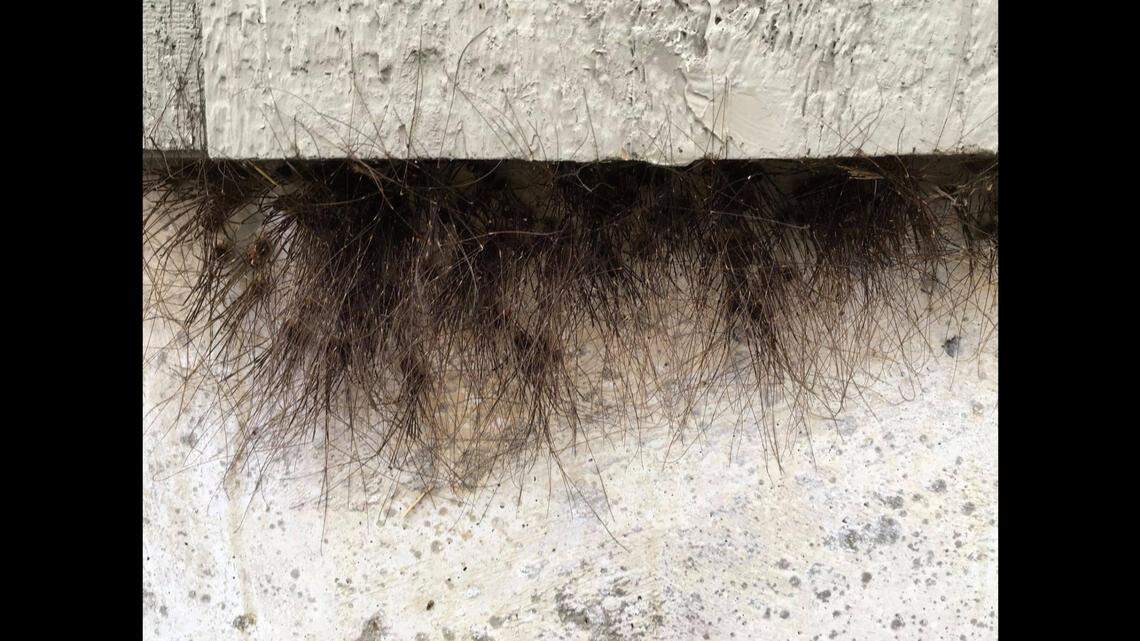
A hair-like substance found growing from the window sill in Alaska’s Glacier Bay National Park has been identified by the National Park Service as a big writhing cluster of bugs.
Specifically, it’s a hundreds of “harvestmen, also called Daddy longlegs,” the NPS said in an Oct. 30 Facebook post.
“They live in moist habitats and are usually found under rocks, on logs, and in your nightmares,” the post said. “Daddy longlegs ... just want to be your friend ... or possibly carry you off into the woods.”
Most people think of “daddy longlegs” to be spiders — since they have eight legs — but NPS officials pointed out the bugs are technically from a different part of the arachnid family. They aren’t venomous and don’t bite or sting, according to the University of California’s College of Natural & Agricultural Sciences.
That was of little consolation to the more than 15,000 people who reacted to the photos in just two hours, using words like “horrifying” and “hideous.” More than a few noted the cluster looked like hundreds of eyelashes.
“This almost made me throw up,” April ‘Williams’ Morrison posted on the NPS Facebook page.
“I really didn’t want to sleep tonight, or at any point for the next week or so anyway,” Chris Martin said.
“I am so freaked out my skin is crawling,” Marie Therese wrote.
As for why the harvestmen were clumped together like “fur,” NPS officials believe it had to do with “safety in numbers,” NPS officials said. (Multiple videos on YouTube show the clustered bugs explode in different directions when disturbed.)
“A group of harvestmen looks larger and scarier (are you scared?), so it can cause predators to think twice about disturbing them or having them as a meal,” the post said.
This story was originally published October 30, 2020 at 10:23 AM with the headline "Clumps of ‘fur’ growing on Alaska building aren’t what they seem. Take a closer look."