Reported hate groups declined in 2020 — but here’s why that’s misleading, report finds
The Southern Poverty Law Center tracked fewer active hate groups in the United States in 2020 — but that doesn’t mean levels of hate or bigotry have fallen.
The center, a racial justice organization based in Alabama, on Monday released its annual report on hate and extremism, which said the group identified 838 active hate groups operating in the United States last year. That’s down from 940 groups tracked in 2019 and the record-high 1,020 in 2018.
The number of groups tracked, however, is still at a historic high — remaining well above 800 since 2015, the group says.
The SPLC considers hate groups organizations that “vilify others because of their race, religion, ethnicity, sexual orientation or gender identity.”
The report pointed out that the number of hate groups is just one way to measure the “level of hate and racism in America.”
For example, the SPLC found in an August poll that 29% of Americans personally know someone who believes “white people are the superior race.” It also reported nearly 4,900 incidents of “extremist flyers” in 2020.
Why the decline in hate groups?
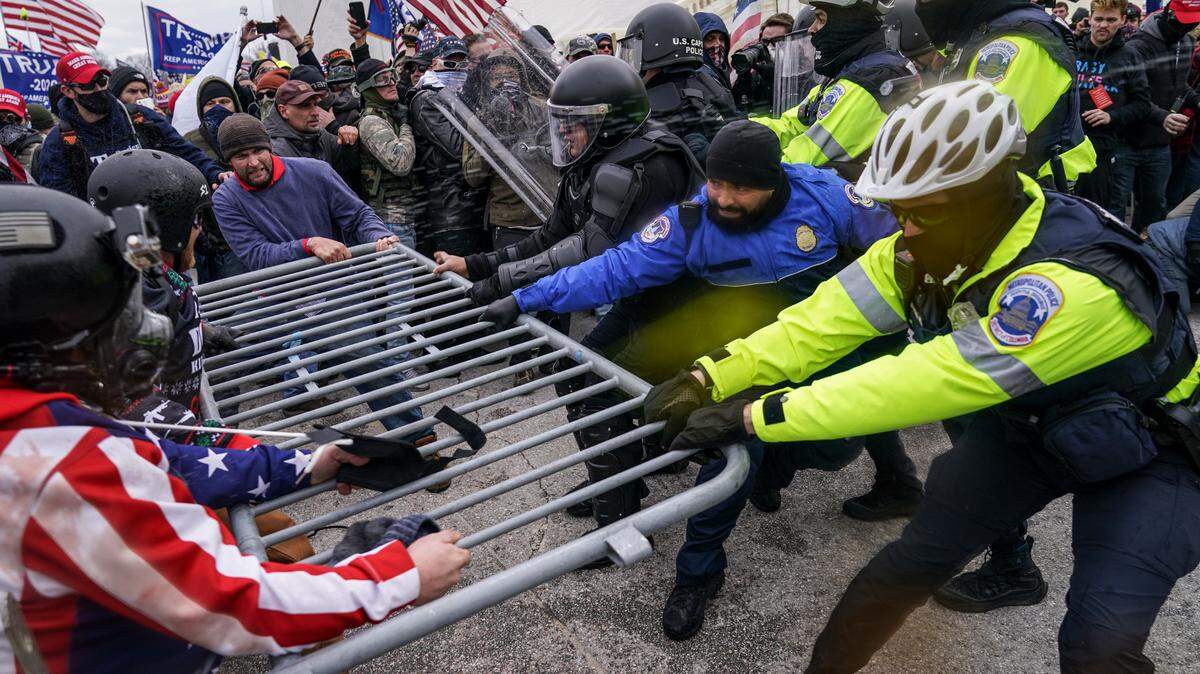
The report emphasized that the decrease in the number of hate groups tracked does not mean that hate or bigotry in the U.S. have declined and mentioned the Jan. 6 deadly attack on the U.S. Capitol by a mob in support of then-President Donald Trump as an example.
“Most of the people storming the Capitol building may not be card-carrying members of a hate or anti-government group, but they harbor extremist beliefs,” it says.
The report outlined a couple of factors that explain the decline in the number of hate groups tracked.
The first is the COVID-19 pandemic, which the report says “minimized overt hate group activity.”
“There were some groups that we did not relist this year because they ceased their in-person activity and did not appear to do anything online,” it says.
The second is that hate groups are increasingly being kicked off social media platforms and “communicating in encrypted chatrooms, making it harder to track their activities,” the report says.
The Capitol attack was largely planned on websites popular among far-right conspiracy theorists, NPR reports.
During the attack, rioters stormed the Capitol as Congress was convened to certify then-President-elect Joe Biden’s victory in the Electoral College. It resulted in five deaths and numerous injuries.
Following the siege, Parler, a platform popular among far-right users, went offline after carriers such as Apple and Amazon refused to host it, CNBC reports.
Twitter, which has permanently banned Trump, has also purged many accounts affiliated with the conspiracy theory QAnon — which some defendants charged in the attack have been linked to — in the wake of the siege, The Washington Post reports.
Subsets of groups
The report also outlined the existence of the different categories of groups it tracks.
The number of white nationalist groups tracked by the SPLC fell by 27 between 2019 and 2020 — from 155 to 128. But that does not indicate there was less “white nationalist organizing.”
“Both white nationalist groups and neo-Nazi groups are becoming more diffuse and difficult to track and quantify as they proliferate online and communicate on encrypted platforms,” it said.
The number of anti-immigrant, anti-Muslim and anti-LGBTQ groups were “largely stable” between 2019 and 2020.
Their in-person organizing, however, was “curtailed due to the COVID-19 pandemic.”
Recommendations
The SPLC made several recommendations in the report for combating extremist groups.
They include establishing offices in the Department of Homeland Security, the Department of Justice and the Federal Bureau of Investigation tasked with investigating and prosecuting domestic terrorism.
The group also recommended improving federal data collection, training and prevention related to hate crimes and providing funding toward the prevention of violent extremism.
Biden renounced white supremacy and domestic terrorism during his Jan. 20 inaugural address and included “strengthening prosecution of hate crimes” among policy proposals outlined during his campaign.
Biden also recently signed a presidential memorandum directing the Justice Department to work with Asian American and Pacific Islander communities to prevent hate crimes and harassment following increased harassment and violence in the past year. The memorandum was one of several on racial equity the president has signed, which the White House has said are “just the start.”
This story was originally published February 1, 2021 at 2:17 PM with the headline "Reported hate groups declined in 2020 — but here’s why that’s misleading, report finds."