Trump’s Twitter ban gets questioned by an unlikely source — Bernie Sanders
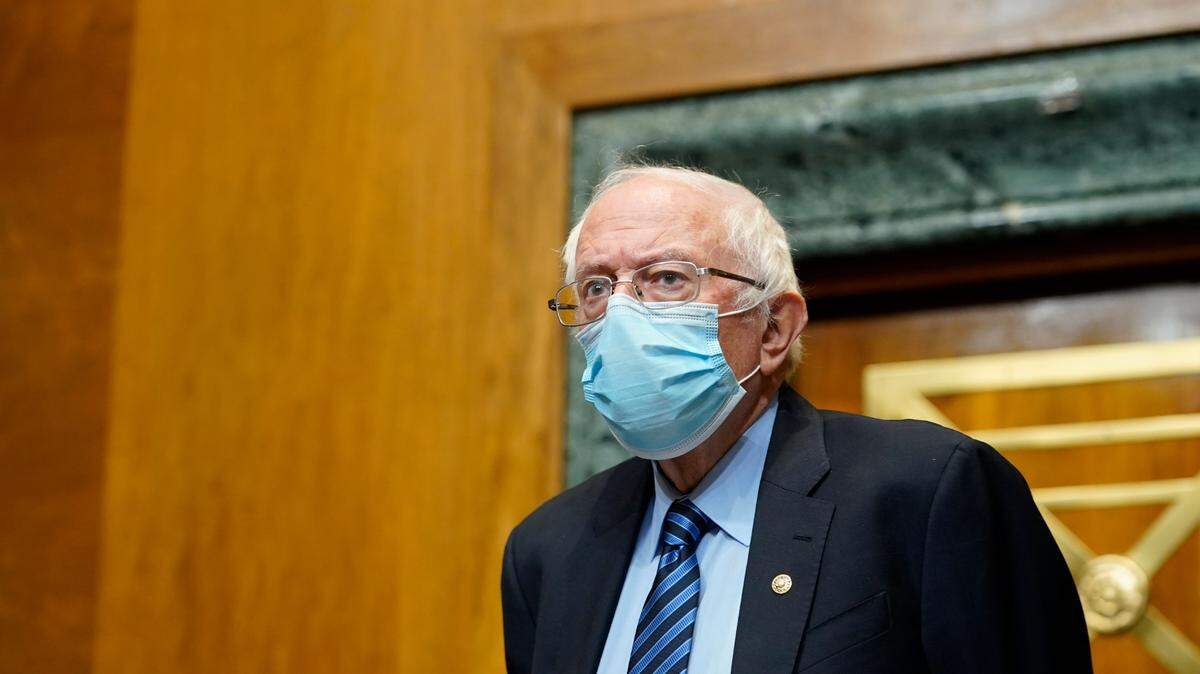
Sen. Bernie Sanders on Tuesday expressed concern about former President Donald Trump’s ban from Twitter.
Sanders, an Independent from Vermont and frequent critic of the former president, said during an interview on “The Ezra Klein Show” that he’s not “particularly comfortable” with Twitter’s decision to permanently remove Trump from the platform — saying he doesn’t like giving too much power to a “handful of high tech people” and questioning how such bans should be used.
“Look, you have a former president in Trump, who is a racist, a sexist, a homophobe, a xenophobe, a pathological liar, an authoritarian, somebody who doesn’t believe in the rule of law. This is a bad news guy,” Sanders said on the podcast. “But if you’re asking me, do I feel particularly comfortable that the president, the then-president of the United States could not express his views on Twitter? I don’t feel comfortable about it.”
But he went on to say the internet shouldn’t be used to spread hate speech or conspiracy theories or for authoritarianism or insurrection purposes.
“So how do you balance that? I don’t know, but it is an issue that we have got to be thinking about,” he said on the podcast. “Because of anybody who thinks yesterday it was Donald Trump who was banned and tomorrow it could be somebody else who has a very different point of view.”
Twitter permanently suspended Trump’s account shortly after the Jan. 6 attack on the U.S. Capitol, during which a mob of his supporters stormed the building as Congress was convened to certify then President-elect Joe Biden’s Electoral College victory.
Many lawmakers from both parties, at least in part, blamed the deadly attack on Trump’s rhetoric surrounding the 2020 presidential election. Trump repeatedly made false claims that the election was fraudulent and stolen from him and, at a rally shortly before the attack, told his supporters to march on Capitol Hill.
Trump’s account was locked for at least 12 hours following the siege. When the lock was lifted, Trump tweeted out a video acknowledging that a new administration would take power and calling for an orderly transition. He also tweeted that he would not be attending Biden’s inauguration and that those who voted for him would have a “GIANT VOICE long into the future.” Twitter cited those tweets in its decision to ban him.
The company said the decision was made over concerns Trump would incite more violence before his term ended.
Other social media companies also suspended Trump’s accounts following the attack — including Facebook, which says Trump’s suspension is indefinite and that an oversight board is reviewing that decision.
Supporters of Trump’s Twitter ban have questioned why social media platforms didn’t take action sooner, saying other users wouldn’t have gotten away using the same rhetoric as Trump, The Washington Post reports. But critics have derided it as an attack on free speech.
A Pew Research study conducted from Jan. 19-24 found 58% of U.S. adults agree that banning Trump from social media platforms was the right thing to do while 41% said it was wrong.
Twitter CEO Jack Dorsey said the ban reflected a “failure” to “promote healthy conversation” but maintained that it was “the right decision for Twitter.”
World leaders have also spoken out against the ban, including German Chancellor Angela Merkel, who said allowing the private sector to make the call is “problematic,” according to the Post.
Some legal experts, however, have told media outlets that suspending or banning Trump’s accounts doesn’t violate the First Amendment because social media outlets are private companies.
“The First Amendment is a constraint on the power of government,” Daphne Keller, a legal expert and leader of a platform regulation program at the Cyber Policy Center at Stanford University, told Business Insider. “It doesn’t apply to Twitter.”
Sanders said during the interview that the “devil is obviously in the details” when it comes to these bans.
“It’s something we’re going to have to think long and hard on, and that is how you preserve First Amendment rights without moving this country into a ’big lie’ mentality and conspiracy theories,” he said.
This story was originally published March 24, 2021 at 6:48 AM with the headline "Trump’s Twitter ban gets questioned by an unlikely source — Bernie Sanders."