
Here’s how to see a lunar eclipse, blood moon and supermoon at the same time this week
May’s full moon isn’t an ordinary full moon.
The full moon Wednesday, called the “Flower Moon,” will feature three celestial events at the same time, according to NASA. A supermoon, total lunar eclipse and blood moon could appear in the sky across the western half of the U.S.
It’ll be the largest and closest full moon of the year, making it a supermoon, NASA said. The total lunar eclipse will also be the only one in 2021.
A total eclipse of a year’s nearest full moon last happened on Sept. 28, 2015, according to EarthSky.
“Yet, it’s not just bringing brightness and size,” NASA said in its Watch the Skies blog. “May’s supermoon is also bringing a ‘super power’ to change its color, and the color is red.”
That change to a rusty, blood-like color could create what is known as a “Blood Moon.” Those only happen when the moon is in a total lunar eclipse, according to Space.com.
A blood moon hasn’t happened since January 2019. A blood moon won’t happen again until May 2022, Space.com reported.
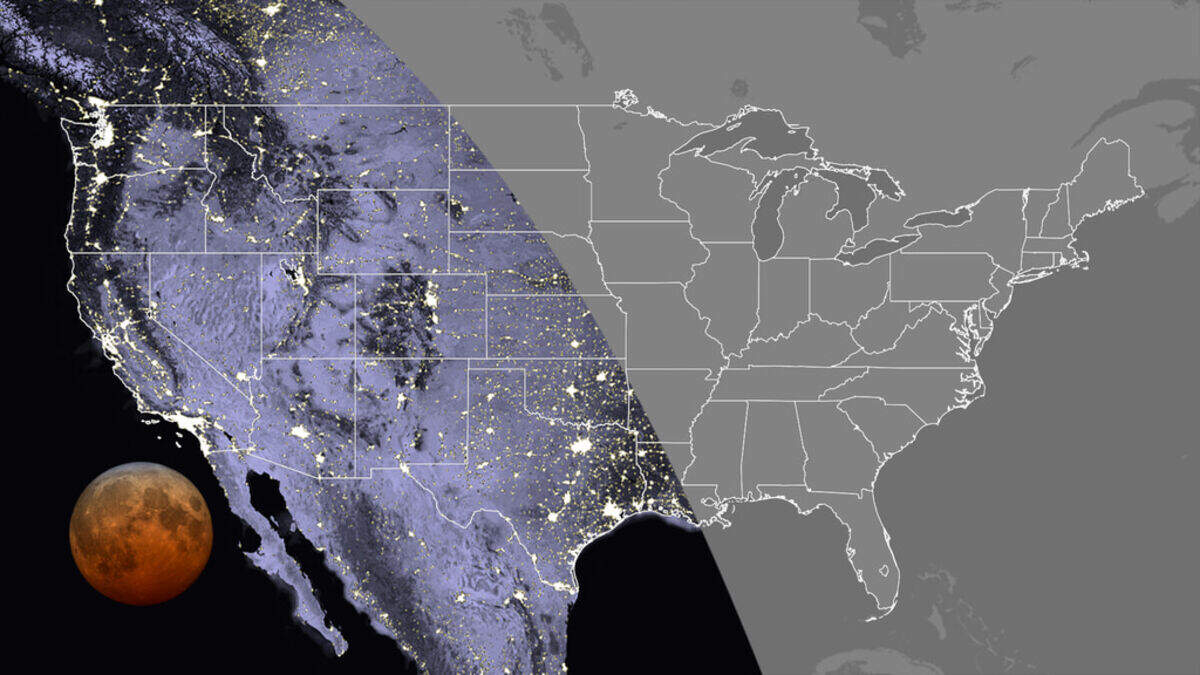
The “Super Flower Blood Moon,” as Space.com called it, will be visible in most of the western half of the U.S.
People living in the Pacific and Mountain time zones will be able to see it, according to NASA. Some people in parts of Texas, Oklahoma, Kansas, Hawaii and Alaska could also catch a glimpse of the Super Flower Blood Moon.
The eclipse will start at 1:46 a.m. Pacific Time on Wednesday, May 26, according to NASA.
“To catch totality – the period when all of the Moon’s surface is blanketed by the Earth’s dark shadow – look up between 4:11 and 4:26 a.m,” NASA said. “We haven’t had a total lunar eclipse occur with a supermoon in almost six years.”
If the Super Flower Blood Moon isn’t visible in your area, the Griffith Observatory, Lowell Observatory, The Virtual Telescope Project and Time and Date all plan to stream the celestial event, according to Space.com.
This story was originally published May 24, 2021 at 8:25 AM.