Lost 17 days after wrong turn, he accepted death in Oregon woods. Then came a voice
A quick overnight fishing trip in May turned into a bitter bid for survival in Oregon’s Umpqua National Forest for a 69-year-old angler who was lost without a compass, map and water.
Harry Burleigh planned to hike a mile and a quarter to Twin Lakes to fish — a supposed short adventure, he said. But with minimal supplies and clothing, he wasn’t prepared to get lost for 17 days after taking a wrong turn.
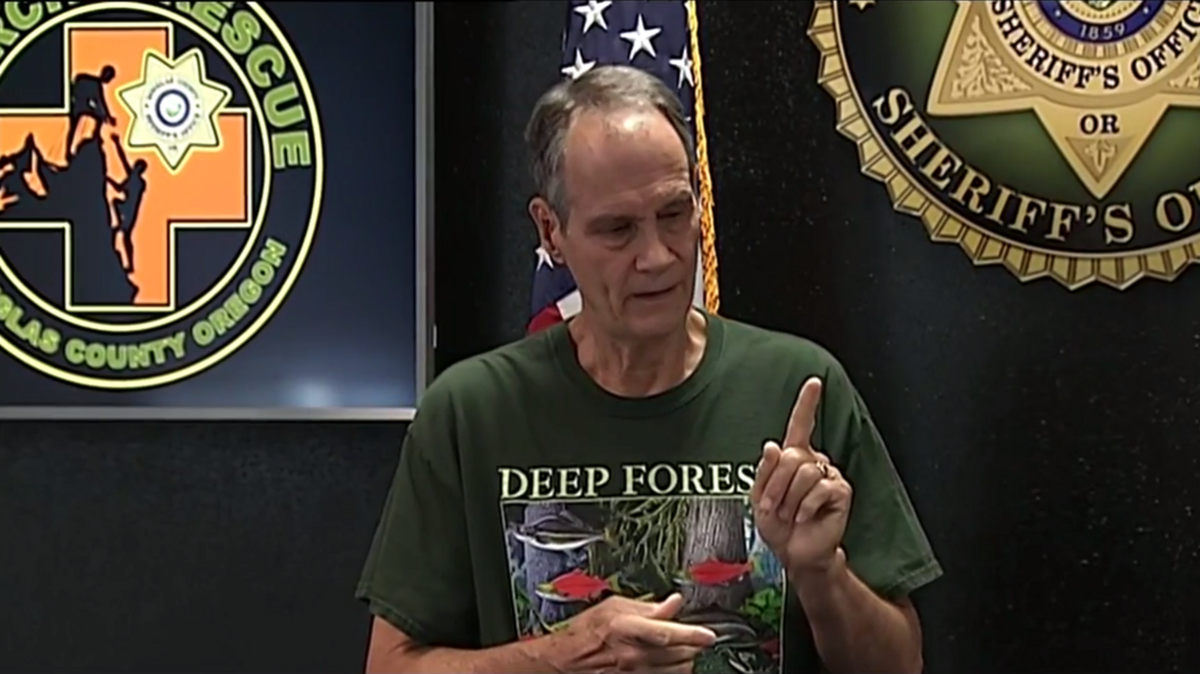
“I dropped all of my protocols that I would normally do,” Burleigh said during a press conference on July 15 recorded by KPIC. “I didn’t implement the seven P’s: Proper prior planning prevents piss poor performance.”
Twin Lakes is located in southwestern Oregon, east of Roseburg.
Burleigh spent his first sleepless night cold in a makeshift shelter. Snow greeted him the next morning, KEZI reported.
He wandered deeper through the forest’s ravines looking for water. Then he fell on logs, landed on his fishing pole and smacked his head, the news station reported.
“This was no longer just doing a hike,” he said. “This was serious.”
Even more lost, dehydrated and in pain, Burleigh continued on for days.
“Statistically, the chances of finding Harry alive were getting very narrow, but search and rescue never gave up hope,” said Douglas County Sheriff John Hanlin during the press conference recorded by KPIC.
And Burleigh knew he was running out of time to be discovered.
“I was exceeding that time frame. I accepted my path. I accepted that this is where I was going to stay,” he told the public.
Burleigh used all the resources around him to survive. He drank water from creeks, snow and from a puddle of water he found in the base of a broken tree, according to The News-Review.
To stave off hunger, he ate millipedes, termites, a scorpion, one crawfish and a “big” snail. He also managed to start a small fire with a plastic magnifying glass his father-in-law gave him 40 years ago, the newspaper wrote.
And he left markers on his path throughout the forest, spelling out “Help” and “SOS” with logs, according to The News-Review.
When an airplane flew over him, he dangled his keys in the air hoping the sun would reflect off them. The plane didn’t see him.
Despite a few more falls, hunger and thirst, he was carried forward by his motivation to return to his family. On his last day in the woods, he left his makeshift shelter to find water. Instead, he was greeted by a rescuer — whom he calls “Guffaw Man,” KPIC reported.
Burleigh spent 12 days in intensive care, according to KEZI.
Burleigh isn’t the only person to go missing near Twin Lakes. In 2011, a hunter vanished in the woods after going off the trail.
Stephen Litsey, 71, was never discovered by search and rescue teams. Two years later, he was pronounced dead by the Douglas County Circuit Court, The News-Review reported in June.
What to do if you get lost in the woods
Burleigh urged hikers to avoid taking shortcuts or going off trail pathways. The man said he thought he had “terrain awareness” but still became lost.
And it’s not an uncommon reason for people to find themselves lost.
Veering off a trail is the number one reason adult hikers need search and rescue, according to a 2019 Smoky Mountains study.
Advanced planning is the best tool a person can have when lost in the woods, according to The United States Forest Service.
“Even if you are going out for just a few hours, pack enough essentials that you can stay hydrated, fueled and prepared for any type of weather,” the Forest Service stated.
Essentials include:
Extra food and water.
A compass or other GPS device.
Maps. Study the terrain and trails.
“Sturdy hiking boots,” layers of clothing and another pair of socks.
A flashlight, blanket and matches held in a waterproof container.
Check for fires, bear sightings and flooding in the area at a local ranger district or forest office.
If lost, maintain a positive outlook. It’s also important to tell another person about a planned hike, the vehicle driven and the specific trail used.