Floods threaten to shut down 25% of US infrastructure including hospitals, report says
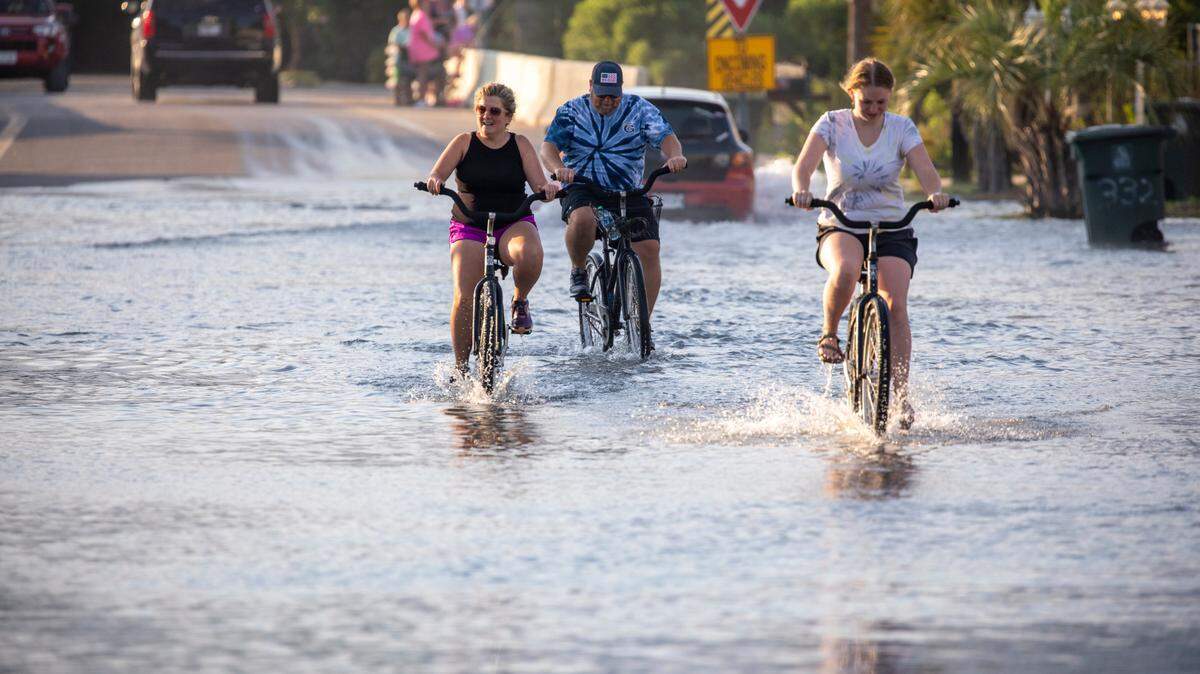
A quarter of all critical infrastructure in the United States, including airports, fire stations and hospitals, are currently at risk of “becoming inoperable,” according to a new report released Oct. 11. Flooding caused by changing environmental conditions that fuel more severe weather is to blame.
What’s more, nearly 23% of all roads in the country (or 2 million miles’ worth), 20% of all commercial properties (or 919,000 buildings), 17% of all social infrastructure (or 72,000 facilities) and 14% of all residential homes (or 12.4 million properties) are at risk of becoming inhospitable, undrivable or inaccessible because of floods.
And projections for 30 years from now look far worse.
Researchers with the nonprofit First Street Foundation calculated community flood risks over three decades involving residential and commercial properties, roads, critical infrastructure and social infrastructure like schools and government buildings for every neighborhood, zip code, city and county.
They found that Louisiana, Florida, Kentucky and West Virginia face the highest community flood risks. The states are home to 17 of the top 20 most at-risk counties in the U.S.
.jpeg "Screenshot (85).jpeg")
“Louisiana alone accounts for six of the top 20” highest risk counties for severe flooding, with Cameron Parish County ranking number one, the report says. Monroe County in Florida (including the Everglades), Terrebonne Parish County in Louisiana (home to two wildlife refuges), Hyde County in North Carolina (next to the Outer Banks) and McDowell County in West Virginia are the next most at-risk regions for flood damage to physical infrastructure.
Even when you zoom out to cities, Louisiana and Florida still make up most of the top 20 cities at highest risk of flooding, which researchers predict has “the potential to be devastating” in local communities.
For example, 1,640 schools, churches and museums in Miami-Dade County in Florida are at risk of shutting down due to flooding; In Texas’ Harris County, 770 hospitals, public utilities and water treatment plants are at risk of “flooding above their operational threshold this year;” Nearly 99% of roads in Orleans Parish County in Louisiana may be undrivable if flooding occurs.
.jpeg "Screenshot (84).jpeg")
“As we saw following the devastation of Hurricane Ida, our nation’s infrastructure is not built to a standard that protects against the level of flood risk we face today, let alone how those risks will grow over the next 30 years as the climate changes,” Matthew Eby, founder and executive director of First Street Foundation, said in a news release. “This report… will help inform where investment dollars should flow in order to best mitigate against that risk.”
Over the next 30 years, researchers found patterns that showed “significant increasing risk” for the Atlantic and Gulf Coasts because of predicted sea-level rise, worsening storm surges and stronger coastal storms.
The Northwest is also expected to see “large increases” in flood risks primarily driven by more rain, storm runoff and snowmelt.
By 2051, climate change would have added 1.2 million more residential homes to the list of those at risk of flooding, 66,000 more commercial properties, 63,000 more miles of roads, 6,100 pieces of social infrastructure and 2,000 pieces of critical infrastructure.
This story was originally published October 11, 2021 at 10:51 AM with the headline "Floods threaten to shut down 25% of US infrastructure including hospitals, report says."