Ever seen a giant, slimy ‘snot otter?’ NC salamander experts want to hear from you
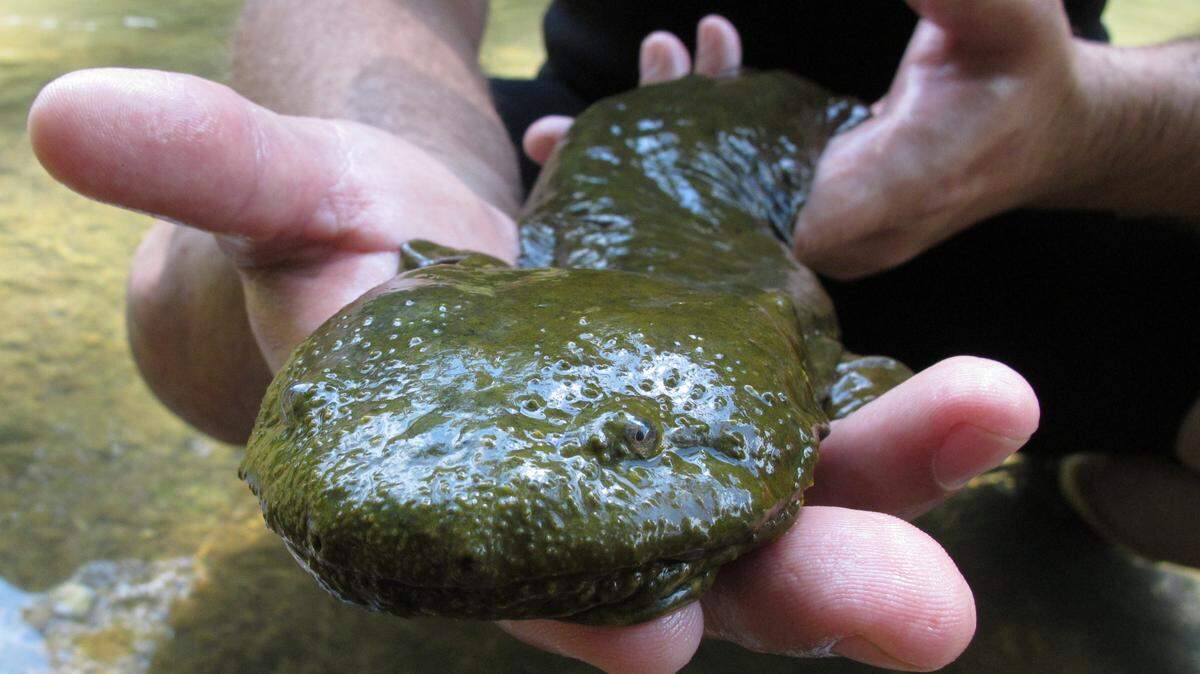
The first time Lori Williams picked up a snot otter she almost dropped it.
“Holding it for the first time was difficult, as they are strong and quite slippery,” Williams, a certified biologist for the North Carolina Wildlife Resources Commission, said. “I was overjoyed and in total awe of that incredible, giant salamander!”
A college student at the time of her first close encounter with the hellbender salamander — also known as a snot otter or water dog — Williams’ fascination with the amphibian has become the focus of her career.
With the trout fishing season beginning on Saturday, April 2, that means spreading the word about how folks can spot and help protect the species.
The future of the two giant salamanders — hellbenders and mudpuppies — remains in the hands of Williams and other biologists.
Hellbenders and mudpuppies are considered a “species of concern” in North Carolina, according to the Wildlife Resources Commission. Hellbenders are also considered a “species of greatest conservation need,” according to the North Carolina Wildlife Action Plan.
Hellbenders have declined in population since the state started tracking them in 2007, though sightings often are more frequent as the state opens up trout waters for fishing, according to a news release.
That’s where the public comes in.
“People are starting to get the connection between healthy hellbender numbers and clean water, which has direct implications for people and animals alike,” Williams said. “Citizen scientists are vital for our conservation efforts because they help update records in known populations, identify new hellbender sites that we didn’t know about before, and add so many good observations.”
In 2018, 125 citizens reported a salamander sighting. In 2020 that nearly doubled, to 248. Last year, the commission collected 243 sighting reports.
“The response from the public has exploded in the last several years, with the highest total in 2020,” Williams said. “Maybe we can break the record this year!”
Many of the sightings are of hellbenders, Williams said, because mudpuppies are more elusive.
The reports help the state identify population trends depending on where citizens find hellbenders and mudpuppies and how old they are.
“When we don’t find any animals at all where they once were, that’s an indication of possible decline,” Williams said. “If we only see older adults but find no young animals or even nests, that’s another red flag that the population is declining, and they are not breeding successfully. “
Part of the declining population is a dangerous mix of a worsening environment and misinformation, according to Williams.
Breaking the salamander stereotype
After Williams earned an undergraduate degree in English and realized it wasn’t her calling, she returned to school to study wildlife conservation.
“Salamanders, frogs, and turtles were some of the first animals I connected with as a child,” Williams said. “I wasn’t really in touch with how deep that connection was, though. My true calling was in wildlife conservation and ecology, and once I truly realized that, I was in a happier place.”
Major threats to hellbenders and mudpuppies are degrading habitat, bad water quality and the false belief that they feed on trout, according to Williams.
“That misconception still leads to some people harming or killing hellbenders, which is illegal,“ Williams said.
Hellbenders may scavenge an already-captured trout for easy prey, but the salamanders mostly eat crayfish, minnows, tadpoles and other small aquatic creatures on the floor of rivers and streams.
Educating the public on the harmlessness of the salamander will help improve the relationship between humans and hellbenders, Williams said.
“Over the years, as more people share their stories, photos, and videos with us, it’s great to see and hear the excitement from people of all ages, and it seems they just love the fact they are helping with conservation efforts,” Williams said.
How to spot a salamander
The mudpuppy and hellbender are often confused with one another — but there ways to tell them apart.
Hellbenders are the largest salamanders in North America and can grow up to 17 inches long, the commission said. They have a flat, broad head and brown wrinkly skin with mottled and dark splotches. Hellbenders are usually found in clean, fast-moving mountain streams.
Mudpuppies reach about 10 inches in length and have smooth, light brown skin with speckles and red-feathered gills, according to the commission. Mudpuppies live in deep rivers, large ponds and lakes, but can also live in clean streams.
“We know less about mudpuppies than we do about hellbenders, but we’d like to know much more about both,” Williams said in the news release. “Mudpuppies are attracted to baited hooks in lakes and deep rivers, so anglers fishing from boats may catch one. We need anyone who fishes deep river sites and impounded waters to let us know if they find one.”
The hellbender and the mudpuppy are not poisonous, venomous or toxic to humans, according to the commission, but they might try to bite if a person picks them up. Citizens should leave them alone if they’re spotted in the wild, and report them to Williams.
People who encounter a giant salamander are asked to email Williams at Lori.Williams@ncwildlife.org or call the commission’s helpline at 866-318-2401 and provide details of the observation.
Taking, owning, transporting or selling hellbenders and mudpuppies from their habitat is considered a class 1 misdemeanor and could result in a fine and up to 120 days in jail, according to the commission.
This story was originally published April 1, 2022 at 11:32 AM with the headline "Ever seen a giant, slimy ‘snot otter?’ NC salamander experts want to hear from you."