
People in Arizona will soon be banned from filming law enforcement within 8 feet
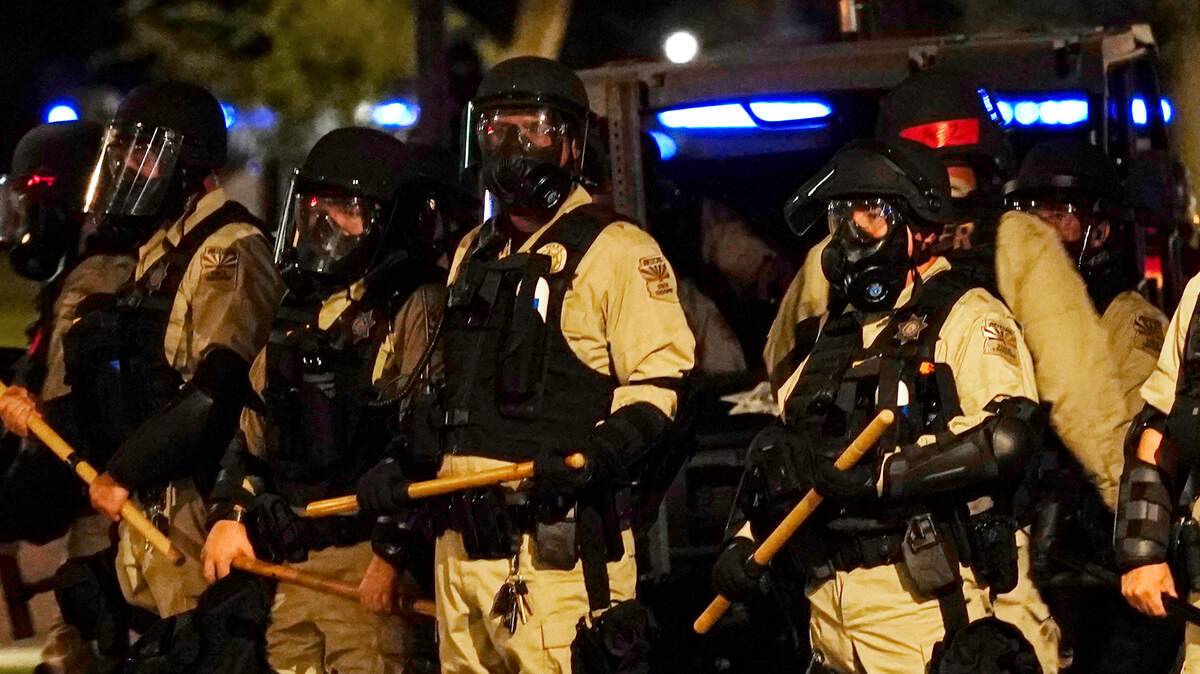
A new law in Arizona barring civilians from filming police from a close distanceis facing criticism for potentially inhibiting Arizonans’ rights to freedom of speech.
According to the bill, which was signed into law on July 6 and will go into effect in September, it will soon be illegal for anyone in Arizona to film video within 8 feet of “law enforcement activity occurring” if they know, “or reasonably should know,” that it’s happening.
“Law enforcement activity” includes officers “questioning a suspicious person,” “conducting an arrest, issuing a summons or enforcing the law,” or “handling an emotionally disturbed or disorderly person who is exhibiting abnormal behavior,” the bill says.
If a person continues to film after receiving a verbal warning to back up, they could be charged with a misdemeanor, the bill says.
The law has several exceptions, however: The bill says that someone who is the subject of police interaction can record the encounter “if the person is not interfering with lawful police actions,” which include “searching, handcuffing or administering a police sobriety test.” The bill adds that people inside a car stopped by police can record the encounter if “the occupants are not interfering with lawful police actions.”
The bill was initially introduced by State Representative John Kavanagh, who’s a former police officer, AZ Family reported. He says the bill is intended to protect law enforcement officers and people who are recording them, adding that he doesn’t have a problem with people filming police as long as they do so from a distance, the outlet reported.
But critics of the bill, including First Amendment experts, have called it unconstitutional, saying it prevents people from exercising their First Amendment rights, the Arizona Republic reported. They’ve also criticized the bill as being too vague and “giving police too much discretion,” the outlet reported.
Various news organizations signed onto a letter from the National Press Photographers Organization, which opposed the bill and said it “violates not only the free speech and press clauses of the First Amendment, but also runs counter to the ‘clearly established right’ to photograph and record police officers performing their official duties in a public place,” a February news release from the organization said.
The letter also said that the bill is “completely unworkable in situations (such as demonstrations and protests) where there are multiple officers and people recording.”
That letter was issued after the initial version of the bill was introduced, which would have banned filming at a greater distance of 15 feet, The Guardian reported. The bill was later amended to current 8 feet in an attempt to address the constitutionality concerns, the Arizona Republic reported.
“As several federal courts have affirmed, people have the First Amendment right to record police officers while they carry out their duties,” ACLU of Arizona communications director Marcela Taracena said in criticizing the bill, according to the outlet, “and the ability to record police interactions has become an important tool to ensure police accountability and transparency.”
The Phoenix Police Department ranked #1 for the use of deadly force among the ten most populous cities in the country since 2013, according to analysis from the organization Mapping Police Violence, ABC 15 reported.