
‘Ring of fire,’ another solar eclipse will cross paths over lucky Texas city, NASA says
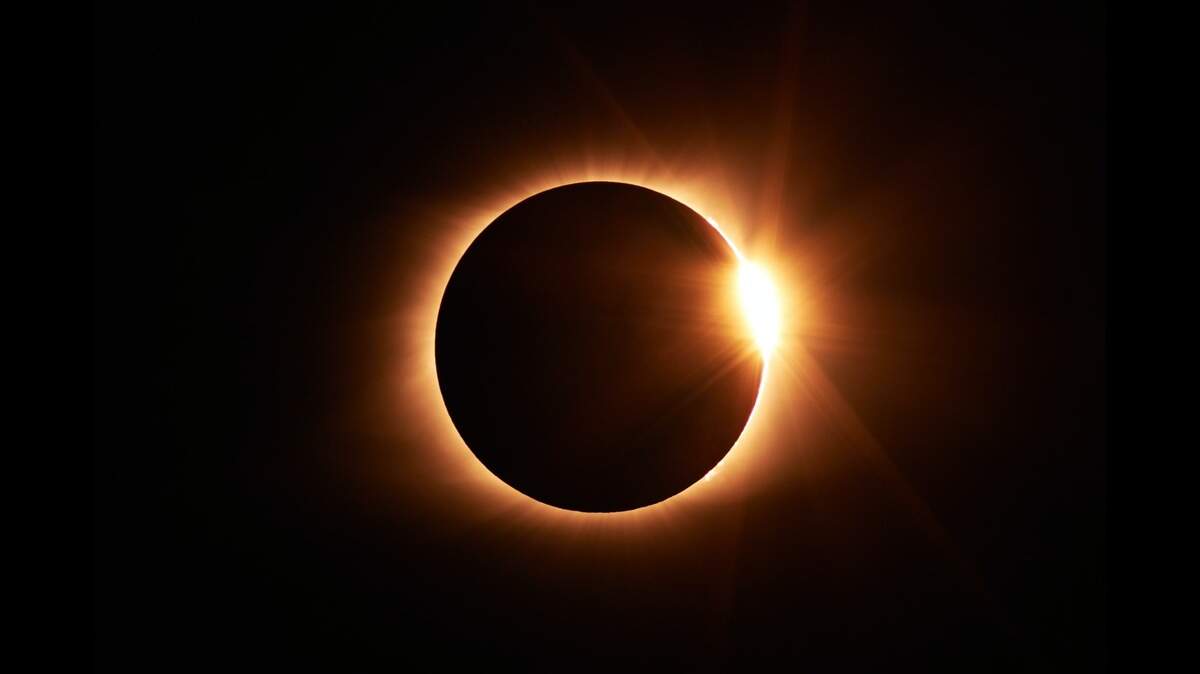
A Texas city is going to have front row seats to two upcoming solar eclipses, according to NASA.
The lucky city, San Antonio, is right along the path of a “ring of fire” eclipse coming on Oct. 14 of this year, and a rare total eclipse on April 8, 2024, NASA said in a March 8 social media post.
The space agency shared a map showing the paths for each event, indicating when and where onlookers can catch the best views.
The annular eclipse, also known as a “ring of fire,” will be fully visible across all of San Antonio, as well as a good portion of West Texas — including Midland and Odessa — and a sizable stretch of south Texas.
A “ring of fire” occurs when the moon passes in front of the sun while at its furthest point from Earth, according to NASA. The moon blocks out a large portion of the sun, but not all, leaving a bright ring of light peeking out from behind for a few fleeting moments.
But the second celestial event, a total solar eclipse slated for 2024, truly puts San Antonio in the sweet spot.
Those in the path of totality — stretching from Maine down through the midwest and cutting across Texas — will see the moon blot out the sun entirely.
It’s the last time a total solar eclipse will be visible in the contiguous United States until 2044, NASA said.
Fort Worth and most of Dallas-Fort Worth is also in the path of the total eclipse, which will be visible in the area starting at 1:40 p.m.
The annular eclipse will be visible in San Antonio at 11:55 a.m., and the total eclipse at 1:35 p.m., according to NASA.
This story was originally published March 12, 2023 at 12:14 PM with the headline "‘Ring of fire,’ another solar eclipse will cross paths over lucky Texas city, NASA says."