
Odd sight of wild horses swimming around Outer Banks is a survival tactic, experts say
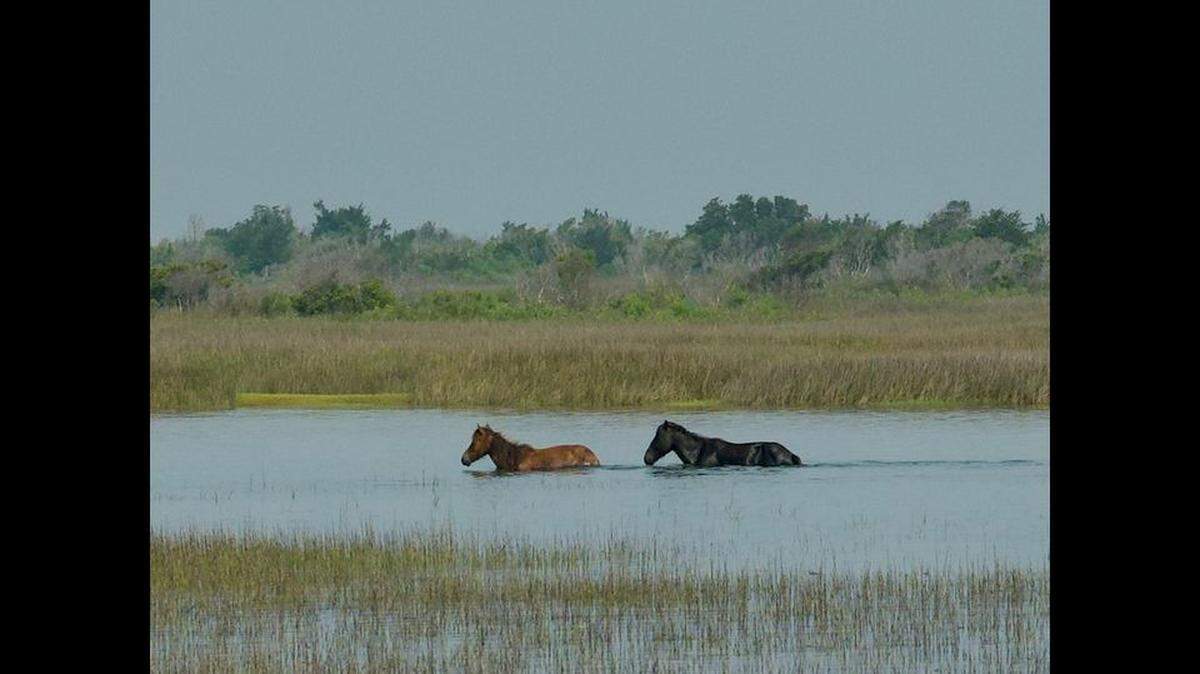
Wild mustangs are part of the allure of North Carolina’s Outer Banks, including the odd sight of them nose-deep in inlets and bays, swimming from one island to the next.
It may look like horseplay, but the National Park Service says it is a centuries-old survival tactic on the barrier islands.
The remote Shackleford Banks is among the places horses are most often seen in the water, and Cape Lookout National Seashore says it’s akin to a trip to the grocery store.
“The Shackleford Banks horses will often wade ... or swim across the deeper areas as they move between the islands,” the park wrote on Facebook.
“The horses will move out to the smaller marsh islands to feed on the grass, then return to the main island toward the end of the day.”
Those occasional dips are also a good way to cool down, and the salt water helps to repel biting flies that swarm the horses in marshes, experts say.
A recent National Park Service survey reported 124 wild horses live on the Shackleford Banks, which is accessible only by boat. The horses are on their own to find food, which is limited and far from a traditional diet.
The Corolla Wild Horse Fund reports the horses — known as bankers — eat “green grass on the dunes” in the summer, along with live oak leaves, wax myrtle and greenbrier.
“In the fall you’ll see them munching on persimmons and acorns, two things that aren’t typically very good for horses but that the Bankers have adapted into their diet over the centuries,” the fund says.
“Sometimes you’ll see them submerge their entire heads into the fresh water of the sound and canals to graze on aquatic plants. They require very few calories to survive and have learned how to utilize our often harsh environment to its fullest.”
The horses on the Outer Banks are believed to be descended from Spanish mustangs brought to the continent by Spanish explorers in the 1500s. In later centuries, abandoned farm horses joined the herds, experts say.
This story was originally published June 13, 2023 at 4:16 AM with the headline "Odd sight of wild horses swimming around Outer Banks is a survival tactic, experts say."