
Shape-shifting marks are appearing on Outer Banks horses. The cause is not clear
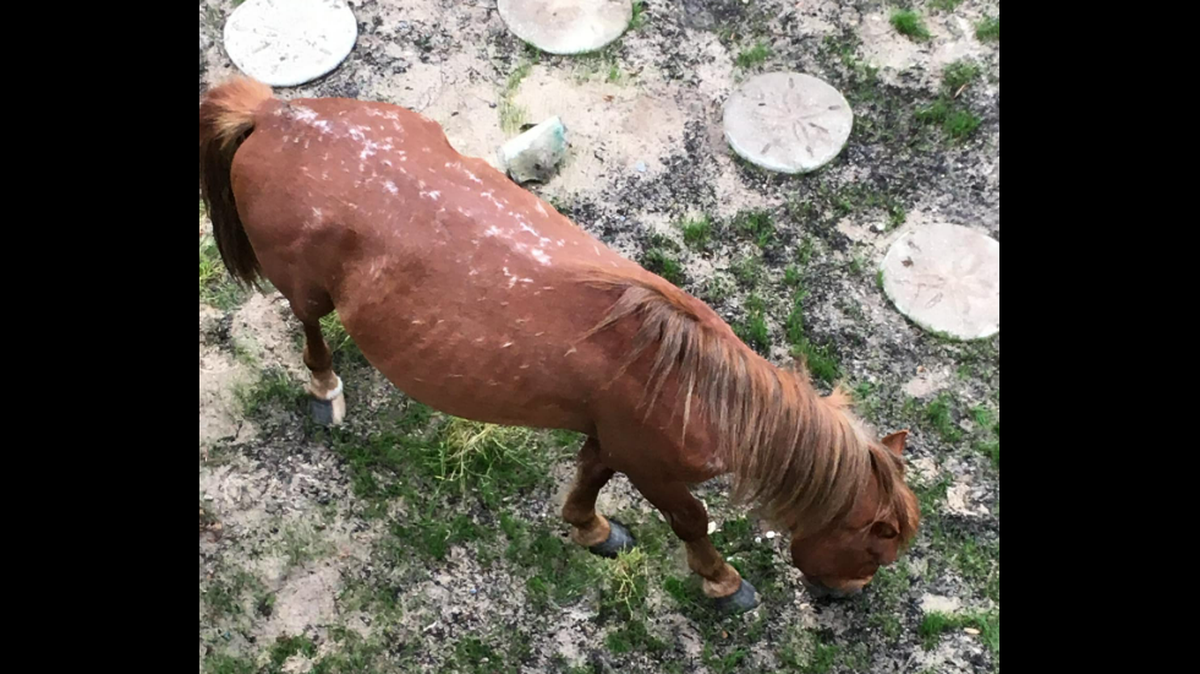
“Primitive markings” are being reported on some wild horses roaming North Carolina’s Outer Banks, and the cause can’t be easily explained.
It may be a rare genetic trait shared by one of the oldest herds in North America, according to the Corolla Wild Horse Fund.
“Every once in a while we get a call from someone concerned about the markings on a horse’s back, thinking they are injured,” Corolla herd manager Meg Puckett wrote on Facebook.
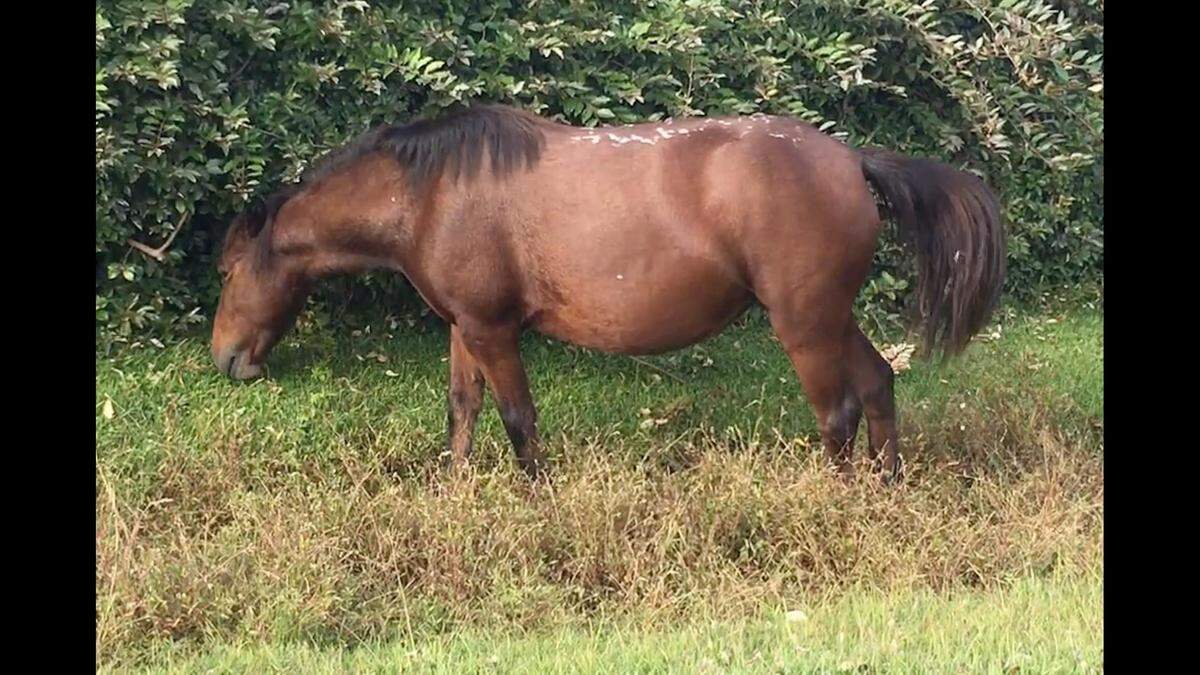
“Sometimes it’s poop from the cattle egrets that ride along as the horses graze, but most often it’s markings. ... We always assumed it was scarring from breeding, but you see them on both stallions and mares and they are patterned in ways scars usually aren’t.”
Another theory was that it might be “scarring from bacterial infections like rain rot.” However, the Corolla horses rarely experience such things, Puckett said.
So what is it?
“In most cases the white areas on these horses’ backs grow and change over time, which leads us to believe it’s actually a very rare type of marking called lacing,” Puckett says. “It’s a very primitive type of marking.”
Lacing has also been observed in some domesticated horses on the mainland, according to IHeartHorses Inc.
“There is some debate as to whether lacing is a rare genetic coat pattern or a type of scarring. ... There are horses, however, that develop the pattern without any kind of injury, and it seems to be passed down between families as a recessive gene,” the site reports.
“It could also be a rare coat pattern that can change size and pattern as the horse ages.”
Puckett says the markings are “one more interesting footnote on the genetic history” of the herd. The Outer Banks are home to two large herds: One on Corolla and one on the Shackleford Banks inside Cape Lookout National Seashore.
Historians say the horses are descendants of mustangs brought to North America by early settlers, starting with the Spanish.
The Corolla Wild Horse Fund is working on a DNA survey of the northern herd and has so far tested 150 horses. Data collected in the survey has enabled the nonprofit to determine lineage of the foals born in recent years.
This story was originally published July 12, 2023 at 10:41 AM with the headline "Shape-shifting marks are appearing on Outer Banks horses. The cause is not clear."