
Baby ‘snot otters’ vanished from Indiana waterways decades ago. Now they’ve reappeared
For years, a group of biologists in Indiana has been hellbent on saving hellbenders — America’s largest species of salamander — from the brink of extinction.
Now, their hard work appears to have paid off.
A juvenile hellbender, also known as a snot otter, was spotted in the Hoosier State for the first time in at least 30 years, according to a July 31 news release from the state’s Department of Natural Resources (DNR).
“This finding, the result of nearly two decades of collective effort, signifies a milestone for our conservation program,” Rod Williams, director of Purdue University’s Help the Hellbender Lab, said in the release.
The creature was discovered in the Blue River, a nearly 60-mile river that runs through the south-central portion of the state.
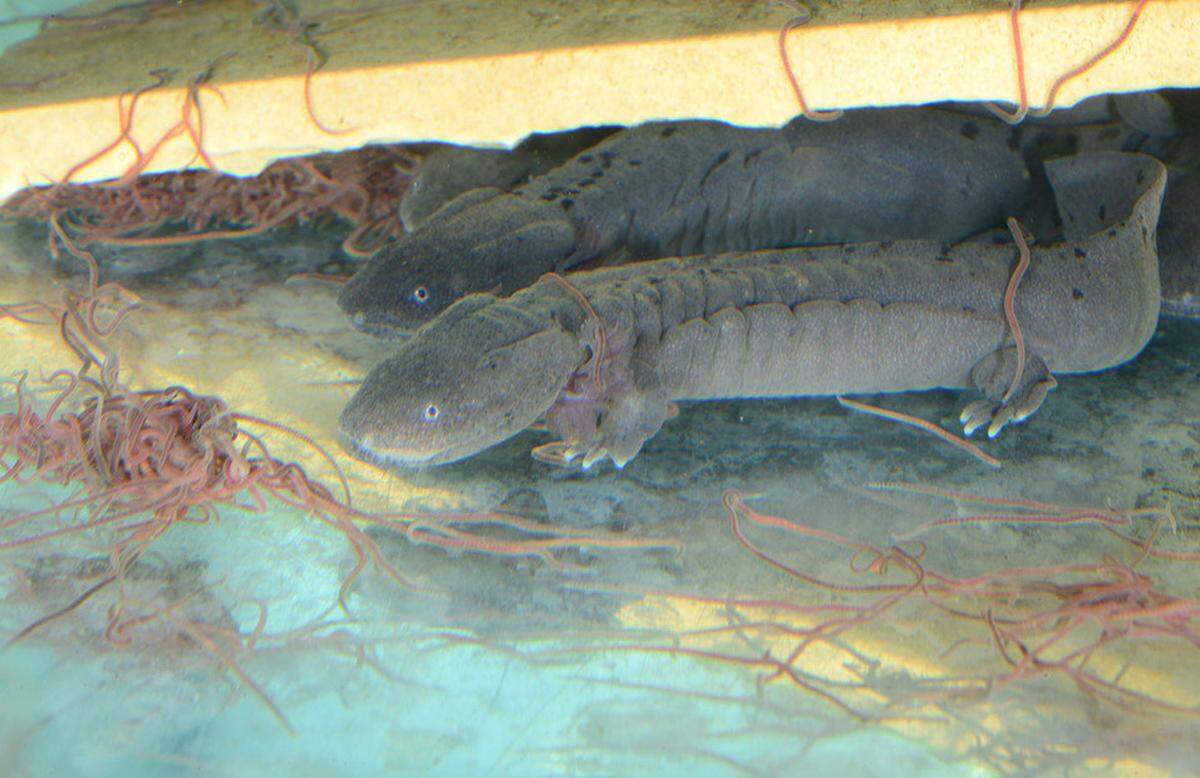
Despite their hair-raising name, hellbenders are harmless creatures that dwell in fast-moving streams and rivers throughout the country, according to the Smithsonian Institution. They can grow to be more than 2 feet long and spend their time lurking under rocks or logs, waiting to pounce on passing crayfish.
Once abundant throughout the eastern United States, populations of the flat-bodied, mucus-covered amphibians have dramatically declined in recent years, particularly throughout the Midwest, according to a DNR report.
They’ve completely vanished from Illinois, and their numbers are “critically low” in Indiana, where they’re found only in the Blue River.
Because they breathe through flaps on their skin, the salamanders are believed to be highly susceptible to poor water quality and may be disappearing because of chemical contamination of the state’s waterways, per the report.
But, over the past 15 years, the Indiana Hellbender Partnership, a collaborative effort between Purdue and the DNR, has worked to reverse the hellbenders’ decline.
In recent years, the Help the Hellbender Lab has raised and released almost 500 juvenile snot otters into the Blue River, which runs along the state’s southern border.
“Finding hellbender larvae is a huge benchmark of the program’s success,” Nate Engbrecht, a DNR herpetologist, said.
“It tells us that there has been successful breeding, hatching, and recruitment in the wild,” Engbrecht said in the release. “It’s a wonderful sign that captive-reared and released hellbenders are doing what we want them to do at this site.”
Though more conservation work still needs to be done, the discovery of the young hellbender is a step in the right direction, officials said.
This story was originally published August 1, 2023 at 10:52 AM with the headline "Baby ‘snot otters’ vanished from Indiana waterways decades ago. Now they’ve reappeared."