‘Large’ sea creature breathes with its legs, sucks prey with ‘straw.’ See new species
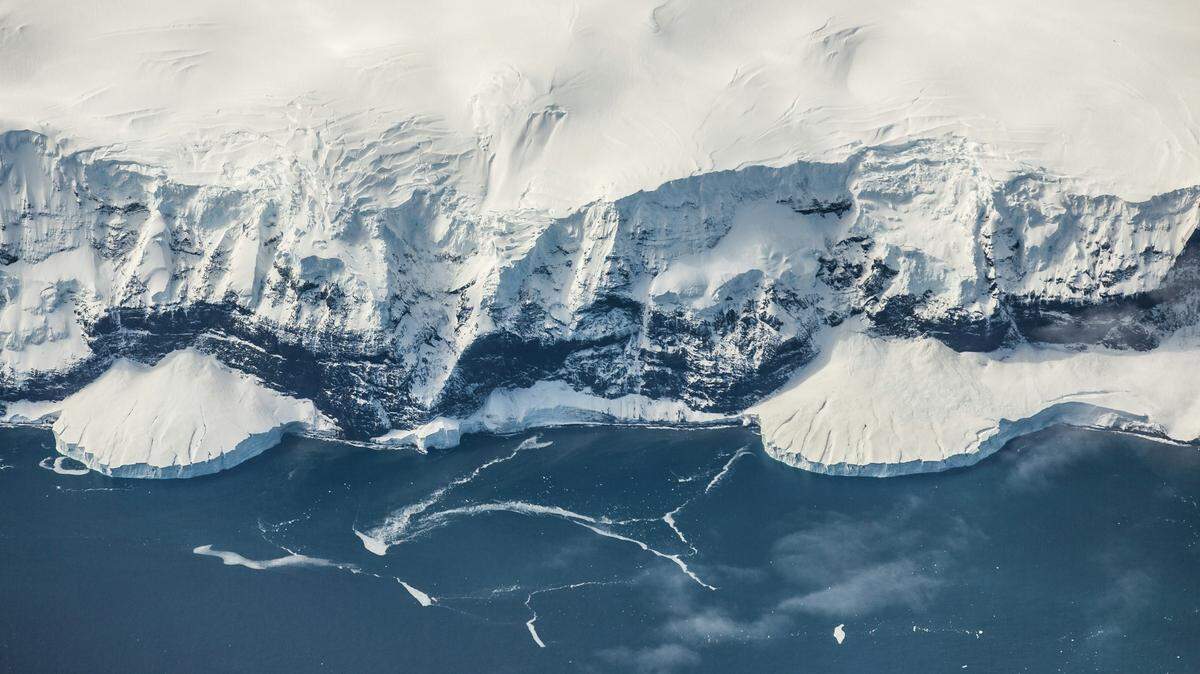
More than a thousand feet beneath an expansive ice shelf, a “slender” creature scurried through the frigid depths of the Antarctic waters on its “long” legs — straight into a huge net.
Researchers were aboard the RVIB Nathaniel B. Palmer in January 2013 when they cast the trawl as part of a research expedition, according to a study published Nov. 28 in the journal ZooKeys. When they pulled the net in, they noticed an unusual sea spider.
The “unique” specimen looked like other types of sea spiders, but when researchers tried to determine its species, they realized it didn’t fit any existing descriptions, the study said. That’s when they realized they had actually discovered a new species: Austropallene halanychi.
Scientists said the spiders are “much larger” than similar species. The collected specimen had a body length of only about 0.4 inches, but its walking legs measured nearly 1.2 inches long.
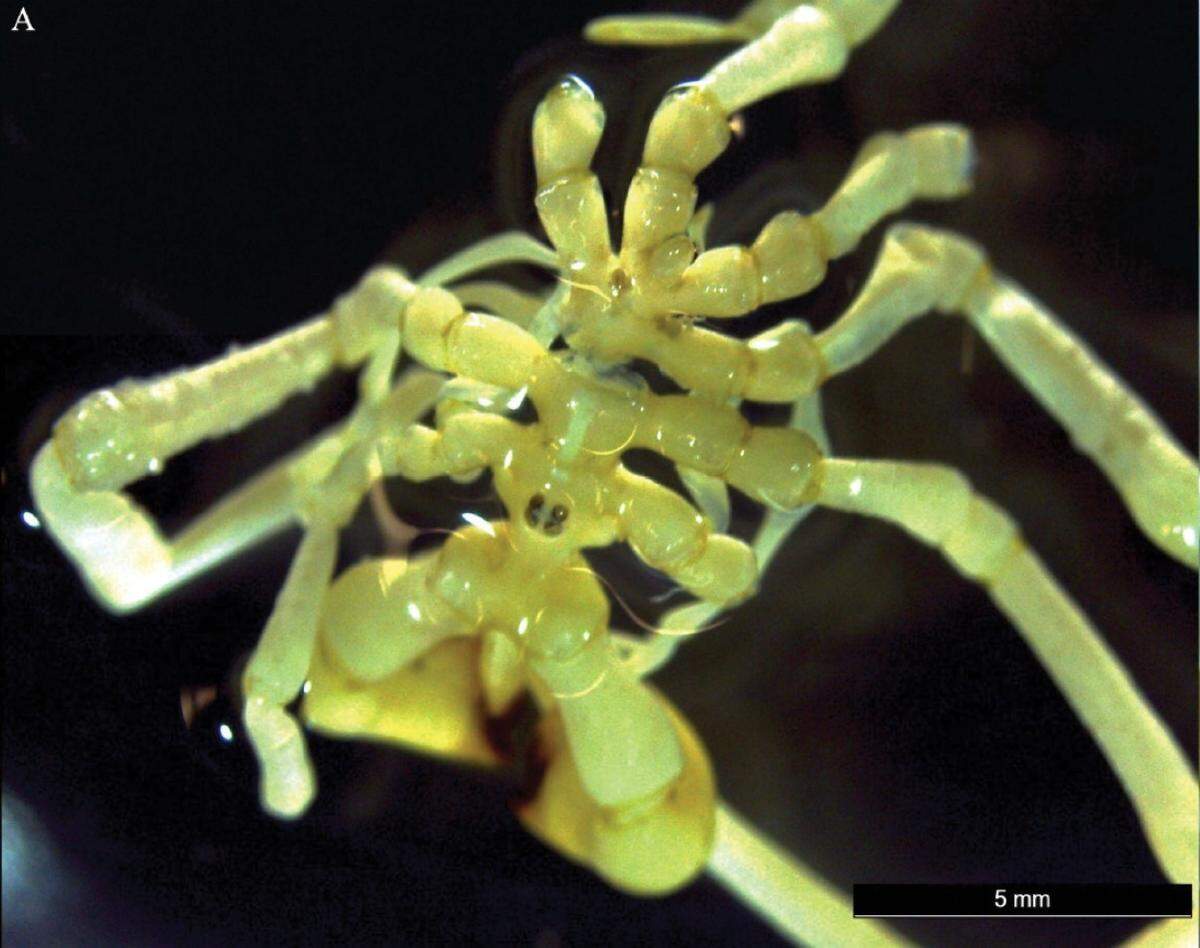
The new species has “four darkly pigmented eyes” and a “short” “swollen” abdomen, according to the study. Its mouth is surround by a “wreath” of bristles.
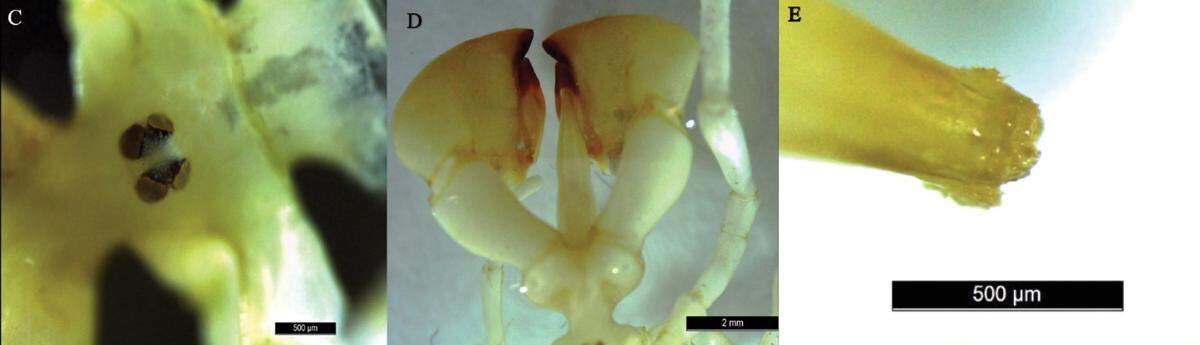
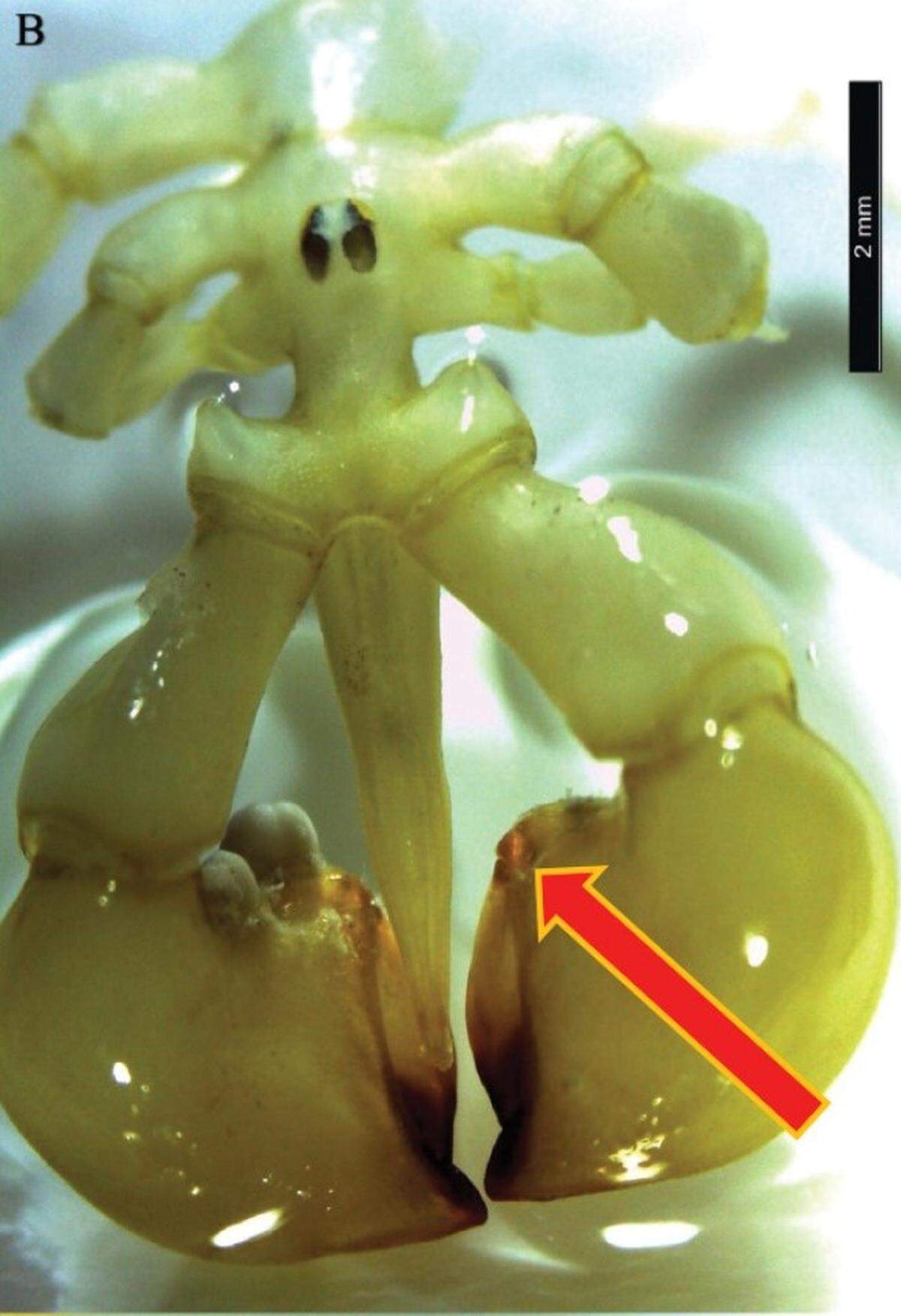
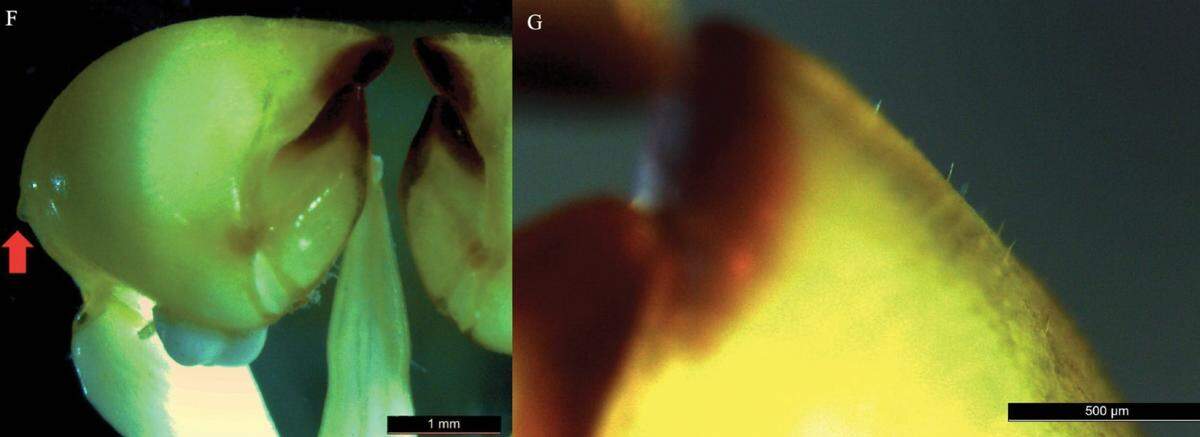
Experts said one of the spider’s most “distinctive” features is its “powerful” and “relatively large” chelifores, or front arm-like appendages. Chelifores have two parts, a scape and a claw — which has a fixed finger and a movable finger.
Austropallene halanychi’s scape is “large and oblong,” and the tips of its fingers are “blackened,” researchers said. Unlike other sea spiders, the new species’ fixed and movable fingers close completely, leaving “no space present between fingers.”
Photos show the animal’s claws, including the bristles that cover its immovable finger.
Austropallene halanychi, like other sea spiders, houses its vital organs in its legs, and uses its “legs to breathe,” co-author Andrew Mahon told McClatchy News in an email.
“Oxygen passes along the legs’ large surface area, and the intestinal pouches in the legs diffuse the oxygen throughout its tissues,” according to Monterey Bay Aquarium experts.
The specimen also had “large” ovigers, which are a male sea spider’s egg-carrying organ, according to the study.
Sea spiders mate using “genital pores in their legs,” aquarium experts said. The male spider climbs on the female, aligning their pores. Then the female releases eggs which are combined with sperm; the eggs are then carried in the male’s oviger.
The creatures feed through their proboscis, which is “a long, tubular mouthpart,” according to the Monterey Bay Aquarium. The creatures use their proboscis to “suck out (its prey’s) insides like a smoothie.”
The new species uses its approximately 0.1 inch proboscis “like a straw” to feed on “soft bodied organisms,” Mahon said. The spider’s proboscis is “tapered,” the study said.
Scientists named the new species after Kenneth M. Halanych, a “prolific marine invertebrate scientist,” according to the study. Austropallene halanychi was collected from the Ross Shelf in Antarctica, approximately 1,900 feet underwater.
This story was originally published November 30, 2023 at 8:47 AM with the headline "‘Large’ sea creature breathes with its legs, sucks prey with ‘straw.’ See new species."