Boy Scout leader found teen’s remains 54 years ago, OR cops say. Now she’s identified
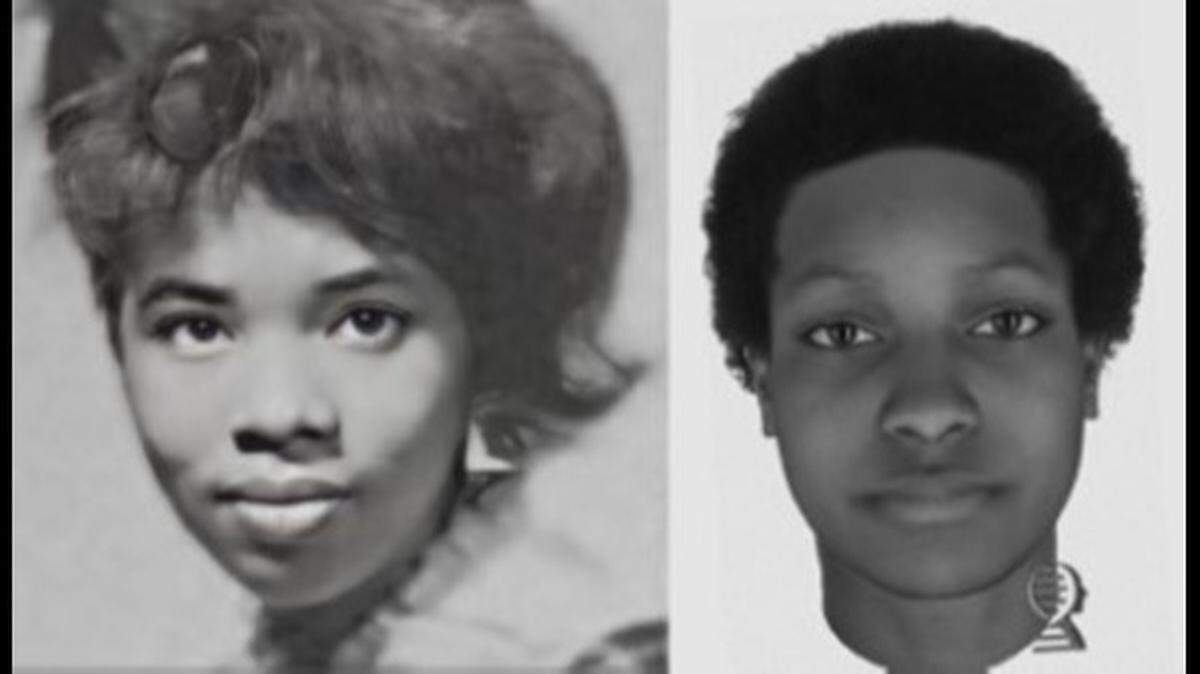
In 1970, a Boy Scout troop leader was trekking an island on an Oregon river when he found some clothing.
When the leader looked closer, though, he found more than just clothing on Sauvie Island in Columbia County, Oregon State Police said in a Thursday, Feb. 22, news release.
He stumbled upon human remains “buried in a shallow grave,” police said.
Now, with the help of DNA technology, the remains have been identified as Sandra Young, a Portland teenager who went missing in the late 1960s, police said.
“Sandra Young has now regained her identity after 54 years,” Nici Vance, a program coordinator with Oregon State Medical Examiner, said in the release.
Case grows cold
After recovering the remains and “remnants of a black curly wig,” investigators determined the woman’s death was likely the result of foul play based on “trauma to the body,” according to police.
Police said investigators couldn’t identify the remains.
In 2004, a little more than three decades later, police said the remains were sent off to the state’s medical examiner’s office, where an anthropology report was done.
Police said they also sent a bone sample off for identification and created a profile for the remains in the National Missing and Unidentified Persons System.
Though DNA samples were submitted to the Combined DNA Index System, police said there were no hits.
The DNA results did, however, show the remains belonged to a female, police said.
This small detail gave investigators something more to go off of, as they combed through data to see if the remains matched any of the cases of missing teenagers or young women on the West Coast, police said.
Even still, investigators had no luck identifying the remains, police said.
Efforts turned to investigative genetic genealogy
Then, in 2018, after the state’s medical examiner’s office received a grant, investigators turned their efforts to investigative genetic genealogy.
Genetic genealogy uses DNA testing coupled with “traditional genealogical methods” to create “family history profiles,” according to the Library of Congress. With genealogical DNA testing, researchers can determine if and how people are biologically related.
After extracting DNA from another bone sample, Parabon NanoLabs, a DNA technology company, created a profile for the remains, police said.
While the lab’s first report was able to offer details about the female’s ethnicity, the follow-up “investigative genetic genealogy report” did not include any promising leads, police said.
Three years later, the lab took “a deeper genetic dive” that looked “into the young woman’s ancestry,” as well as created an image of what she may have looked like using DNA phenotyping, a process that uses DNA to predict physical appearance.
“To see her face come to life through DNA phenotyping was striking,” Vance said.
DNA database pieces puzzle together
Last January, a potential distant relative of the young woman happened to upload their DNA to GEDMatch, an open-source genetic genealogy database, police said.
After this hit, the genetic genealogist working the case encouraged other potential relatives to also submit DNA samples to the database, helping complete a more holistic “picture of heritage,” according to police.
With a complete report, as “countless family trees” were created, pieces of the puzzle started to come together, police said.
As investigators spoke with potential family members, police said they learned a teenage relative, Sandra Young, went missing from Portland around the same time the remains were found.
Young, who was a Grant High School student at the time of her disappearance, was last seen in 1968 or 1969, police said.
Young’s sister had given a DNA sample and “was cooperative, supportive, and motivated to determine if the remains could be their sister,” officials said.
With that last piece of the puzzle, investigators finally had their answer — the remains were positively identified as Young, who was born June 25, 1951, police said.
Portland police are now investigating Young’s death, officials said.
Sauvie Island is about 20 miles northwest of Portland.
This story was originally published February 23, 2024 at 9:33 AM with the headline "Boy Scout leader found teen’s remains 54 years ago, OR cops say. Now she’s identified."