
‘Historical’ sign taken from Gullah Geechee site found in Clemson dorm, SC cops say
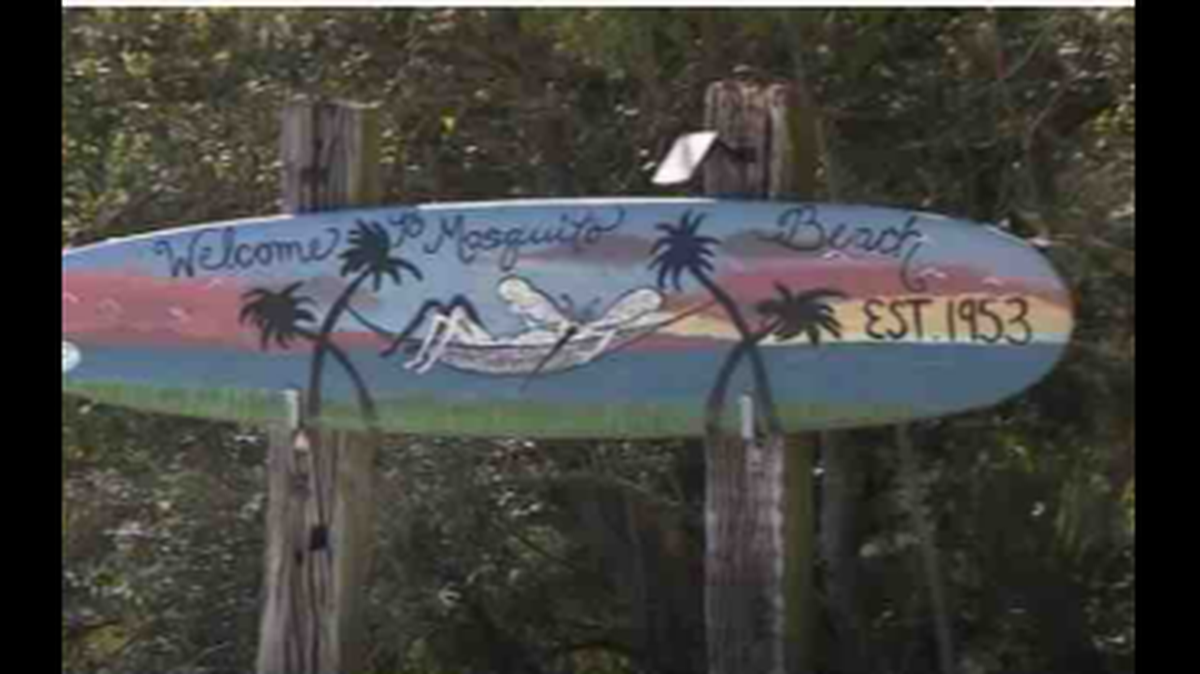
The theft of a beloved piece of public art from South Carolina’s famed Mosquito Beach community came to a head-shaking conclusion when it was found 250 miles away in a Clemson University dorm room, officials say.
Details of who took the large piece of folk art — a surf board retooled to be a “Welcome” sign — were not revealed.
The Charleston County Sheriff’s Office also declined to mention why it was taken, but the incident hints to an elaborate college prank. Mosquito Beach is on James Island, just south of Charleston.
“On Tuesday, detectives from the Charleston County Sheriff’s Office contacted the Clemson University Police Department (CUPD) in reference to information that led them to believe that the missing sign was possibly inside of a student’s apartment,” Clemson University officials told McClatchy News.
“CUPD investigated that lead and recovered the sign from an apartment in Lightsey Bridge.”
The sheriff’s office said detectives traveled to the college to “ensure (the sign’s) successful return to the Mosquito Beach community Wednesday afternoon.”
“The sign ... holds significant historical and sentimental value to the area’s residents,” the sheriff’s office said.
“Community members are currently weighing their options in terms of pressing charges and how they wish to move forward.”
The vibrantly painted surf board, featuring a large mosquito in a hammock, served to welcome tourists to an area that “functioned as an oasis for Lowcountry African Americans during the dark days of ‘Jim Crow’ segregation,” according to Historic Mosquito Beach.
A “concerned citizen” reported the sign missing on April 5, officials said. It is valued between $5,000 and $6,000, WCBD reports.
Mosquito Beach is part of the “Gullah Geechee Cultural Heritage Corridor,” historians say.
“Gullah Geechee people are the descendants of West and Central Africans who were enslaved and bought to the lower Atlantic states of North Carolina, South Carolina, Florida, and Georgia to work on the coastal rice, Sea Island cotton and indigo plantations,” the National Park Service reports.
“Because their enslavement was on isolated coastal plantations, sea and barrier islands, they were able to retain many of their indigenous African traditions. These traditions are reflected in their foodways, arts and crafts, and spiritual traditions.”
This story was originally published April 11, 2024 at 5:20 AM with the headline "‘Historical’ sign taken from Gullah Geechee site found in Clemson dorm, SC cops say."