Harry S. Truman was one of the last presidents to drop a reelection bid. Here’s how it went
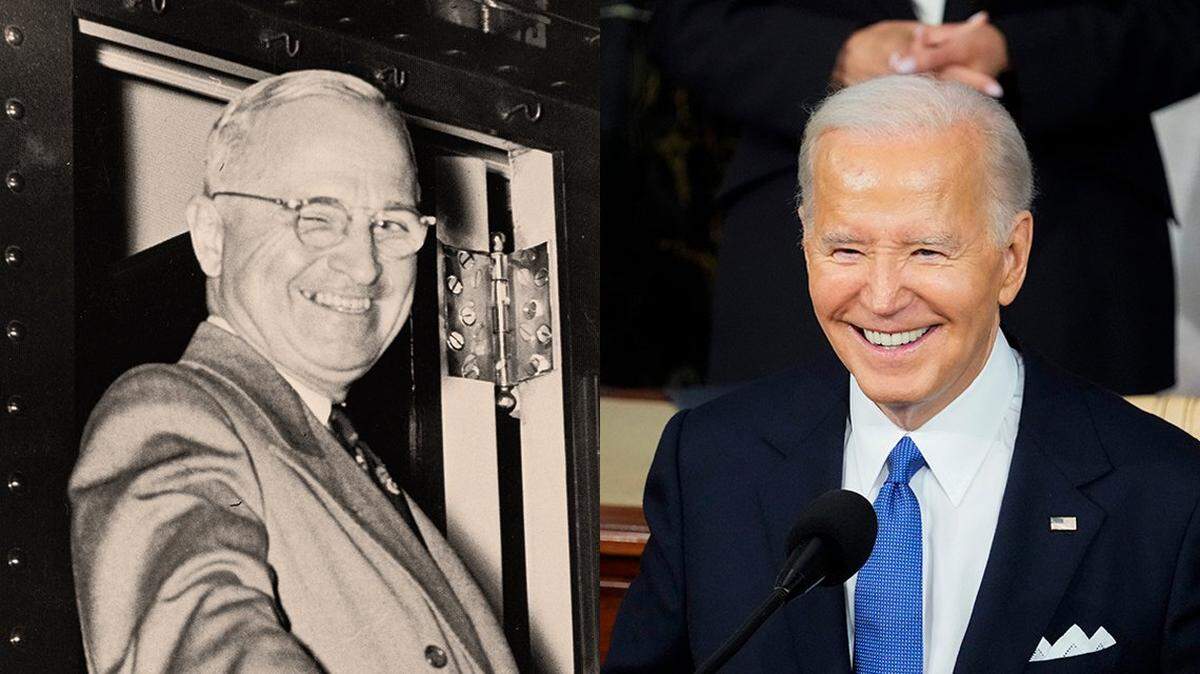
After Joe Biden’s historic decision Sunday to withdraw from the 2024 presidential election, many people were asking about previous times in which a sitting president opted against reelection at a late stage.
One such instance occurred 72 years ago and involved President Harry S. Truman. He decided not to seek a third term in March 1952 after losing the first primary of the election cycle.
But his influence on the Democratic nomination didn’t end there. Truman was involved in not only one of the last decisions not to seek reelection but also in the last contested Democratic National Convention — even though he wasn’t on the ballot. And the convention that year happened to be in the same city as this year’s event: Chicago.
Though the 2024 convention is unlikely to reach the same level of cutthroat competition, the 1952 nominating process makes for an interesting comparison in 2024.
Here’s what to know about the history, in light of the current state of the Democratic nomination.
Harry S. Truman drops bid for reelection
The 33rd president was born in Missouri in 1884, making him 67 when he decided not to run for a third term in March 1952.
Truman was the last president eligible for a third term under the 22nd Amendment, which restricted the presidency to two terms. It was ratified in 1951 but included an exception for the current president. Truman had originally taken office when Franklin Delano Roosevelt died less than three months into his fourth term.
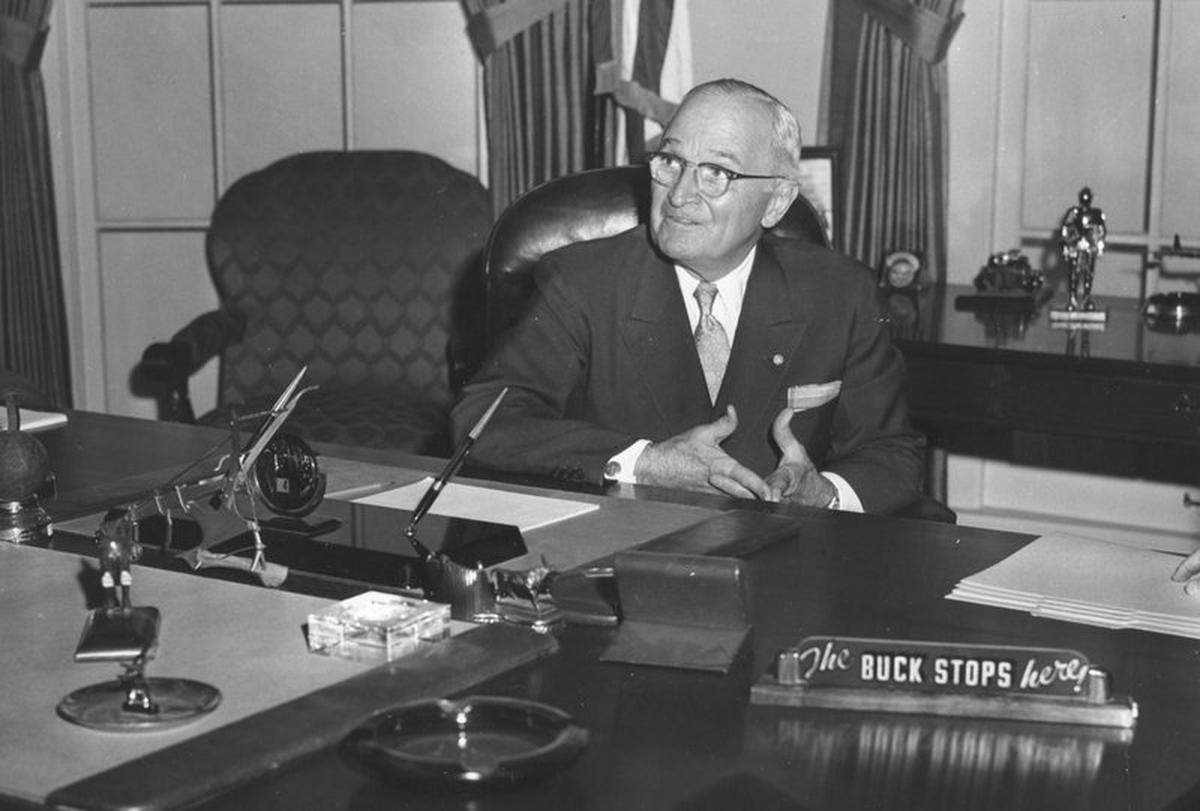
But when it came time for Truman to consider running again, in the midst of the controversial Korean War, his approval rating was down to 22% in February 1952, according to The American Presidency Project at the University of California.
Truman did begin running for reelection, entering the first primary of the year in New Hampshire, on March 11, 1952. The incumbent president was beaten by Tennessee Sen. Estes Kefauver, 19,800 votes to 15,927, as recorded in a document on the National Archives’ website.
By the end of the month, Truman had decided to abandon his reelection campaign. In a speech March 29 at the Jefferson-Jackson Day Dinner, he affirmed his dedication to the Democratic Party and ended with the announcement that he “shall not be a candidate for reelection.”
“I have served my country long, and I think efficiently and honestly,” he said in the speech, according to a transcript from the University of Virginia’s Miller Center. “I shall not accept a renomination. I do not feel that it is my duty to spend another four years in the White House.”
The 1952 Democratic nomination
Presidential primaries were still rare in 1952, with only 16 states holding votes directly on the presidential candidates. Instead, party leaders chose the delegates who chose the president at each year’s convention.
So even though Kefauver had won 12 of the 16 primaries held in 1952, he was not guaranteed the nomination going into the late July convention, according to a history of the event by Chicago magazine.
Instead, influential members of the party, including Truman, had been looking for another candidate to put on the ballot. They had been trying to recruit Illinois Gov. Adlai Stevenson as Truman’s successor, but he had declined to run.
But then, obligated to give a speech to open the convention as the host state’s governor, Stevenson’s address took the crowd by storm. Afterward, under pressure from Truman and others, he agreed to put his name forward for nomination.
It took three ballots at the convention, officially making it the Democrats’ most recent brokered convention, for Stevenson to earn a majority over Kefauver.
An archived article from The New York Times notes that it was only after a visit by Truman that other candidates on the ballot opted to withdraw and throw their support behind Stevenson, earning him the nomination.
“I’m telling you now Adlai Stevenson is going to win in 1952,” Truman said. “I am going to take my coat off and do everything I can to help him win.”
But less than four months later, Stevenson was swept in the general election by the Republican candidate Dwight D. Eisenhower, a famed World War II general from Kansas.
Then and now
Even with such a dramatic change months before the election, it’s unlikely that the 2024 Democratic nomination will truly resemble the 1952 convention.
Convention delegates are far more tied to their state’s primary election results these days, making the past several decades of conventions more of a formality and less of a fierce competition between the party’s powerbrokers.
Moreover, it’s likely that Democrats will move quickly to coalesce behind their next nominee — likely Vice President Kamala Harris, whom Biden has endorsed — long before the August convention.
Many are calling for a virtual roll call to be held in early August to gauge delegates’ support for Harris, including two Kansas Democrats running for Congress. If a majority of delegates are behind her, it’s unlikely to be an open or brokered convention like what was seen in 1952.
“The party would unify around Harris. She’s the anointed successor,” Darrell West, a political analyst at the nonpartisan Brookings Institution, told McClatchy News earlier this month.
This story was originally published July 22, 2024 at 12:58 PM with the headline "Harry S. Truman was one of the last presidents to drop a reelection bid. Here’s how it went."