
Remains of rare 17th century structure found under parking lot, Virginia officials say
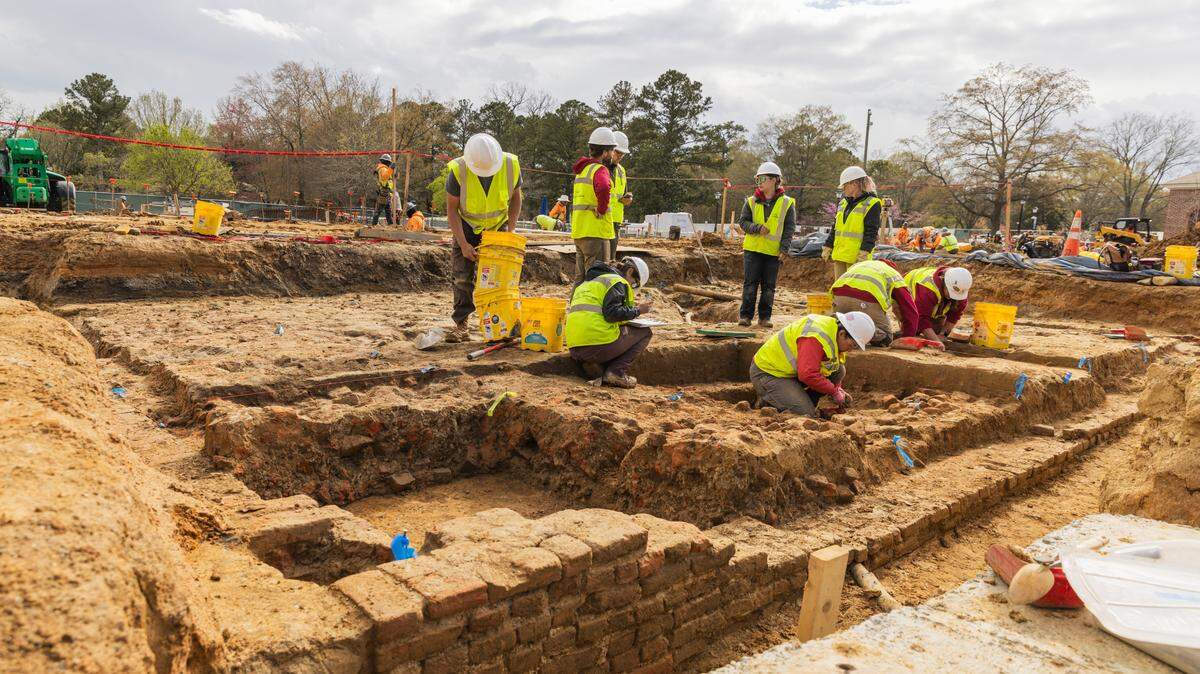
The remains of a structure from the late 1600s have been discovered two-feet under a parking lot in historic Williamsburg, Virginia, and the location is more than a little ironic.
It’s the same spot where a new archaeological center is being built for Colonial Williamsburg — “the largest U.S. history museum in the world.”
Demands for the center to be relocated would be easily justifiable, but that won’t be happening, according Jack Gary, director of archaeology for the Colonial Williamsburg Foundation.
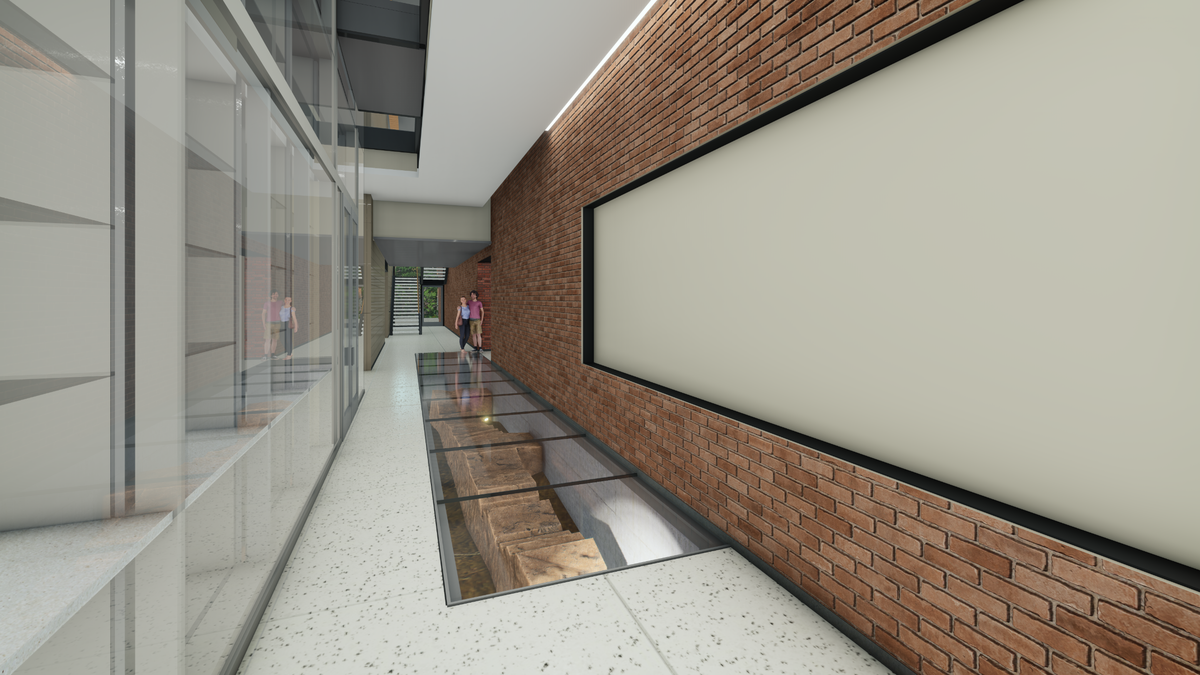
Instead, the center will be built as planned on top of the homestead, but with see-through flooring.
“The glass floor will be 35 feet long and 6 feet wide. It’s a significant feature in the building in a main corridor and you’ll stand right on top of it, looking down into the past,” Gary told McClatchy News.
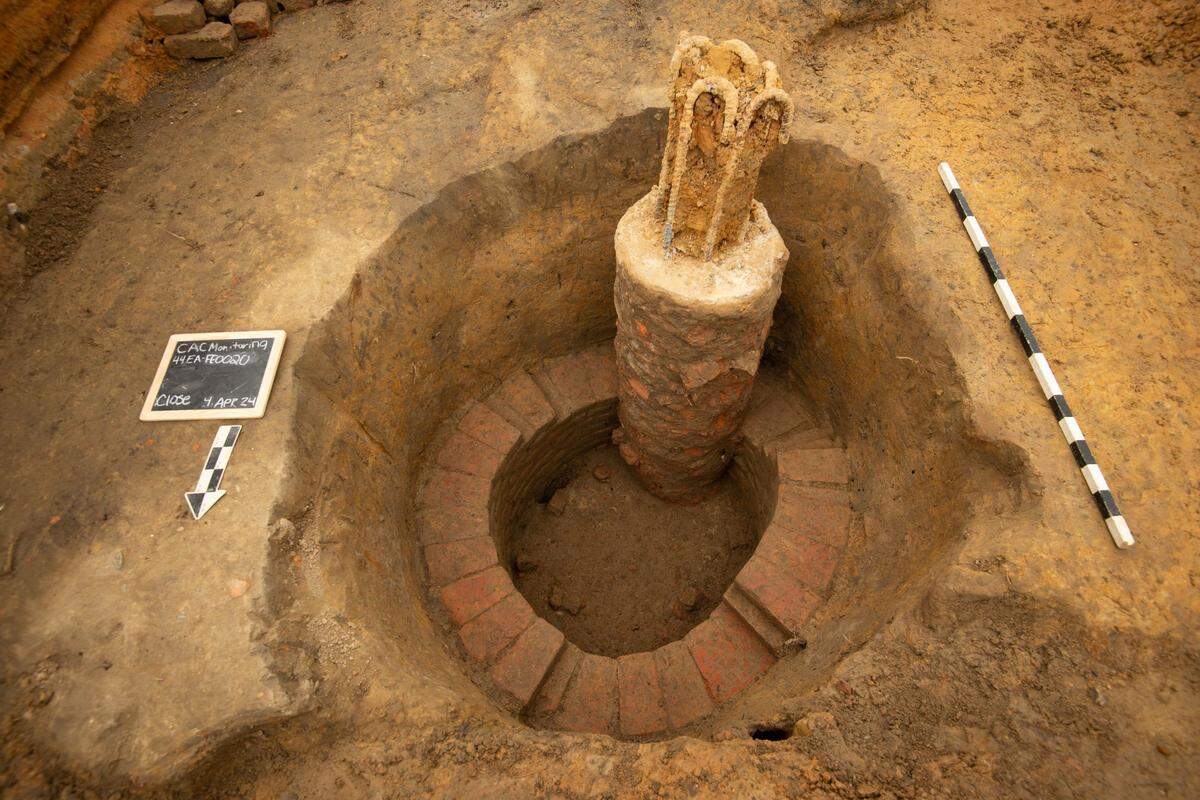
“We’re going to expose a 32-foot length of foundation right there in the building and the (drinking) well which was also found. While we couldn’t expose well itself, we took some of the rings (of bricks) and we’ll embed them in floor of building where well actually was.”
That well, which is 40 feet deep, remains intact with a cap on it. An attempt to search for artifacts at the bottom had to be halted at 6 feet, due to safety concerns, Gary said.
As for the parts of the foundation that aren’t visible through the floor, they’ll be preserved under a layer of sand.
“We were even able to be sure all utilities were routed around it,” Gary said. “We were able to preserve the whole thing and still accomplish building the building on top of it.”
So what did they find?
The foundation, cellar and well are what remains of one of the oldest known structures in a historic city full of old structures, officials say.
It was hidden at a spot across from the Art Museums of Colonial Williamsburg, officials say.
When hints of something historic started turning up in the spring, Gary arranged for construction on the center to be shifted to another part of the lot so an investigation could be conducted.
They found a brick foundation that is 32 feet by 24 feet and served as one home in a sparsely populated neighborhood known as Middle Plantation. The community predates Colonial Williamsburg and was an “outgrowth” of the capital city of Jamestown, historians believe.
Little is known of Middle Plantation. In fact, 18th century maps don’t show any structure at the spot, because it predates the creation of detailed maps, Gary said.
The parking lot that sat atop it was created in the 1960s to serve Eastern State Hospital.
“We joke that sometimes the best way to preserve a site is to put a parking lot on top of it and seal it in,” Gary said.
Artifacts suggest it was the main residence of a “somewhat affluent” family, who may have had a small plantation in the area. No other structures associated with the farm have been found, and may have been destroyed when a hospital and its dorms were built, Gary said.
The owner remains a mystery, in part because records in the area were burned during the Civil War.
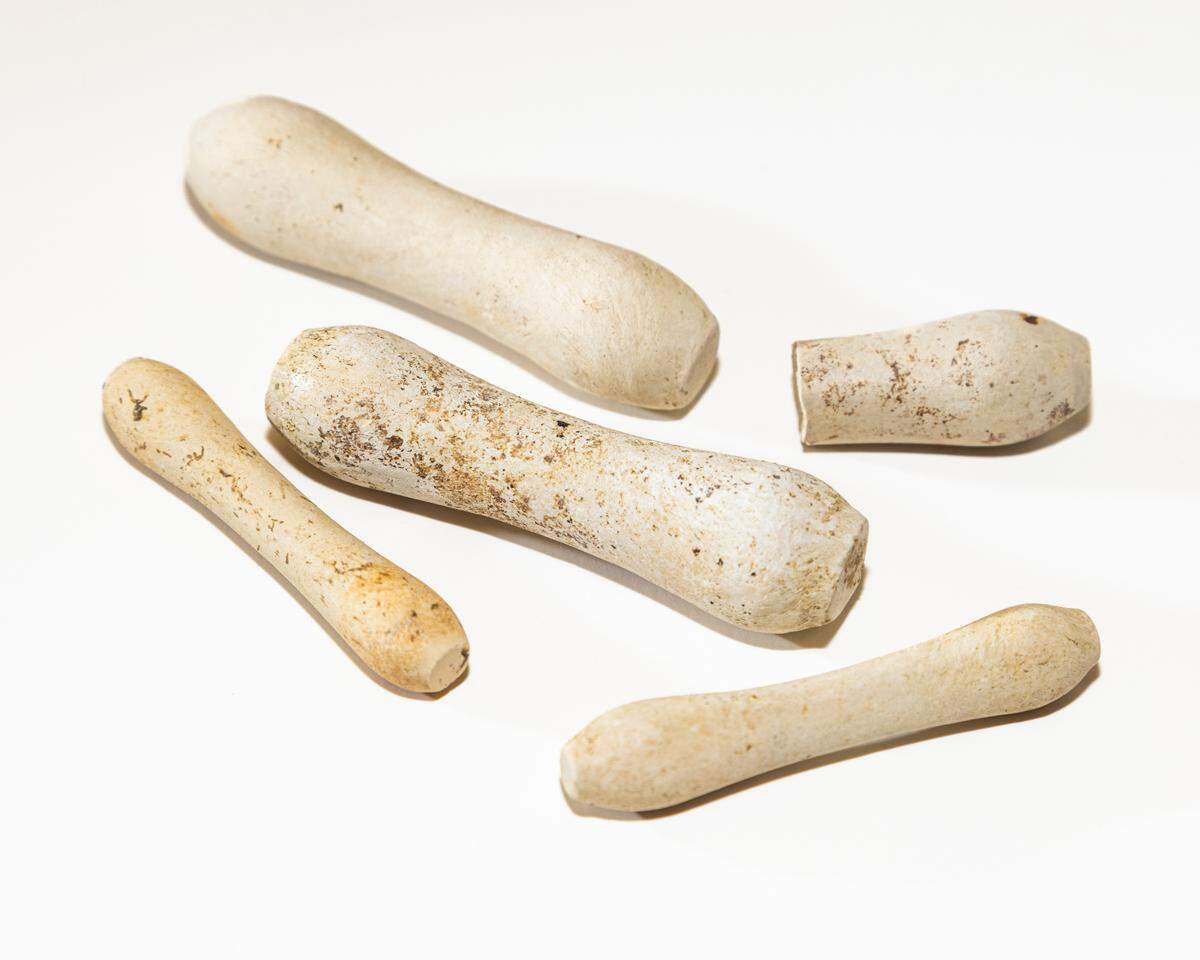
“What surprised me most was the number of clay wig curlers that came out. Not sure of full counts, but dozens of them. It’s the most I have ever seen in one excavation,” he said. “Other points of affluence were Chinese export porcelain, tea bowls and tea wares, and a silver tea spoon.”
The farm of an entire 2-foot by 3-foot lead casement window was also found, including its diamond-shaped panes of glass. However, the frame became twisted over the centuries.
“We lifted the whole thing in a block of soil and it’s in the conservation lab for .... removing the soil around it, grain by grain. This is not something we find every day. We find lead from windows, but never fully tied together. We will unravel what it looks like and recreate it (in 3D).”
Countless animal bones and even egg shells were found, and closer examination will reveal the family’s diet.
Another telling artifact is cowrie shells, Gary said. The seashells were known to be used as adornment by people of African decent, indicating there may have been enslaved people working in the home.
The structure was likely demolished between 1737 and 1740, its parts salvaged for use in other structures. That would explain why a large amount of plaster from the walls was found in the basement, Gary said.
Why it’s important
Williamsburg was the capital of Virginia from 1699 to 1780 “when the dream of American freedom and independence was taking shape,” according to the Colonial Williamsburg Foundation.
Decades of archaeological work at the site has resulted “in one of the world’s largest archaeological collections” of artifacts from colonial America, according to the foundation.
Still, the newly discovered home stands out as a window into one of the least understood parts of the community, historians say.
“We don’t have many sites like this, from this time period, that we can fully excavate,” Gary said.
“We had a full opportunity to excavate it, and understand everything about one household in great detail. It’s a very short period of time. It’s one to two generations of people who were living in that house.”
The result is a snapshot of one household over one very short period time, he said. It was home to only one or two generations, and then they were gone and the house was torn down.
Who they were and why they left may never be known, but countless details of how they lived will soon be artifacts on display for tourists.
“It will really remind them that everywhere they go in Williamsburg, there is history literally under their feet,” Gary said in a video posted to YouTube.
The Colin G. and Nancy N. Campbell Archaeology Center will open in 2026, just two months later than originally planned, officials said.
Colonial Williamsburg is an 18th century living history museum with dozens of “buildings, homes, and shops reconstructed on 301 acres — most on their original foundations,” according to Virginia.org.
This story was originally published August 12, 2024 at 5:09 AM with the headline "Remains of rare 17th century structure found under parking lot, Virginia officials say."